
Schengen Visa: Complete Guide to Visiting the Schengen Area
Planning a trip to Europe? If your nationality requires a visa, the Schengen visa is the single document that unlocks access to 29 countries on one application. This guide covers who needs one, what documents to prepare, how to apply, and what to expect at each stage.
Key Takeaways
A Schengen visa is a short-stay visa (Type C) that covers 29 Schengen Area countries and allows stays of up to 90 days in any 180-day period. One visa lets you visit multiple member states on the same trip; for example, France, Germany, and Italy on a single itinerary.
A Schengen visa does not cover Ireland, the UK, or other countries outside the Schengen zone. Travelers from many African, Asian, and Latin American nations need a Schengen visa to visit Europe, while citizens of visa exempt countries (USA, Canada, Japan) normally do not for short stays.
Core required documents include the application form, a valid passport, travel insurance, proof of funds, flight reservations, and proof of accommodation. Missing or inconsistent papers are the most common reason for delays or refusals.
Visa processing time is typically 15 calendar days but can stretch to 45 days during busy seasons. Apply at least 4 to 6 weeks before your planned date of travel.
Every traveler requires their own visa, including infants.
What Is the Schengen Area and Schengen Visa?
The Schengen Area is a border-free travel zone in Europe. The Schengen visa is the standard short-stay visa that non-EU nationals use for tourism, business, or family visits.
The Schengen Area comprises 29 European countries with abolished internal border controls, including France, Germany, Italy, Spain, the Netherlands, Greece, Switzerland, and Norway. Bulgaria and Romania completed their accession on 1 January 2025. The Czech Republic became a Schengen member in 2007, and Prague remains one of the most visited cities for Schengen travelers. With a valid Schengen visa, travelers can move between Schengen countries without internal border checks, similar to traveling between states in one country.
The Schengen Area and the European Union are not the same. Ireland and Cyprus are EU members but not yet in Schengen. Switzerland and Norway are non-EU states that participate fully. The standard Schengen visa (Type C) is valid for 90 days within 180 days. Other categories include Type A (airport transit) and national D visas for long-term stays such as study or work.
Who Needs a Schengen Visa to Visit Europe?
Whether you need a Schengen visa depends on your nationality and purpose of travel. The EU visa policy divides nationalities into visa-required and visa-exempt lists.
Nationals of countries such as India, Pakistan, Nigeria, South Africa, the Philippines, China, and Iraq must apply before traveling. Travelers need a Schengen visa to enter Germany, France, or any other Schengen state if their nationality is on the visa-required list.
Citizens of visa exempt countries, including the United States, Canada, Australia, New Zealand, Japan, South Korea, and the United Kingdom, can visit the Schengen Area without a visa for up to 90 days in 180 days. However, being on the visa free list does not guarantee entry. Border officers can request a valid passport, proof of onward flight, and proof of sufficient funds.
Ireland and the UK are not part of the Schengen Area. A Schengen visa says nothing about whether you can enter these other countries. Always check the latest official list because rules change; for instance, visa facilitation agreements are revised periodically.
Schengen Visa Types and What They Allow
Choosing the right visa type prevents problems at the border and during your stay. Here are the main categories:
Uniform Schengen Visa (Type C): The most common option. Covers tourism, business meetings, trade fairs, and family visits for up to 90 days in any 180-day period. The standard short-stay visa allows 90 days in 180 days.
Single-entry: You enter the Schengen Area once. If you leave, you cannot re-enter. Suitable for a one-time two-week holiday.
Multiple-entry: You can cross Schengen borders multiple times during the visa's validity. In 2025, about 51.7% of all visas issued were multiple-entry.
Airport transit (Type A): Required by some nationalities to change planes in a Schengen airport, even without leaving the transit area.
National visa (Type D): Issued by individual Schengen states for study, work, or long family stays exceeding 90 days.
A Schengen visa allows travel between all member nations but does not permit work unless the visa category or national law allows it. Unauthorized employment is a violation that can affect future visa decisions.
Schengen Visa Requirements and Required Documents
Incomplete files are a leading cause of refusals. The global refusal rate in 2025 was about 14.6%, and missing or inconsistent documents account for a large share. Here is a checklist of required documents:
Document | Details |
|---|---|
Application form | Completed and signed; minors need a parent or guardian signature |
Passport | A valid passport must be issued within the last ten years, with 3+ months validity after departure and two blank pages |
Photos | Recent biometric photo, 35x45 mm, ICAO standard |
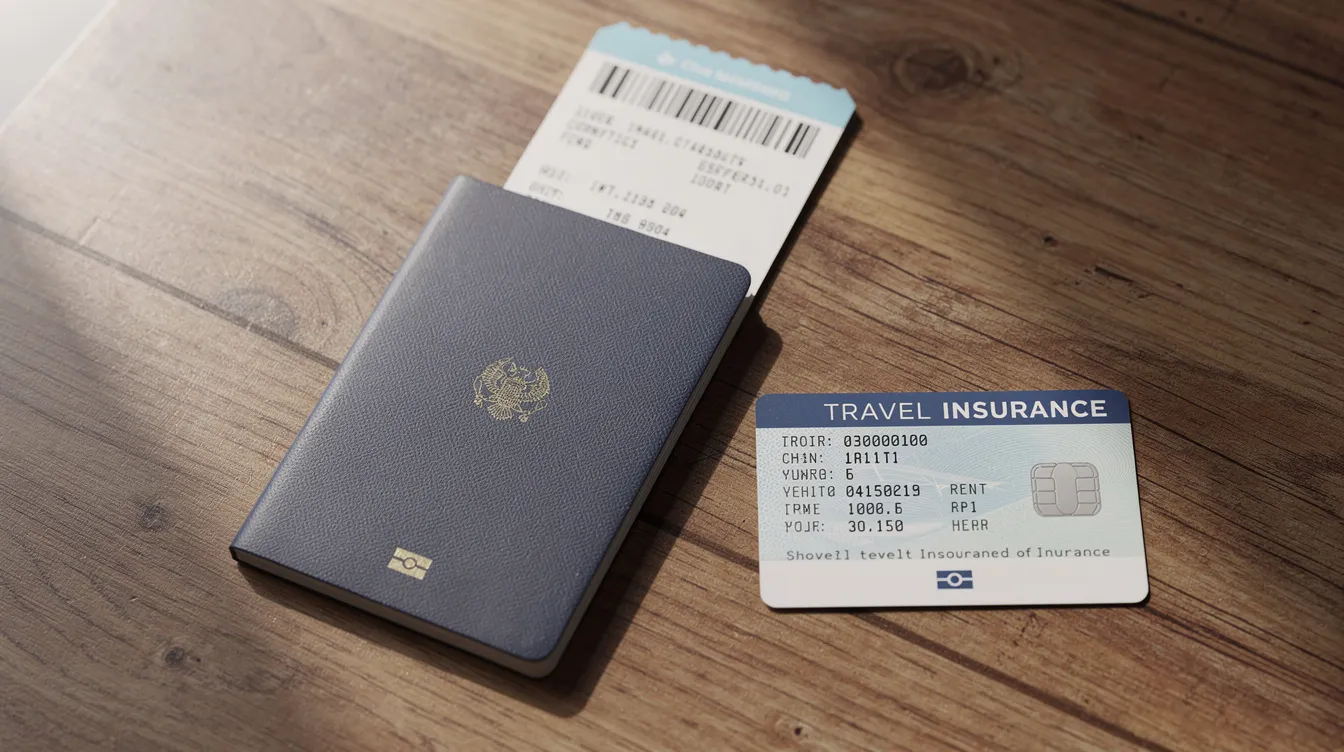
Travel insurance | Must cover at least €30,000 in emergency medical and repatriation costs across all Schengen countries for the full trip |
Proof of funds | Bank statements (last 3-6 months), payslips, or a sponsorship letter |
Flight bookings | Round-trip reservation with dates and flight numbers |
Accommodation | Hotel bookings, rental agreements, or an invitation letter from a host |
Ties to home country | Employment contract, property deeds, family obligations |
For business travel, include an invitation from the hosting company. For family visits, include proof of relationship. A cover letter explaining your trip purpose and itinerary can strengthen your case. Check the exact embassy list before your appointment, as additional documents may be required depending on nationality.
How to Apply for a Schengen Visa Step by Step
1. Choose your embassy. Apply at the consulate of the country where you will spend the most days. If your stay is split equally, apply at the country of first entry. For example, if most of your trip is in Germany, apply at the German embassy.
2. Book an appointment. Schedule online with the embassy, consulate, or official visa application center. Applicants should submit their application 3 to 6 months before their planned travel date, but no earlier than three months prior. Aim for at least 4-6 weeks of lead time.
3. Prepare your file. Fill in the visa application form carefully. Ensure all dates across your form, flight bookings, and accommodation match. Applicants must submit a completed visa application form with supporting documents in the correct order.
4. Attend the appointment. Submit your documents, pay the visa application fee of €80 for adults (€40 for children aged 6-12, free for children under 6). Biometric data such as fingerprints and photographs are collected during the application process.
5. Wait for a decision. Processing takes about 15 calendar days, but may extend to 30 or 45 days in complex cases. Do not book non-refundable tickets until your visa is approved.
6. Collect your passport. If approved, a visa sticker in your passport shows validity dates, permitted entries, and maximum days of stay. If refused, you receive a written reason and information on appeal options.
Before your trip, double-check the visa dates and number of entries. Carry copies of key documents while traveling in the Schengen Area. Travel insurance is required for a Schengen visa application, so keep your policy accessible throughout the trip.
FAQ about the Schengen Visa
These questions address common situations not fully covered above. Each answer is brief and practical.
Can I use a Schengen visa to visit Ireland or the UK?
No. A Schengen visa only grants access to Schengen member countries. Ireland is not part of the Schengen Area, and neither is the UK. If you want to combine a Schengen trip with a stop in Dublin or London, you need to apply separately for an Irish or UK visa depending on your nationality. Check each country's official immigration website before booking multi-country itineraries.
Can I change my first country of entry after my Schengen visa is issued?
Minor route changes are usually tolerated as long as your main destination remains the same as declared in the application. If plans change in a way that shifts your primary stay to a different country, consult the issuing consulate. Keep a copy of your original travel plan and any updated bookings in case border officers ask for details when you enter the Schengen Area.
Can I extend my Schengen visa while I am in Europe?
Extensions are possible only in exceptional circumstances: serious illness, force majeure such as natural disasters, or humanitarian reasons. Wanting to stay longer for tourism or to visit more cities is not an accepted reason. If justified, submit the extension request to immigration authorities in the Schengen country where you are staying before your visa expires.
Do I need to carry my passport inside the Schengen Area?
Yes. Even though there are no routine border checks between Schengen countries, your passport with the Schengen visa is your primary form of ID as a non-EU visitor. Police can legally request identification at any moment. Hotels require a passport at check-in. Use a money belt or hotel safe to keep it secure while moving between countries.
What happens if I overstay my Schengen visa?
Overstaying, even by a few days, can lead to fines, detention at the border when leaving, and entry bans affecting future travel to Europe. The Entry-Exit System, operational since April 2026, tracks every non-EU visitor's entry and exit dates. If unforeseen events threaten an overstay, contact local immigration authorities before your visa expires. Careful planning around the 90-days-in-180-days rule is the safest approach for any future visa application.