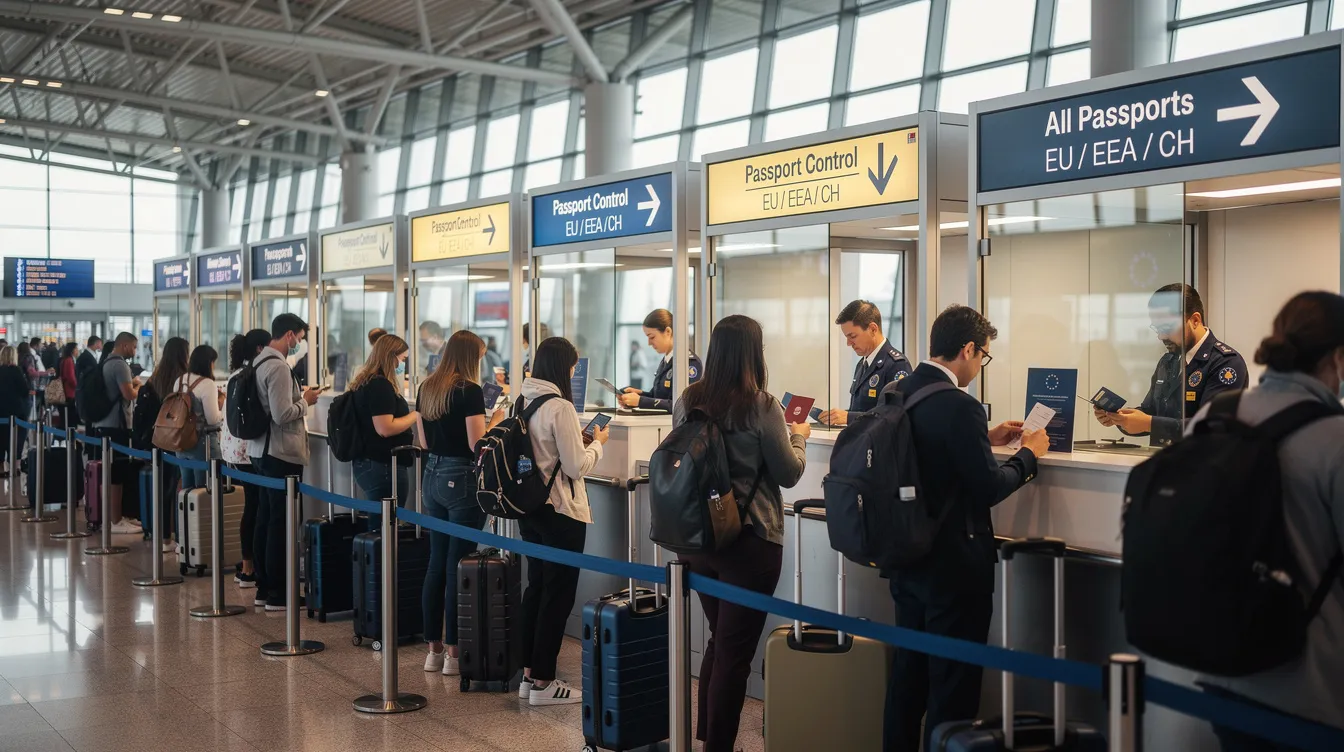
Visa for Europe: Schengen, ETIAS and Entry Rules Explained
Europe is not one single visa zone. Whether you need a visa, an electronic authorisation, or nothing at all depends on your nationality, the countries you plan to visit, how long you intend to stay, and the purpose of your trip. This guide breaks down the rules for the Schengen Area, upcoming systems like ETIAS and EES, and the exceptions that apply to countries like Ireland and Cyprus.
Key Takeaways
Short stays in the Schengen Area are limited to 90 days in any 180 day period. Nationals of certain countries need a Schengen visa; visa-exempt travelers will need an ETIAS authorisation from late 2026.
A Schengen visa generally lets you visit all Schengen countries on a single document, but it does not cover Ireland, the UK, or most European microstates. Stays over 90 days require national long-stay visas or residence permits.
Airport transit visas apply only to nationals of specific countries and only for airside transit through the international transit area. Family members of EU or EEA citizens can benefit from facilitated or exempt visa procedures in many cases.
Rules and dates change. The Entry/Exit System (EES) launches from 12 October 2025, with full operation by 10 April 2026. ETIAS is scheduled for the last quarter of 2026. Always check official sources (embassy, consulate, official ETIAS and EU sites) shortly before departure.
This article provides concrete examples, timelines, and practical tips for planning trips to Europe, whether you are a tourist, business traveler, or student.
Overview: Do You Need a Visa for Europe?
"Europe" covers dozens of countries with at least three distinct sets of entry rules. To find out whether you need a visa, answer three questions: which countries are you visiting, what is your nationality, and how long do you plan to stay?
Entry permission to Europe depends on nationality, length of stay, and purpose of travel. Here is how the main groupings break down:
Schengen Area: 29 European countries with open internal borders and a shared short-stay visa policy. Most of Western and Central Europe.
European Union (non-Schengen): Ireland and Cyprus are EU member states but do not participate in Schengen border controls. Each has its own visa policy.
EEA and Switzerland: Citizens of EU, EEA, and Switzerland do not need a visa to travel across the EU. Non-EU nationals follow Schengen or national rules.
United Kingdom: Since Brexit, the UK is outside both the EU and Schengen. UK entry rules are entirely separate.
Western Balkans and other European states: Countries like Serbia, Albania, and North Macedonia have their own national visa requirements.
Short stays under 90 days in the Schengen Area may require a Schengen short-stay visa or, for visa-exempt nationals, an ETIAS authorisation once it launches. Travel to Europe involves different visa and entry rules for the Schengen Area, Ireland, and the UK.
Consider two examples. A Canadian tourist staying 21 days across France and Italy in May 2027 does not need a Schengen visa (Canada is visa-exempt), but will need to obtain an ETIAS authorisation before boarding. An Indian national visiting for a 10-day business trip must apply for a Schengen visa in advance, since India is on the visa-required list.
Beyond Schengen, each European state has its own national entry requirements. Always double-check with the destination country's official sites for further information before booking flights.
What Is the Schengen Area?
The Schengen Agreement was signed in 1985 between five European countries. It has since expanded into a borderless travel zone that currently covers 29 European countries, including 25 EU member states plus Iceland, Norway, Switzerland, and Liechtenstein. Earlier references to 26 Schengen countries reflect the count before Bulgaria, Romania, and other recent additions completed their accession.
Free movement inside the Schengen Area means no systematic border controls once you are admitted at the external border. This is distinct from the broader EU principle of free movement, which grants EU citizens and EEA citizens the right to live and work anywhere in the union. Non-EU nationals lawfully present in the area can travel between Schengen member states without showing passports at each crossing.
Notable non-Schengen European countries include Ireland, Cyprus, the Western Balkan candidate states, and microstates like Andorra, San Marino, and Monaco, which have varying arrangements with their Schengen neighbours. Some overseas territories of Schengen states (French Guiana, Greenland, Faroe Islands) also have separate rules.
Time spent in any Schengen country counts together toward the 90 days in a 180 day period limit. Ten days in Spain, fifteen in Germany, and five in Portugal all draw from the same 90-day allowance. Temporary border controls can be introduced in exceptional circumstances, such as major security events, but these are temporary and do not change visa requirements.
What Is a Schengen Visa?
A Schengen visa is a short stay visa for third country nationals whose nationality requires pre-approval before entering the Schengen Area. It allows stays of up to 90 days in any 180 day period. A Schengen short-stay visa is specifically for nationals from countries without visa-free agreements with the Schengen states.
The visa comes in several forms:
Single entry: one entry, one stay.
Double entry: two entries permitted during the visa's validity.
Multiple entry visa: unlimited entries during validity, which can range from a few months to 5 years. First-time applicants usually receive shorter validity.
This visa covers tourism, family visits, short business trips, conferences, short course attendance, and some short-term training. It does not cover long-term employment or residence.
Holding a Schengen visa does not guarantee entry. Border guards still verify entry requirements: purpose of stay, means of subsistence, proof of accommodation, and evidence of plans to leave. In some cases, visas carry limited territorial validity (LTV), meaning they are valid only in specific Schengen member states if other states objected during the consultation process.
Who Needs a Schengen Visa and Who Is Visa-Exempt?
The EU divides non-EU countries into two lists under Regulation (EU) 2018/1806. "Annex I" nationals need a visa. "Annex II" nationals are visa-exempt for short stays but will need ETIAS once it launches.
Annex I (visa required) includes nationals of approximately 100 countries. Examples: India, Pakistan, China, South Africa, Nigeria, Morocco. Applicants from these countries must apply for and obtain a Schengen visa before travel.
Annex II (visa-exempt) covers about 61 countries and territories. Examples: United States, Canada, Japan, Brazil, Australia, South Korea. These nationals can currently enter without a visa for stays up to 90 days, though ETIAS will add a pre-screening step from late 2026.
Several special categories may enjoy exemptions or facilitated procedures:
Family members of EU or EEA citizens travelling with or joining their relative
Refugees and stateless persons holding certain residence permits from a member state
School pupils on organised trips from non-EU countries, travelling with their school
Nationals covered by visa facilitation agreements that reduce fees or simplify documents
Check the up-to-date EU list of visa-required and visa-exempt countries on official europa.eu pages. Nationality rules change, and the European Commission can suspend visa exemptions based on reciprocity.
Understanding the 90 Days in Any 180 Day Period Rule
Both visa-required and visa-exempt visitors to the Schengen Area must respect the same limit: you can stay up to 90 days within a 180-day period. This applies whether you hold a Schengen visa, will use ETIAS, or are a visa-exempt traveller before ETIAS kicks in.
The 180-day window is rolling, not fixed to calendar dates. On any given date, authorities look back 180 days and count how many of those days you spent inside the Schengen Area. Both the day of entry and the day of exit count as full days.
Numerical example: You arrive on 1 March and leave on 30 April (61 days used). You return on 1 June and leave on 20 June (20 more days). Total: 81 days within the relevant 180 day period. You have 9 days left before hitting the limit.
The EU's official short-stay calculator helps travellers track their allowed time. This tool is free to use and available on the European Commission's website.
Overstaying carries real consequences: potential entry bans, difficulty obtaining future visas, and fines depending on the country where the overstay is detected. With the upcoming Entry/Exit System, authorities will have automated records of every entry and exit, making overstays visible in real time.
Airport Transit and Airport Transit Visas (ATVs)
Airport transit means staying airside in the international transit area of a Schengen airport while waiting for a connecting flight, without passing through border control or entering the country.
Most travellers do not need a separate authorisation for this. However, nationals of specific countries (including Afghanistan, Bangladesh, Ethiopia, and others on a list maintained by each Schengen state) must obtain an airport transit visa. A Type A airport transit visa allows passing through Schengen airport international zones without entering the country. An airport transit visa allows transit through a Schengen country's airport, but it does not permit leaving the airside area.
An ATV is not a short-stay Schengen visa. If your routing requires you to collect checked baggage, change terminals outside the transit zone, or clear immigration for any reason, you need a regular Schengen visa instead.
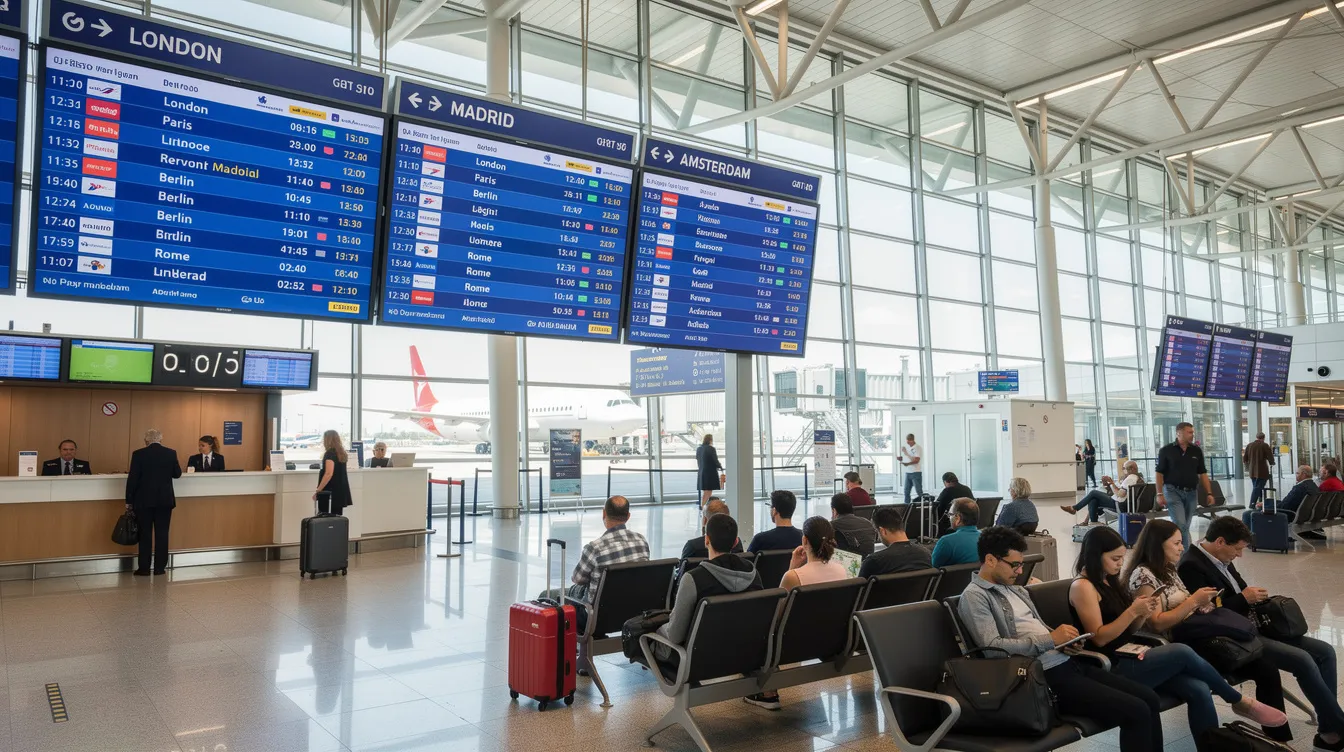
Before booking, confirm with your airline and the relevant consulate whether you need an ATV for your specific routing. Policies differ by country and even by airport. Codeshare flights and self-transfer itineraries can complicate whether your transit counts as an entry.
Where and How to Apply for a Schengen Visa
You must apply at the consulate of your destination country, or, if visiting more than one country, at the consulate of the country where you will spend the most time. If time is equal across destinations, apply at the consulate of the country of first entry into the Schengen Area.
Many Schengen member states outsource visa application collection to external service providers such as VFS Global or TLScontact. These centres handle appointment booking, document collection, and biometric capture on behalf of consulates.
The typical process:
Book an appointment at the consulate or visa application centre.
Fill out the unified Schengen visa application form.
Pay the visa application fee.
Submit biometric data (fingerprints and photograph).
Attend an interview if the consulate requests one.
Wait for a decision.
Applications can usually be made from 6 months prior to the planned travel date. Submit your application at least 15 days before travel. Seafarers can apply up to 9 months prior. During busy seasons (summer, holidays), book appointments weeks in advance.
Applicants must apply in the country where they legally reside. Consulates can request proof of legal residence before accepting your file.
Documents, Costs and Processing Times
Requirements are broadly harmonised across Schengen countries, but each consulate can request extra supporting documents based on the trip purpose and the applicant's situation.
Common necessary documents include:
Document | Details |
|---|---|
Valid passport | A valid passport must have been issued within the last 10 years and valid for at least 3 months after the planned departure date from the Schengen Area; at least 2 blank pages required |
Application form | Completed and signed unified Schengen visa application |
Photos | Two recent passport-size photographs meeting ICAO standards |
Travel itinerary | Flight reservations, planned route |
Accommodation proof | Hotel bookings, host invitation letter |
Travel medical insurance | Must cover a minimum of EUR 30,000 for emergency medical treatment and repatriation |
Financial means | Bank statements, pay slips, or sponsor letter showing sufficient funds |
Ties to home country | Employment letter, property ownership, family obligations |
The standard visa fee for a Schengen visa is EUR 90 for adults. Children aged 6-11 typically pay a reduced fee. External visa centres may charge an additional service fee on top of the visa application fee.
Fee waivers or reductions apply to certain groups: students on school trips, researchers participating in recognised programmes, certain cultural exchanges, and family members covered by EU free movement rules.
Processing time for a Schengen visa is typically 15 calendar days from the date of application. In cases requiring additional checks or documents, processing can extend up to 45 days. Apply as early as your travel dates allow.
Refusals, Appeals and Reapplications
Not all visa applications are approved. When a consulate refuses a Schengen visa, it must provide the reasons in writing, using a standardised refusal form.
Common grounds for refusal include:
Doubts about the stated purpose of stay
Insufficient financial proof for the duration of the trip
Missing or inadequate travel documents
Weak evidence of intention to return to the home country
Alerts in security or migration databases
Inconsistencies in submitted documents are common reasons for visa application delays or rejections
Each Schengen country has its own national procedure for appealing a refusal, usually with a deadline stated in the refusal letter. Some countries allow administrative appeals; others require applicants to go through courts.
Rather than appealing, many applicants choose to reapply with a stronger file, directly addressing the specific reasons cited. Keep copies of all documents and the decision notice. These records help in any future application or if you seek legal advice.
Entry Requirements at the Border: More Than Just a Visa
Even with a valid Schengen visa, border guards at the external border check whether you still meet entry requirements under the Schengen Borders Code.
Standard entry conditions verified at the border:
Valid travel documents (passport, visa or ETIAS where required)
Justification of purpose and conditions of stay
Proof of sufficient means of subsistence
No alerts in the Schengen Information System (SIS) or other security databases
No threat to public policy, internal security, or public health
The Entry/Exit System (EES) will register data of travellers crossing external Schengen borders, gradually replacing manual passport stamping with electronic data recording. EES collects biometric data like fingerprints and facial images from non-EU nationals.
EU citizens, EEA citizens, Swiss nationals, and holders of residence permits or long-stay visas follow different procedures but still undergo identity and security checks.
Travellers can be refused entry even with a visa if circumstances have changed: a revoked invitation, a new entry ban, or insufficient funds at the time of arrival. Carry supporting documents during travel, not just in your visa application file.
What Is ETIAS and the New Authorisation System for Visa-Exempt Travellers?
The European Travel Information and Authorisation System (ETIAS) is an electronic travel authorisation for visa-exempt non-EU nationals travelling to the Schengen Area and Cyprus for short stays. ETIAS is required for visa-free travellers to the Schengen Area once it launches.
ETIAS will start operations in late 2026, during the last quarter of the year. From that date, travellers from visa-exempt countries may need ETIAS for short visits. It will be mandatory before boarding flights, ships, or coaches to participating countries.
ETIAS is not a visa. It is an online security pre-screening. An ETIAS authorisation is valid for 3 years or until passport expiry, whichever comes first. ETIAS will allow stays of up to 90 days per 180 day period, the same limit as a Schengen visa.
The application process:
Fill out an online form with personal and passport details.
Answer background and security questions.
Pay the fee: EUR 20 for adults aged 18 to 70; under 18 and over 70 are exempt.
Receive a decision, usually within minutes or a few days.
Travellers must apply for ETIAS online before their trip. The official ETIAS application portal will be hosted on an EU domain (europa.eu). Non-official websites already exist and may charge inflated fees. The European Union Agency for the operational management of large-scale IT systems (eu-LISA) manages the technical infrastructure behind ETIAS.

EU Entry/Exit System (EES): How It Affects Your Trip
The Entry/Exit System (EES) is an EU-wide database registering entries and exits of non-EU nationals admitted for short stays across 29 European countries.
EES launches from 12 October 2025, with a gradual phase-in across Schengen external borders. Full operation is expected by 10 April 2026. EES applies to non-EU nationals entering the Schengen Area.
Data collected by EES:
Biometric information: four fingerprints and a facial image
Passport and travel document details
Time and place of entry and exit
Information on any refusals of entry
EES replaces passport stamping with electronic data recording at participating borders. Manual stamps may continue at some non-Schengen points like Ireland and Cyprus, where national practice applies.
Practical impact for travellers: expect longer queues on first entry while biometric data is captured. Subsequent crossings should be faster as the system recognises returning travellers. Authorities will calculate remaining 90/180-day allowances automatically, reducing the chance of accidental overstays but also making deliberate ones far more detectable.
Family Members of EU/EEA Citizens and Free Movement
Under EU free movement rules, certain family members of EU, EEA, and Swiss citizens enjoy special residence and travel rights. These include spouses, registered partners, dependent children, and dependent parents.
Family members who hold a valid "residence card of a family member of a Union citizen" may be exempt from Schengen visa requirements when accompanying or joining their EU or EEA relative. Citizens of EU and EEA do not need a visa or authorisation for short visits, and their qualifying family members benefit from facilitated entry.
This exemption depends on meeting specific conditions: a genuine relationship, travelling together or for the purpose of joining the EU citizen, and proper documentation. Border officials can verify documents and intention.
Non-EU family members should carry:
Proof of the family link (marriage certificate, birth certificate)
The EU citizen's passport or national ID
The residence card, if issued
UK nationals and their family members covered by the Withdrawal Agreement may benefit from distinct, time-limited arrangements. Check the precise documentation required in each member state before travel.
Stays Longer Than 90 Days: Study, Work and Residence
Stays exceeding 90 days in any 180 day period in a Schengen or associated country are not covered by a Schengen visa or ETIAS. A Type D long-stay visa is required for stays longer than 90 days for specific purposes.
Common long-stay purposes:
University study
Employment (requiring a work permit in most cases)
Family reunification
Research
Au pair or volunteering programmes
Long-term retirement
Long-stay visas can be for studying, working, or family reunification, among other reasons. A national long-stay visa is issued for stays longer than 90 days in a specific country. These are issued under national laws, not fully harmonised at EU level. You deal directly with the embassy or local immigration office of the destination country.
Some procedures have partial EU-wide rules. For example, the EU Blue Card for highly skilled workers and the student directive set baseline standards. But processing times, documents, and rights (such as whether a student visa includes work authorisation) vary by country. In Germany, student visas allow up to 140 days of work per year. In France, the VLS-TS long-stay visa serves as both visa and initial residence permit for up to one year.
Start the process months prior to your intended move. Processing can take several months, and embassy appointment availability fluctuates by season and location.
Special Cases: Ireland, Cyprus and Other Non-Schengen Territories
Not all European countries follow Schengen rules. Travellers must treat non-Schengen states separately.
Ireland has its own visa policy. A Schengen visa is not valid to enter Ireland, and an Irish visa does not grant access to the Schengen Area. A visitor planning a combined trip to, say, France and Ireland needs both a Schengen visa and an Irish visa if their nationality requires visas for both. Ireland and Cyprus are not part of the Schengen Area.
Cyprus is an EU member state and aligns with many EU visa-waiver lists, but is not yet in Schengen. Time spent in Cyprus does not count toward Schengen's 90-day limit, and vice versa.
Other territories with separate rules:
Territory | Notes |
|---|---|
French overseas departments (Réunion, Martinique, etc.) | May require separate visa even for Schengen visa holders |
Greenland, Faroe Islands | Part of the Danish realm but outside Schengen; own entry rules |
Andorra, San Marino, Monaco, Vatican City | Open borders with neighbours but no formal Schengen membership; entry typically requires transiting a Schengen state |
Check each territory's administration for specific rules before travel.
Means of Subsistence, Travel Insurance and Other Practical Conditions
Beyond visas and authorisations, travellers must meet practical entry conditions proving they can support themselves during their stay.
Each Schengen state sets reference amounts for daily minimum funds. Border officers may ask for evidence of cash, bank statements, credit cards, or a sponsorship letter. The amounts vary; for example, some states expect EUR 50-100 per day, while others set flat minimums per stay.
Travel medical insurance covering at least EUR 30,000 for emergency medical treatment and repatriation is mandatory for Schengen visa applicants and strongly recommended for all travellers. Even when not checked at the border, a single hospital stay in Western Europe can cost thousands of euros.
Return or onward travel proof (round-trip tickets, confirmed bookings, or evidence of overland onward travel) demonstrates you intend to leave within the allowed period.
Keep copies of key documents accessible during the journey:
Insurance policy with coverage details
Hotel bookings or host invitation letters
Bank statements or proof of funds
Return or onward travel tickets
Planning Your Itinerary Around European Entry Rules
Multi-country European trips often combine Schengen and non-Schengen destinations. Plan routes and dates carefully to respect the 90/180-day rule and each country's national entry requirements.
Example itineraries:
A 60-day loop through Schengen countries, followed by 30 days in the UK and Ireland. Your Schengen clock stops while you are outside the area, but your 180-day window keeps rolling.
Combining 45 days in Schengen, 30 days in Cyprus, and 15 days in the Balkans. Only the 45 Schengen days count against your 90-day limit.
Track your days in the Schengen Area on a calendar or app, especially if you make multiple entries and exits across a 180 day period. The EU's short-stay calculator is a reliable tool for this.
If you plan to spend extended time in Europe, consider long-stay options or splitting time between Schengen and non-Schengen countries rather than risking an overstay. Check whether your visa allows multiple entries before planning to leave and re-enter the Schengen Area during one extended trip. A multiple entry visa is usually necessary for itineraries that include side trips to non-Schengen countries with returns to Schengen.

Further Information and Official Resources
Visa and entry policies change regularly. This article reflects rules and timelines known as of mid-2026, including plans for EES and ETIAS introduction.
Key official sources:
Council of the EU visa policy page for Schengen visa lists and rules
The official ETIAS website (hosted on europa.eu) for authorisation details and, once launched, the application portal
European Commission Home Affairs pages on the Entry/Exit System and smart borders
National embassies, consulates, and interior ministry or migration websites for country-specific rules
Re-check entry requirements a few weeks before departure. Last-minute regulatory or security changes can affect who may need a visa or extra documentation. Airline travel advisories and official short-stay calculators provide additional verification of up-to-date conditions.
FAQ: Visas and Travel Authorisations for Europe
Do I need both a Schengen visa and ETIAS to visit Europe?
No. Travellers either need a Schengen visa (if from a visa-required country) or ETIAS (if from a visa-exempt country), but not both. ETIAS applies only to nationals of countries that do not need a Schengen visa for short stays. If your nationality requires a Schengen visa, ETIAS is irrelevant to you.
If I have a Schengen multiple-entry visa, can I use it to enter Ireland or the UK?
A Schengen visa is not valid for entry into Ireland or the UK. These countries have separate visa policies. If your nationality requires visas for both the Schengen Area and Ireland (or the UK), you must obtain each visa independently. Check the Irish Naturalisation and Immigration Service or UK Visas and Immigration for their specific requirements.
How will the Entry/Exit System affect frequent business travellers?
EES will automatically calculate remaining days under the 90/180-day rule for each traveller. Frequent business travellers who previously relied on manual stamp-counting or brief exits to "reset" their allowance will find the system more precise. Plan trips carefully, because the system flags remaining days at each border crossing and will alert officers when a traveller is close to the limit.
Can I extend my 90-day stay inside the Schengen Area?
Extensions of short stays are granted only in exceptional cases, such as force majeure, serious medical emergencies, or pressing personal reasons. Standard tourist or business stays cannot be extended by simply requesting more time. If you want to stay longer than 90 days, you must leave the Schengen Area and apply for a national long-stay visa from outside.
Is travel insurance really checked when entering Europe?
Schengen visa applicants must prove compliant insurance (minimum EUR 30,000 coverage) as part of the visa application. At the border, officers can request proof from any traveller, though checks are not universal. Regardless of whether you are asked, carrying valid insurance is strongly advisable. A hospital admission in countries like France, Germany, or Switzerland can result in bills exceeding EUR 10,000 for even routine procedures.