Indian Tourist Visas: Complete Guide for Visiting India
Key Takeaways
Most foreign nationals need a visa before they can visit India, with tourist visas typically allowing short stays for leisure, family visits, and casual cultural activities.
India's e-Visa system covers tourists from many countries, including most of Europe, the US, UK, and Australia, but not all nationalities are eligible. Readers must check current eligibility on the official Indian Visa Online website.
Tourist e-Visas usually allow stays of 30 to 90 days per visit, are non-extendable in most cases, and do not permit employment or long-term study.
Travelers arriving from destinations like the Caicos Islands must meet the same Indian tourist visa rules as other foreign nationals, plus transit requirements of any connecting countries.
Rules, fees, and processing times change frequently. Always confirm details with the official Indian government portal or nearest Indian embassy or consulate before booking non-refundable flights or hotels.
Introduction: Do You Need an Indian Tourist Visa?
Almost every international traveler needs a visa before they can enter India for tourism purposes. That includes citizens of the US, UK, EU member states, and overseas territories like the Turks and Caicos Islands. India requires a visa for most foreign travelers, regardless of the duration or reason for your visit.
In the Indian context, a tourist visa covers sightseeing, recreation, visiting friends and family, attending cultural events, and short yoga or wellness retreats. It does not cover paid employment, journalism, or long-term study.
There are two main pathways: the standard Tourist Visa obtained at an Indian mission abroad, and the electronic Tourist e-Visa obtained fully online. India offers e-Tourist Visas and Regular Paper Tourist Visas, and this article covers both as of 2026. That said, entry rules and eligible countries can change with little notice, so always double-check the latest official guidance before you travel.
Types of Indian Tourist Visas
India organizes its visa system by purpose, and tourism is one of the largest categories. Here are the main Indian tourist visa types you should know about:
Tourist e-Visa (e-Tourist Visa): Issued in 30-day, 1-year, or 5-year variants. The e-Tourist Visa is primarily for recreation and sightseeing, though the e-Tourist Visa can also be used for visiting friends and family. Validity period and allowed duration per visit differ by variant, and tourist visas may have single or multiple entries depending on the visa type.
Regular Sticker Tourist Visa: Applied for at an Indian embassy or consulate. Common validity options include 6 months, 1 year, 5 years, and even 10 years for nationals of certain countries like the USA or Japan. This is the route for travelers who are not eligible for the e-Visa or who need longer stays per visit.
Special tourist-like categories: Entry visas for persons of Indian origin, OCI (Overseas Citizen of India) cards, and similar categories are sometimes confused with tourist visas. These follow different rules, documentation, and eligibility criteria entirely.
Visa-free entry: Extremely limited. Only certain diplomatic or official passport holders, or those covered by specific bilateral exemptions, may enter without a visa. Most travelers should not assume they are visa-exempt.
Who Needs a Tourist Visa for Visiting India?
Almost all foreign nationals require a visa, and Indian Immigration does not routinely issue "visa on arrival" for tourists.
The following broad nationality groups are commonly eligible for the Indian Tourist e-Visa:
Citizens of most EU countries (France, Germany, Slovenia, Solomon Islands, Hungary, Iceland, Latvia, Lithuania, Luxembourg, Macedonia, Mali, Malta, Nauru, Netherlands, and many more)
United States, Canada, Australia, New Zealand, Uruguay, USA
Many Asian states: Indonesia, Ireland, Korea, Laos, Kenya, Kiribati, Kyrgyzstan
Latin American and Caribbean nations: Cuba, Dominica, Grenada, Guyana, Haiti, Honduras, Mauritius, Mexico, Micronesia, Moldova, Monaco, Mongolia
African and Pacific nations: Oman, Palau, Palestine, Thailand, Togo, Tonga, Trinidad and Tobago, Turks and Caicos Island territories, Vanuatu, Vatican City, Venezuela, Vietnam, Zambia, Zimbabwe, Grenadines, Samoa
The e-Visa facility extends to citizens of approximately 166 to 172 countries, depending on category
Travelers from some countries must apply only through an Indian embassy or consulate and may face additional document checks, background verification, or limited validity visas. Nationals of Israel, Italy, Jamaica, and many others remain eligible for the e-Visa, but eligibility can shift based on government policy.
Travelers from overseas territories such as the Turks and Caicos Islands use the nationality of their passport (e.g., British passport holders) to determine whether they qualify for the e-Visa or need a regular visa. If you hold multiple nationalities, choose the passport that offers the most convenient Indian visa option and use the same passport throughout your journey.
Indian Tourist e-Visa (e-Tourist Visa) Overview
The e-Visa is India's primary electronic visa system. It allows travelers to apply, pay, and receive approval online without visiting an embassy. You submit your application, and an Electronic Travel Authorization (ETA) is emailed to applicants after processing, typically within 72 hours.
Here are the main e-Tourist Visa validity options:
30-Day e-Tourist Visa: The 30-Day e-Tourist Visa is valid for 30 days from arrival. It generally allows double entry within that window and is ideal for a single short trip.
1-Year e-Tourist Visa: The 1-Year e-Tourist Visa permits multiple entries for up to 180 days per calendar year. You can enter and exit India multiple times over 365 days from the date the ETA is granted.
5-Year e-Tourist Visa: The 5-Year e-Tourist Visa permits multiple entries for up to 180 days per calendar year. The visa remains valid for five years from issuance, making it useful for repeat visitors.
Stay limits per visit depend on your nationality. For most nationals, continuous stay per visit is capped at 90 days. However, citizens of the US, UK, Canada, and Japan may be allowed up to 180 days continuous stay per visit under the 1-year and 5-year variants, subject to current rules.
The e-Visa is linked electronically to your passport number. You must obtain it before boarding a flight to India. Despite the fact that immigration officers verify it electronically at the airport, it is not the same as "visa on arrival."
Official Indian e-Visa Application Process
Passport holders are advised to use the official Government of India e-Visa portal. The legitimate site uses a ".gov.in" domain. Look-alike commercial sites exist and often charge inflated fees.
Beware of third-party websites that mimic the official portal. Always verify the URL ends in .gov.in before entering personal data or making any payment.
Here is the step-by-step process:
Create an application: Go to the official Indian Visa Online portal and start a new application. Choose "e-Tourist Visa" and select your purpose (tourism, visiting relatives, etc.).
Complete personal and travel details: Fill in your biographical information, travel itinerary, and contact details. You will need to specify your expected date of arrival, port of entry, and accommodation information.
Upload required files: Applicants must upload a scanned PDF of their passport's bio page for the e-Visa. A digital photo with a white background is required for the e-Visa application. Follow the exact file size and format instructions on the portal.
Pay the fee: Visa fees vary based on nationality and visa type. Standard fees for a 30-day e-Tourist Visa have been around $25 for many nationalities, though promotional reductions sometimes apply. Payment is made online by card or other accepted methods. The fee is non-refundable.
Wait for approval: Most applications are processed within 72 hours, though peak seasons can cause delays. Visa applications can be submitted at least 4 days before arrival, and for longer validity options, you can apply up to 120 days in advance.
Print your ETA: Once approved, print at least one copy of the ETA approval email and carry it with the same passport used during the application when flying to India.
Applying for an Indian Tourist Visa via Embassy or Consulate
Some travelers are not eligible for the e-Visa or may prefer a regular visa sticker for longer validity, multiple long stays, or complex travel plans. Visa applications can be submitted online or at embassies, depending on your situation.
The typical process for a regular (sticker) Tourist Visa:
Fill out the online visa application form on the Government of India portal, print it, and sign it.
Submit the signed form along with your passport, photos, and supporting documents to the designated Indian mission or visa center.
Common supporting documents include confirmed or provisional flight bookings, proof of accommodation, a copy of your return ticket, recent bank statements showing sufficient funds, and a travel insurance recommendation where applicable.
Some countries use outsourced visa centers that may collect additional service fees, require appointments, biometric data, and specific photo formats.
Processing times can range from a few working days to several weeks depending on nationality, season, and security checks. Apply well in advance of your trip.
Regular tourist visas can have long validity: up to 5 years for most nationals and up to 10 years for US and Japanese citizens.
Documents Required for Indian Tourist Visas
Whether you are applying for an e-Visa or a regular visa, certain core documents are required. Here is a consolidated list:
Passport: A passport must be valid for at least six months from the planned date of arrival. It should have at least two blank pages for stamps.
Photo: A recent color passport-size photo. For e-Visa applications, a digital photo with a white background is required. For embassy applications, printed photos meeting the mission's specifications.
Application form: Completed and signed (printed for embassy applications).
Return or onward travel proof: A copy of a confirmed or tentative return ticket or onward flight booking.
Accommodation proof: Hotel bookings, tour confirmations, or an invitation letter from your host in India.
Financial proof: Bank statements or evidence of sufficient funds for the duration of your stay.
Additional documents (some nationalities): Employment letters, previous visa history, or detailed itineraries including the cities and dates you intend to visit.
Double-check photo and scan specifications on the official site before uploading. Incorrect file size, wrong background color, or a blurred image is a common reason for e-Visa delays or rejections.
Ports of Entry and Travel Rules for Indian e-Visas
E-Visa holders must arrive through designated international ports. As of August 2026, the Government of India has authorized 88 international ports for e-Visa entry: 37 airports, 38 seaports, and 13 land ports.
Major designated airports include:
Delhi, Mumbai, Bengaluru, Chennai, Kolkata, Cochin
Goa (Dabolim and Mopa), Hyderabad, Jaipur, Varanasi, Amritsar, Lucknow
Port Blair, Guwahati, Chandigarh, and many others

Once admitted, e-Visa holders can travel to most Indian cities and regions freely. However, some areas near international borders and certain protected or restricted zones (parts of the Northeast, Ladakh, certain Himalayan regions) require separate permits in addition to your visa.
Exit from India is usually permitted from any authorized immigration checkpoint, including many land borders. Travelers arriving from places like the Caicos Islands will likely transit through hubs such as London, New York, or Miami and must also meet transit visa rules of those countries.
Duration of Stay, Validity, and Extensions
Understanding the difference between visa validity and permitted duration of stay is critical:
Visa validity is the time window during which you can enter India.
Duration of stay is how long you can remain in the country per visit.
Typical stay rules for tourist e-Visas:
Many nationalities are limited to 90 days continuous stay per visit.
The 30-day e-Tourist Visa allows a maximum 30-day stay from date of first arrival.
Nationals of the US, UK, Canada, and Japan may be permitted up to 180 days continuous stay per visit under 1-year and 5-year variants-always subject to current policy.
Total stay in India per calendar year under longer-term e-Tourist Visas must not exceed 180 days.
Overstaying an Indian tourist visa is taken seriously. Consequences can include fines, difficulties with departure, detention, and future visa refusals.
Tourist visa extensions inside India are generally not allowed except in rare humanitarian or medical emergencies. Such cases require strong documentation and approval from the Foreigner Regional Registration Office (FRRO). If you plan extended time in the region, structure your itinerary to exit India before your allowed stay expires.
Special Considerations for Religious and "City Holy" Tourism
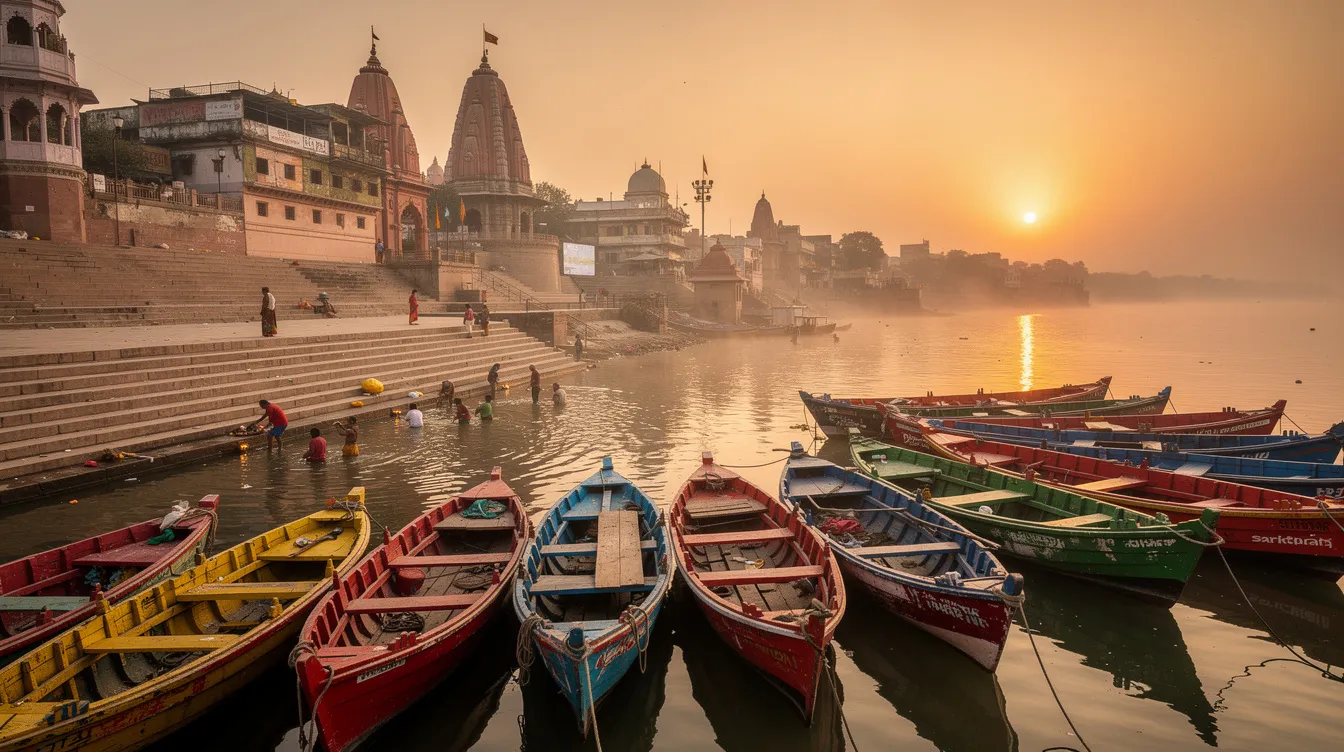
India is home to some of the world's most revered sacred destinations. Varanasi on the Ganges, Amritsar's Golden Temple, Bodh Gaya, and important Hindu, Muslim, Sikh, Christian, and Buddhist pilgrimage sites draw millions of visitors each year. A standard tourist visa is usually sufficient for religious tourism and pilgrimages.
However, there are nuances:
Tourist visas do not permit paid religious work, proselytizing, or long-term volunteering. Those activities require a different visa category.
Some city holy destinations and border-adjacent shrines-for example, certain Himalayan temples near international boundaries-may require special local permits (Protected Area Permits or Restricted Area Permits) in addition to your visa.
India has introduced the e-Ayush Visa for travelers seeking traditional medicine and wellness treatment, which is separate from the tourist visa. If your primary purpose is Ayurvedic or traditional medicine treatment, check whether you need this specialized visa.
Photography, drone use, and certain items may be restricted at religious sites. Visa holders must follow Indian law and local customs while visiting sacred locations.
Health, Insurance, and Arrival Formalities
While India may not mandate travel insurance for tourist visas, comprehensive cover including medical evacuation is strongly recommended. Healthcare costs for foreign nationals can be high, and evacuation from remote areas is expensive.
At arrival, immigration officers may ask for:
Proof of onward or return travel
Proof of funds
Accommodation details (even if already provided in your visa application)
Valid Yellow Fever Vaccination Certificate if you are arriving from or transiting through countries with yellow fever risk-this requirement is based on your travel history, not just your nationality
The typical arrival process for e-Visa holders involves presenting your passport and printed ETA approval, biometric collection at immigration, and possible questions about your travel plans and duration of stay.
Keep hotel addresses, local contact numbers, and your itinerary handy to speed through arrival forms and any immigration queries.
Common Mistakes and How to Avoid Visa Rejection
Preventable errors are the leading cause of Indian tourist visa delays and rejections. Here are the most frequent mistakes:
Mismatched passport details: Typos in names, birthdates, or passport numbers on the application.
Poor quality uploads: Blurred photos, wrong background color, or passport scans that do not meet the portal's specifications.
Wrong visa type selected: Choosing a business or medical e-Visa when you need a tourist visa, or selecting the wrong kind of duration.
Incorrect arrival information: Entering the wrong arrival port or date.
Incomplete travel history: Giving incomplete or inconsistent answers about previous Indian visas, travel history, or criminal records.
Using unverified third-party agencies: Some sites promise "guaranteed" Indian visas, charge inflated fees, or request unnecessary personal data. Always use the official portal.
If your application is rejected, carefully review any explanation provided before applying again. You can also contact the nearest Indian mission for guidance on what to change.
Encourage yourself to re-check every field before you submit. A few minutes of review can save weeks of delay.
Practical Tips for a Smooth Trip to India
Apply for your Indian tourist visa or e-Visa well before purchasing non-refundable flights, especially around busy periods like December to early March when India's weather is ideal for tourism.
Carry both digital and printed copies of your visa approval, passport ID page, travel insurance, and key hotel confirmations. Connectivity issues at arrival are common.
Register with your country's consular services where possible. Keep contact details for your embassy or consulate in major Indian cities such as New Delhi or Mumbai.
Respect local customs in religious and city holy destinations. Be aware of local laws on alcohol, photography near protected monuments, and basic food and water safety precautions.
Keep your information current: if you find a change in rules, check the official Incredible India travel planning page for general information and updated instructions.
Indian Tourist Visas for Multi-Country Trips (Including Caicos Island Routes)
Many travelers combine India with other destinations in Asia, the Middle East, Europe, or the Caribbean. If your trip involves multiple countries, you need to align all visa and transit requirements carefully.
Tourists coming from or going to territories like the Caicos Islands will probably connect through hubs such as London, New York, or Miami. You must check transit visa rules for those countries in addition to Indian requirements. For example, Tobago, Turks, and Caicos Island travelers with British passports may not need a UK transit visa, but those with other nationalities might.
When planning a multi-country itinerary:
Ensure your Indian tourist visa validity covers all planned entries into India, especially if using a multi-entry e-Visa.
Allow extra time between connecting flights for immigration and security procedures, particularly when traveling on separate tickets.
Keep copies of your entire itinerary, including onward voyages from India, to reassure immigration officers that you will depart within the authorized stay.
Remember that the issuance of your e-Visa is subject to approval by the Government of India, and processing time can vary.
Frequently Asked Questions (FAQ)
Can I work or volunteer in India on a tourist visa or e-Visa?
No. Indian tourist visas, including e-Visas, do not permit paid employment, long-term volunteering, or internships. For such activities, you must obtain the appropriate employment, internship, or project visa from an Indian embassy or consulate. Short-term casual visits to cultural events or informal wellness and recreation activities are generally fine under a tourist visa, but any kind of paid work is strictly prohibited.
Do I need a separate permit to visit border regions or sensitive areas in India?
Yes. Some regions, such as parts of the Northeast, Jammu & Kashmir, Ladakh, and certain Himalayan or tribal areas, require Protected Area Permits (PAP) or Restricted Area Permits (RAP) in addition to your tourist visa. These are usually arranged through tour operators or local authorities. Your e-Visa alone does not grant access to these zones, and entering without the correct permit can result in penalties.
What happens if my passport expires while my long-validity Indian visa is still valid?
If a multi-year Indian visa is in an expired passport, you usually must carry both the old passport containing the visa sticker and the new valid passport when you enter India. Make sure your nationality and personal details have not changed between passports. Immigration officers will verify both documents at the border.
Can I change my visa type (for example, from tourist to student) after arriving in India?
Changing visa categories inside India is generally not allowed. E-Tourist Visas are non-convertible. Travelers who wish to study, work, or conduct research long term typically need to leave India and apply for the correct visa type from an Indian mission abroad. The ministry responsible for immigration does not process category changes for tourists already in the country.
How early should I apply for an Indian tourist e-Visa before my trip?
Check the current application window on the official Indian e-Visa portal. Visa applications can be submitted at least 4 days before arrival, and for longer validity options (1-year or 5-year), you can apply up to 120 days in advance. Apply as early as allowed within that window. About 95% of e-Visa applications are processed in less than 72 hours, but peak-season delays do happen, so don't leave it to the last minute.