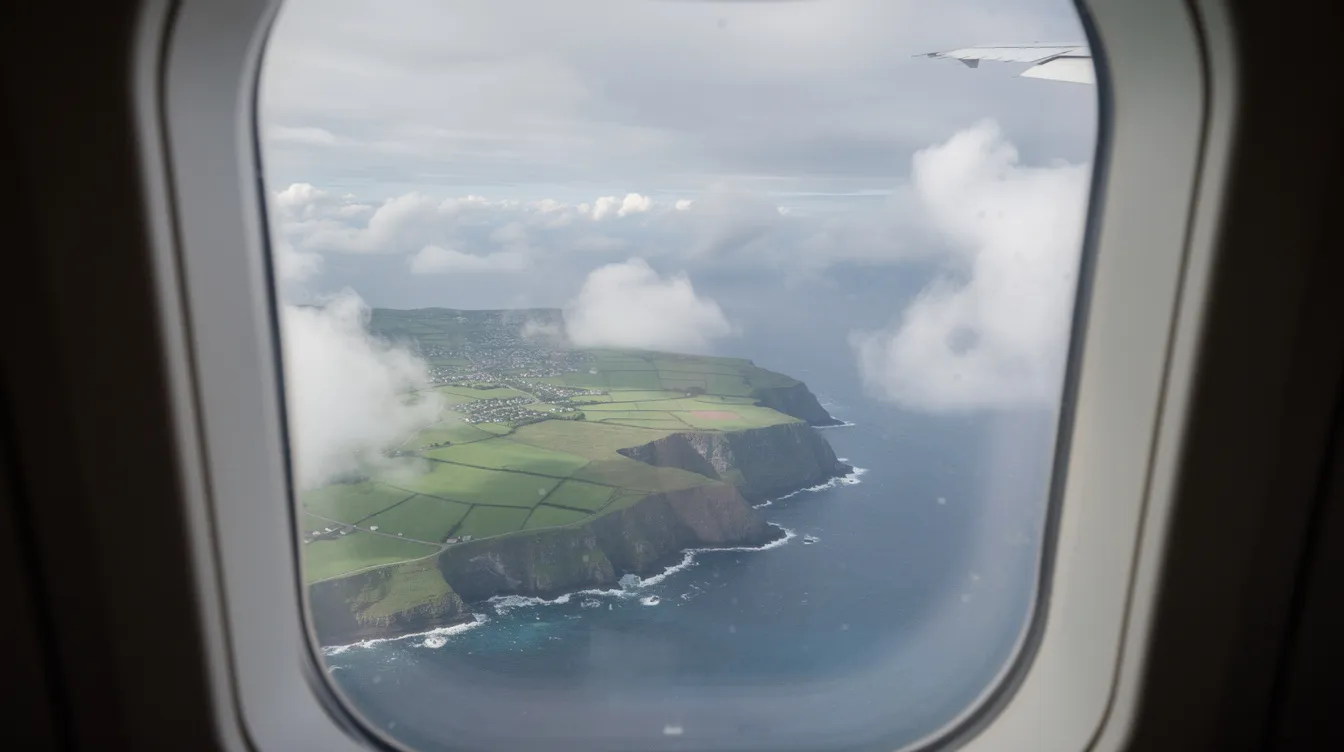
Flying to Ireland from the UK: A Practical 2026 Guide
Whether you're heading to Dublin for a city break, exploring the wild Atlantic coast, or visiting family in Cork, flying to Ireland from the UK remains one of the quickest and most affordable short-haul trips available. But documentation rules, baggage policies, and security requirements have shifted over the past year, and getting caught off guard can cost you time, money, or your boarding pass.
This guide covers everything you need to know about flying between the UK and Ireland in 2026-from choosing the right airport and airline to clearing security, navigating arrivals, and understanding your rights if things go wrong.
Key Takeaways
Flights are short and frequent. Direct flights from the UK to Ireland are widely available across multiple airlines and airports. Most routes take roughly 1 to 1.5 hours, with multiple daily departures on popular city pairs like London–Dublin and Manchester–Dublin.
Carry a valid passport. UK and Irish citizens benefit from Common Travel Area protections, but airlines now almost universally require a passport or Irish passport card for boarding. Non-UK/non-Irish nationals need a passport and may need a visa or Electronic Travel Authorisation depending on citizenship.
Budget and full-service options compete. Ryanair, easyJet, British Airways, and Aer Lingus all operate UK–Ireland routes. Booking 4 to 8 weeks in advance often yields the best pricing for flights, especially outside peak travel windows.
Security and food rules matter. The 100 ml liquids rule still applies at most airports. Five new items are banned from hand luggage under updated UK rules, and meat and dairy products from EU countries are prohibited when entering Great Britain-fines for non-compliance can reach up to £5,000. Check official guidance before packing.
Planning Your Flight from the UK to Ireland
This section covers everything from choosing departure and arrival airports to picking the right airline and booking window. Getting these decisions right can save you hours in transit and significant money on fares.
Departure and Arrival Airports
Major UK departure airports include London Heathrow, London Gatwick, and Manchester, along with Birmingham, Edinburgh, Glasgow, Bristol, Belfast City, and Belfast International. London has multiple airports including Heathrow, Gatwick, Stansted, and Luton-each serving different airlines and price points on Ireland routes.
Major Irish arrival airports include Dublin, Cork, and Shannon. Smaller options like Knock (Ireland West Airport) and Kerry serve western Ireland and can be worth checking. It is advisable to check alternative Irish airports for potentially cheaper flights, particularly if your final destination is outside Dublin.
Dublin Airport is the primary and busiest international gateway to Ireland, handling the majority of UK–Ireland traffic year-round.
Typical Flight Times
Flight times can vary based on route and departure city in the UK, but here are the standard block times for popular city pairs:
Route | Approximate Flight Time |
|---|---|
London → Dublin | ~1 hour 15 minutes |
Manchester → Dublin | ~1 hour |
Edinburgh → Dublin | ~1 hour |
London → Cork | ~1 hour 25 minutes |
London → Shannon | ~1 hour 30 minutes |
A journey that takes just over an hour makes flying the fastest way to cross between these isles-faster than any ferry or rail alternative.
Airlines Operating in 2026
Aer Lingus is the national airline of Ireland, offering full-service flights on most UK–Ireland routes with cabin baggage and often checked luggage included.
British Airways offers flights primarily from London to Dublin and occasionally other Irish airports, with standard full-service inclusions.
Ryanair operates a vast network of routes between regional UK airports and Ireland, typically at lower base fares but with extras charged for checked bags, seat selection, and priority boarding.
easyJet covers several key routes, competing on price with Ryanair.
Jet2 runs some seasonal routes, particularly to western airports during summer months.
Low-cost carriers usually include only a small under-seat bag in the base fare. Full-service airlines tend to include at least one cabin bag and sometimes a checked bag, depending on fare class.
Booking direct through airlines can make managing changes or delays easier, particularly if your flight is disrupted and you need rebooking.
When to Book and How to Save
Airfare prices can fluctuate depending on different factors-day of the week, how far out you book, and demand surges around holidays or events. Here's how to get the best deal:
Book early. For off-peak travel, 6 to 8 weeks ahead is the sweet spot. For busy periods, book earlier.
Avoid peak travel dates to find lower airfare prices. Demand spikes during UK school holidays, St Patrick's Day (17 March), Six Nations rugby weekends, GAA finals, and summer festivals.
Be flexible with travel dates to find cheaper flights. Flying midweek rather than Friday evening can cut fares significantly.
Use flight aggregators to compare prices across multiple airlines. Tools like Google Flights or Skyscanner show price calendars that highlight the cheapest days to fly each week.
Direct Flights to Northern Ireland vs. Dublin + Overland
You can fly directly into Belfast City or Belfast International from multiple UK cities. These airports are ideal if your destination is in northern Ireland. Alternatively, many travellers fly into Dublin and then travel onwards by bus, train, or car-the Dublin-to-Belfast journey takes around 2 hours 15 minutes by coach or car.
On key routes like London–Dublin, there are multiple daily flights year-round. Regional routes (e.g., Bristol to Knock or Edinburgh to Shannon) often run on reduced schedules during winter, sometimes only a few times a week, so always check seasonal availability.
Onward Connections
When selecting your arrival airport and landing time, consider onward transport:
From Dublin Airport: Express coaches to Galway (~3 hours), Limerick (~2.5 hours), Cork (~3.5 hours), and cross-border services to Belfast.
From Shannon: Close to Limerick (30 minutes), ideal for exploring the west coast and the Wild Atlantic Way.
From Cork or Kerry: Best for the south-west, reducing overland travel time dramatically versus flying into Dublin.
Travel Documents, Security, and Baggage Rules
Requirements differ significantly for UK and Irish citizens compared to other nationalities, and rules have changed recently. Always verify policies on gov.uk and your airline's website close to your departure date.
Identity Documents: Who Needs What
UK citizens: A valid passport is strongly recommended and now almost always required by airlines for flights between the UK and the Republic of Ireland. While the Common Travel Area means there are no routine immigration checks at the land border with northern Ireland, airlines since approximately February 2026 have standardised requirements-most now demand a passport or Irish passport card, and alternative photo IDs like driving licences are increasingly not accepted.
Irish citizens: Should carry a valid Irish passport when flying to the UK or within the isle of Ireland. Some carriers may accept an Irish passport card on certain routes, but this must be confirmed directly with the airline when booking.
EU/EEA and other nationals: A valid passport is normally essential. Depending on nationality-whether you hold a passport from Germany, France, or elsewhere-you may need a UK visa and/or Irish visa. Permission to live in the UK does not automatically grant the right to enter Ireland, and vice versa. Check requirements with the relevant embassy before travel.
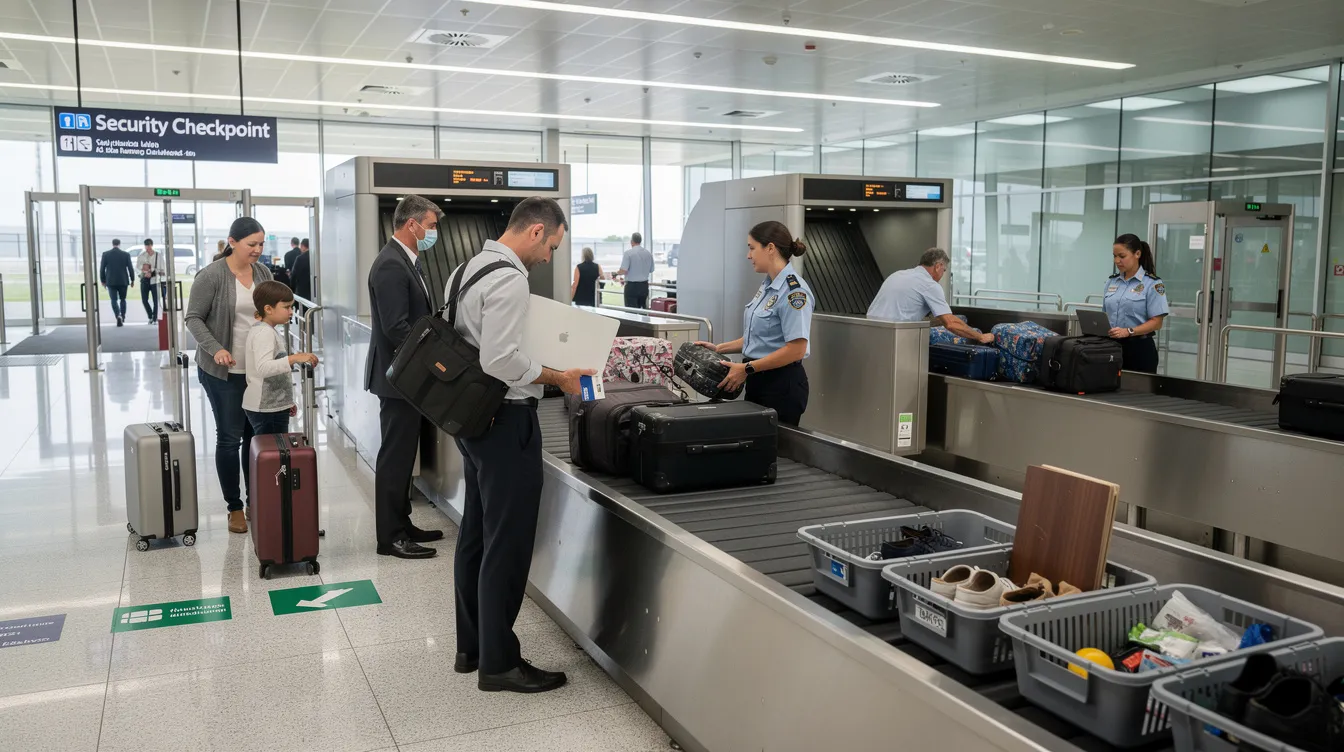
Airport Security Screening
UK and Irish airports share broadly similar security rules:
Liquids: Containers must be no larger than 100 ml, placed in a single transparent resealable bag (1-litre capacity). Some airports with upgraded CT scanners (including parts of Heathrow) may allow larger liquids to remain in your bag, but this is not universal. Check your departure airport's specific rules.
Electronics: Laptops and tablets may need to be removed from bags at airports without next-generation scanners.
Medical items: Essential medicines above 100 ml require supporting documentation such as a prescription or doctor's letter.
Five new items are banned from hand luggage under updated UK regulations, so review the prohibited items list before packing. Security staff can confiscate oversized liquids, certain foods, and sharp objects, and trying to carry banned items could delay boarding or, in serious breaches, result in refused travel.
Food Restrictions: A Common Catch
This is one of the most frequently asked about issues-and one of the most costly to get wrong.
Meat and dairy products from EU countries are prohibited when entering Great Britain. The ban includes sandwiches, cheese, and cured meats. Any man or woman arriving into England, Scotland, or Wales from the Republic of Ireland carrying these items risks having them seized. Fines for non-compliance can reach up to £5,000.
Critically, these restrictions apply only to travellers entering Great Britain. If you're flying between the Republic of Ireland and northern Ireland, or between two airports within the isle of Ireland, these food rules do not apply in the same way.
If you're buying food at an Irish airport to eat on the plane, that's generally fine-just make sure nothing prohibited is left in your bag when you land in Great Britain.
Baggage Allowances
Baggage policies vary heavily by airline and fare type:
Carrier Type | Typically Included | Usually Extra |
|---|---|---|
Low-cost (Ryanair, easyJet) | 1 small under-seat bag | Overhead cabin bag, checked suitcase |
Full-service (Aer Lingus, BA) | 1 cabin bag + personal item | Second checked bag, excess weight |
Standard checked bag limits are usually 15–23 kg depending on carrier and fare class.
Cabin bags are typically capped at 55 × 40 × 20 cm and 7–10 kg.
Weigh your luggage before leaving home. Excess baggage fees at the airport are significantly higher than pre-booking online.
Special Items
If your Ireland trip involves golf along the coast, surfing, or bringing musical instruments, these items usually require pre-booking as oversized luggage. Fees and dimension limits vary by airline-budget carriers tend to charge more for special items than full-service airlines.
A Note on Safety and Turbulence
While flying is statistically extremely safe, turbulence incidents have made headlines. Last year, 13 people were injured by severe turbulence across various flights. A BA flight had 14 passengers injured due to turbulence on a single service. One flight nose-dived twice during turbulence, causing chaos in the cabin. These events are rare but reinforce why keeping your seatbelt fastened when seated is essential for safety, even on a short hop across the Irish Sea.
Airports, Transfers, and Practical Tips on Arrival
Once you've landed, the next challenge is getting from the terminal to your destination. This section covers airport layouts, onward transport, and the practical details-like currency and roaming-that catch travellers off guard.
Dublin Airport
Dublin Airport has two terminals:
Terminal 1: Handles many European short-haul flights, including several Ryanair and easyJet services.
Terminal 2: Home to Aer Lingus, some British Airways flights, and US pre-clearance facilities.
Arrival is straightforward: collect baggage, pass through customs (if applicable), and exit to the arrivals hall. Transport options are well-signposted outside each terminal.
Getting into Dublin city centre:
Transport | Journey Time | Approximate Cost |
|---|---|---|
Express bus (Aircoach, Dublin Express) | 25–40 minutes | ~€8–€9 |
Local Dublin Bus (routes 16, 41) | 45–70 minutes | ~€2.60 |
25–40 minutes | €30–€45 (daytime) | |
Private transfer / ride-hail (FreeNow) | 25–40 minutes | Varies |
Smaller Irish Airports
Cork, Shannon, Kerry, and Knock are far easier to navigate-typically one arrivals hall, shorter walks, and faster baggage collection. Onward transport is more limited:
Cork: Regular buses to Cork city centre (20 minutes), car hire desks in the terminal.
Shannon: Close to Limerick (~30 minutes by car), gateway to the west coast and Clare.
Knock/Ireland West: Serves Galway, Sligo, and the north-west. Car hire is often the most practical option here.
Kerry: Ideal for the Ring of Kerry and Killarney. Bus services are infrequent; pre-book a car or transfer.
Belfast Airports
Belfast City Airport (George Best): Just 5 km from Belfast city centre, well-connected by bus and taxi. Ideal if Belfast itself is your destination.
Belfast International Airport: Further out (~30 km from the city centre) but often has cheaper fares and more carrier options. Bus transfers take around 30–40 minutes.
Both airports offer straightforward connections into northern Ireland. For cross-border travel into the Republic, coaches and car hire are the most practical options.
Time Zone and Currency
The entire island of Ireland operates on the same time as the UK-Greenwich Mean Time in winter, Irish Standard Time (BST equivalent) in summer. There is normally no time difference when flying from the UK, so your watch stays the same.
Currency is where it gets interesting:
Republic of Ireland: Euro (EUR)
Northern Ireland: Pound sterling (GBP)
If your itinerary takes you across the border, have access to both currencies or use payment cards with low foreign exchange fees. Many shops in border areas accept both, but exchange rates at tills are rarely favourable.
Practical Quick Tips
Pre-book airport transfers or check last bus and train departure times, especially for late-night arrivals. Getting stranded after the last bus takes what should be a €9 journey and turns it into a €50+ taxi ride.
Mobile roaming: Most UK mobile plans include roaming in Ireland and northern Ireland at no extra cost, but confirm with your provider. If staying longer than a week, a local SIM or eSIM can save money.
Before you leave the airport, confirm your return flight details, understand check-in times for the journey home (especially early morning flights to major UK airports), and allow extra time during peak travel seasons. This year has seen busier-than-usual passenger flows at Dublin and Heathrow during school holidays.
FAQs
Do I need a passport to fly from the UK to Dublin in 2026?
Yes, in practice. Although the Common Travel Area means there are no routine immigration checks for UK and Irish citizens, airlines almost always require a valid passport for flights between the UK and Dublin, even for UK and Irish citizens. Relying on other photo ID like a driving licence is risky unless the airline's terms explicitly allow it in writing. Since approximately February 2026, carriers like Aer Lingus have formalised this requirement. Always check your airline's documentation policy before heading to the airport.
Can I fly to Northern Ireland with just a driving licence from elsewhere in the UK?
Possibly, but don't assume it. Some airlines may accept a valid UK or Irish photocard driving licence on domestic UK routes, which can include flights from Great Britain to northern Ireland. However, policies vary between carriers, and a growing number now insist on a passport for all flights. Check the specific airline's ID policy well in advance-being turned away at the gate with no alternative is one of the most commonly asked about nightmares in travel forums.
Is there passport control when flying between Northern Ireland and the Republic of Ireland?
Direct flights between airports on the isle of Ireland are relatively limited. For most people travelling across the land border by car, bus, or train, there are no routine passport checks under the Common Travel Area. However, all travellers should still carry valid ID in case of spot checks or when proving identity is needed-for example, when checking into accommodation or dealing with authorities.
Are there customs limits when bringing shopping back from Ireland to the UK?
Yes. Since Brexit, the Republic of Ireland sits within the EU customs area and Great Britain does not. Standard duty-free allowances apply to alcohol, tobacco, and other goods when travelling from the Republic into Great Britain. Exceeding personal allowances means you must declare goods and may owe duty and VAT. Northern Ireland has a slightly different status under the Windsor Framework, so rules differ when arriving there from the Republic. Always check the latest UK government allowance tables before returning.
What happens if my UK–Ireland flight is delayed or cancelled?
Flights between the UK and Ireland are covered by air passenger rights rules-UK regulations for flights departing from UK airports, and EU Regulation 261/2004 for flights departing from Irish airports. Depending on the length of the delay, the reason (airline fault versus extraordinary circumstances like weather), and the notice given, you may be entitled to care (meals, hotel accommodation, communication access) or financial compensation. Keep all receipts for additional expenses, contact the airline directly, and submit claims through their formal process. Being flexible and prepared with a backup plan is the best way to manage disruption on short-haul routes.