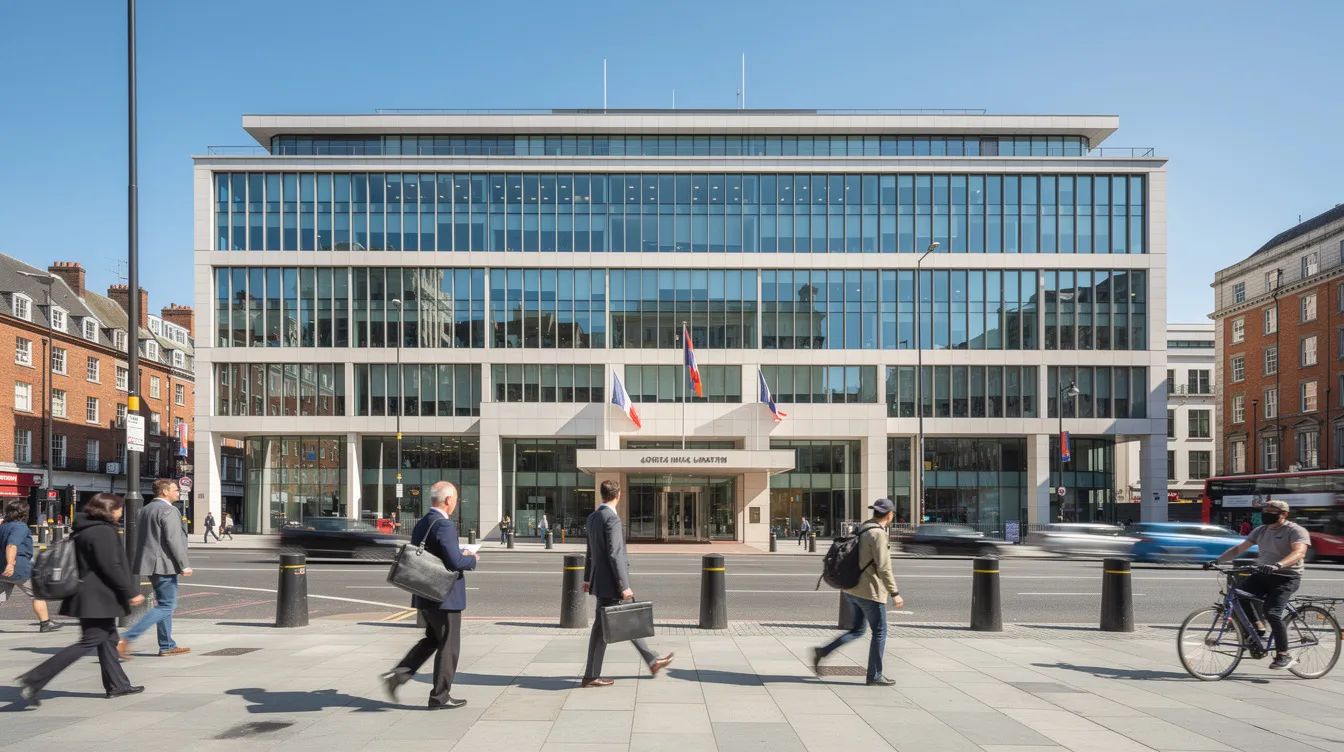
Garda National Immigration Bureau: Powers, Procedures and Recent Developments
Ireland's approach to immigration enforcement rests heavily on one specialist unit within An Garda Síochána. The Garda National Immigration Bureau is responsible for enforcing immigration law in Ireland, from border checks at Dublin Airport to deportation operations and criminal investigations into trafficking and document fraud. Understanding how this bureau works, what powers it holds, and what rights individuals have when they encounter its officers matters for anyone living, working or studying in the country.
Key Takeaways
The Garda National Immigration Bureau (GNIB) is the specialist enforcement arm of An Garda Síochána, handling deportations, border checks, detention and investigation of immigration offences across the state.
GNIB operates at Dublin Airport, ferry ports and on cross-border routes within the Common Travel Area, including selective passport checks on buses travelling between Northern Ireland and the Republic.
Recent data shows thousands of people are refused entry each year, hundreds have been imprisoned on immigration-related grounds, and refusals for certain nationalities have shifted significantly year on year.
Individuals facing GNIB enforcement have rights including access to solicitors, the ability to challenge deportation orders through judicial review, and protections under Irish and European human rights law.
Ongoing controversies include the use of ordinary prisons for immigration detention, allegations of racial profiling, and calls for dedicated detention facilities and clearer oversight mechanisms.
What Is the Garda National Immigration Bureau?
The Garda National Immigration Bureau was established in May 2000 as the operational immigration enforcement unit within An Garda Síochána. Often referred to in media and court documents as "Garda National Immigration" or simply "GNIB," the bureau focuses on policing and enforcement aspects of immigration in Ireland rather than administrative visa processing.
GNIB's core mandate derives from the Immigration Acts 1999–2015 and related EU law. This covers enforcing immigration controls at borders, executing deportation and removal orders, investigating immigration offences such as sham marriages and document fraud, and supporting border security. The bureau also investigates illegal immigration and human trafficking as part of its criminal enforcement role.
Organisationally, GNIB is headed by a Detective Chief Superintendent and based at Burgh Quay, Dublin 2. Immigration officers are stationed at major ports and Garda districts nationwide. The bureau offers support to local Garda divisions on immigration matters, meaning its reach extends well beyond Dublin. GNIB officers are both members of An Garda Síochána and designated immigration officers, giving them powers of arrest, detention and removal in immigration cases.
One significant recent change: immigration registration has been transferred to the Immigration Service Delivery (ISD) unit under the Department of Justice. Since January 2025, first-time registrations for residence permits are handled by ISD rather than GNIB, sharpening the distinction between enforcement and administrative functions.
GNIB's Main Roles and Powers Under Irish Law
GNIB's legal powers are broad and touch every stage of an individual's interaction with the immigration system. Here is how they break down in practice:
At the point of entry, GNIB officers examine passports and visas, question travellers about their purpose of stay, and can issue refusals of "leave to land" under the Immigration Act 2004. Grounds for refusal include lacking a valid visa, insufficient funds, risk to public policy, or presenting forged documents. The GNIB oversees immigration control at entry points like airports and ports.
Inside the state, enforcement targets people suspected of overstaying, working without permission, breaching visa conditions, or involvement in sham marriages and people-smuggling operations. Officers can arrest individuals under specific statutory powers.
Deportation-related powers are central to GNIB's work. The GNIB carries out deportation and removal orders signed by the Minister for Justice, including:
Serving "notices of intention to deport"
Enforcing deportation orders by escorting individuals to airports or ports
Coordinating group removals on chartered flight operations with EU partners
Information-gathering includes checking identity and immigration status during targeted operations-workplace inspections, transport checks, and intelligence-led surveillance-while complying with anti-discrimination and human rights standards.
Oversight comes through judicial review. The High Court and Court of Appeal regularly test the legality and proportionality of deportation and detention decisions. Recent case law, such as K. (Detention Pending Deportation) (2026), shows courts ordering conditional release even where removal appears imminent, reinforcing that detention must always be lawful and necessary.
GNIB at Borders and Airports (Refusals of Entry and Detention)
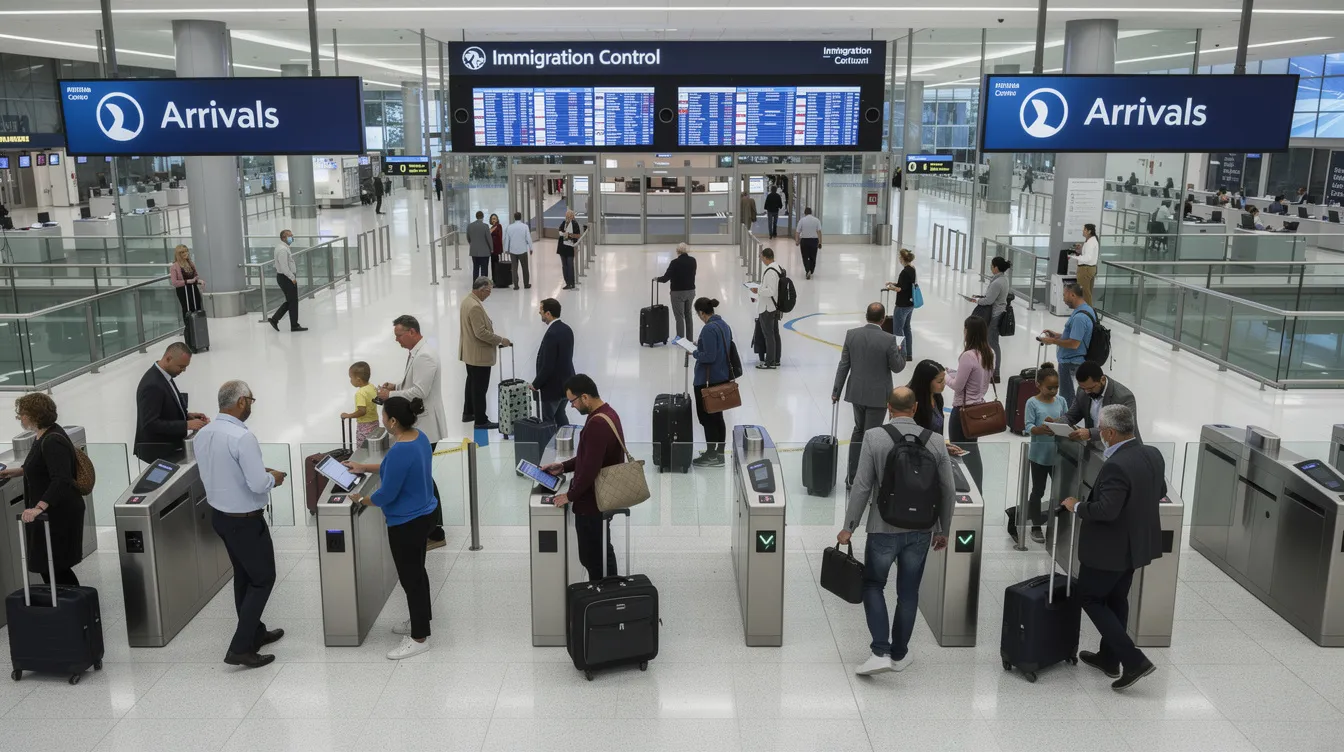
Dublin Airport is the primary frontline for Garda National immigration controls. GNIB officers are present at passport control and secondary inspection areas, processing thousands of cases each year.
The numbers are substantial. Almost 4,000 individuals were denied entry to Ireland in 2017. In 2022, Dublin Airport alone recorded 7,662 refusals of leave to land. By 2024, total refusals across all ports reached approximately 6,895, down from a peak above 9,000 in 2022.
When a person is refused entry, the typical process involves an interview, a formal decision on leave to land, possible short-term holding at the airport, and removal on the next available flight. A dedicated immigration detention centre at Dublin Airport-located at Transaer House-was opened in 2022 with four single-person cells. However, the facility remains incomplete and not fully operational, meaning many refused entrants continue to be transferred to prisons.
Specific nationality trends illustrate the patterns. In 2016, 489 Brazilian nationals were refused entry, prompting the Brazilian embassy to raise concerns about alleged mistreatment. Albanian refusals more than doubled between 2023 and 2024, rising from 435 to 1,010.
The detention picture is equally stark. In 2016, 421 people were imprisoned on immigration-related issues, held alongside sentenced prisoners in facilities like Cloverhill. This practice has drawn sustained criticism from the Irish Penal Reform Trust and international bodies.
GNIB also operates at ferry ports such as Rosslare and Cork, cooperating with EU border agencies on routes considered vulnerable to trafficking and smuggling.
GNIB and the Common Travel Area: Cross-Border Checks
The Ireland–UK Common Travel Area predates both countries' EU membership and survived Brexit. While there is no routine passport control on the land border, the Garda National Immigration Bureau conducts selective passport checks on buses crossing the border, particularly on cross-border services between Northern Ireland and the Republic.
These operations typically involve officers boarding buses, asking selected passengers to produce passports or identity documents, and assessing immigration status. GNIB describes such checks as intelligence-led, targeting irregular migration and abuse of the Common Travel Area.
Legal and rights concerns are significant:
Allegations that checks disproportionately target people of colour or those with non-Irish accents
Debates about compatibility with CTA freedom of movement principles
Questions about racial profiling under equality and human rights law
Civil society groups have called for greater transparency, including clear written policies on who can be stopped and why, improved data collection on the demographics of those checked, and independent monitoring of Garda National immigration practices on cross-border routes. GNIB maintains that these operations are necessary for implementing immigration policy and combating trafficking, but the tension between enforcement and rights remains unresolved.
Deportations, Charter Flights and High-Profile Cases
GNIB plans and executes deportations in two main ways: individual removals on scheduled flights and group removals on EU-coordinated chartered flight operations from Dublin Airport. The logistics of a chartered flight involve coordination between Garda National immigration units and other EU states, specialist escorts, and sometimes dozens of people removed to a single country or region in the early morning hours.
Recently, 33 people were removed from Ireland by the Bureau in a single operation, illustrating the scale of enforcement activity. These operations continue to generate controversy.
Several high-profile cases have shaped public debate:
Mohamed Sleyum Ali: A Somali asylum seeker died shortly after deportation from Ireland in 2015, raising urgent questions about non-refoulement obligations
Cork protests (2019): Protests occurred over sudden deportations of asylum seekers who activists said were removed before speaking to solicitors
Family cases: Courts have intervened to prevent deportation where medical evidence or children's welfare is at stake, as in the J.K. and Ors case (2026), where a South African mother and six children had their deportation stayed pending full hearing
Critics argue that early-morning removal operations sometimes proceed before individuals can access legal representation, and that medical vulnerabilities are not always adequately assessed. The interaction between the Minister's deportation orders and Garda operational discretion means last-minute legal challenges can pull people off flights, creating real tension between enforcement efficiency and rule-of-law safeguards.
GNIB, Asylum Seekers and Direct Provision
While the International Protection Office assesses asylum claims, GNIB plays a significant role at the enforcement edges of the asylum system: border refusals, detention of certain applicants, and enforcement after final refusals.
Asylum seekers may first encounter Garda National immigration officers on arrival at Dublin Airport or a port. Officers conduct initial interviews, check documentation, and decide whether to admit individuals to the protection process or refuse entry. Some asylum seekers have reported being detained or threatened with deportation despite ongoing legal processes.
Protests in 2019 highlighted cases where asylum seekers in Direct Provision were suddenly removed, prompting public campaigns in cities like Cork and Galway. GNIB may execute deportation orders on people who have exhausted their asylum appeals, often after years in Direct Provision. Journalists have documented the lives of those returned to countries like Nigeria after long stays in Ireland.
There is growing debate about whether GNIB should have a more limited role with vulnerable asylum seekers and trafficking victims. Some experts call for a welfare-focused, non-policing approach that separates enforcement from support services, particularly for individuals with mental health needs or histories of trauma.
Enforcement Operations: Work, Study and Everyday Life
Garda National immigration activity extends well beyond airports. It surfaces in workplaces, colleges, taxi ranks and private homes through targeted operations and investigations.
The Bureau cancelled immigration status for 55 taxi drivers in 2019 whose documentation or driving licences did not comply with legal requirements. This was part of broader workplace enforcement that GNIB conducts, sometimes prompted by intelligence about undocumented workers.
GNIB also monitors foreign students' compliance with visa conditions, including health insurance requirements. Guidance from the Garda National Immigration Bureau has been used to clarify whether private health cover is mandatory for non-EEA students.
Criminal investigations represent another major strand. The GNIB investigates organized criminal activities related to immigration, including:
Sham marriages arranged for immigration benefit
Production and use of fake documents
Organised scams at Dublin Airport where illegal immigrants reportedly paid up to €20,000 to bypass controls with insider help
The GNIB maintains operational databases and collaborates with international partners to track cross-border criminal networks. Officers work closely with specialist anti-trafficking units, and high-profile trafficking and people-smuggling cases have been brought before Dublin courts after arrests at the airport.
The human impact is real. Foreign workers and au pairs caught up in immigration enforcement-such as the Brazilian au pair imprisoned after being denied entry in 2017-feel the direct consequences of GNIB decisions, as do their families, employers and communities.

Technology, Queues and Modernisation of Immigration Services
Garda National immigration operations intersect with civilian immigration services in ways that affect daily life. For years, hundreds of foreign nationals queued through the night outside Dublin offices for visa renewals or registration appointments, with Gardaí sometimes called in for crowd management.
The shift toward digital solutions has helped. Online booking systems for visa and registration appointments have replaced early-morning ticketing queues. Tools like the MyQ.ie mobile app give estimates of waiting times at immigration offices, easing pressure on both Garda staff and applicants.
The broader context includes state digital identity projects such as the Public Services Card, costing over €54 million, designed to streamline access to multiple services including those linked to immigration and welfare checks.
Despite these improvements, capacity still struggles to keep up with demand from foreign workers and students. The transfer of registration functions to the department of Justice's ISD unit should further reduce pressure on GNIB, but clear Garda guidance remains essential at busy offices during transition periods.
Rights, Controversies and Calls for Reform
Garda National immigration work is inherently controversial because it sits at the intersection of security, human rights and political debate over migration in the country.
Core rights issues include:
Access to legal advice before deportation
Conditions of detention, including use of ordinary prisons for non-criminal immigration detainees
Standards of treatment during arrest, transfer and removal
Racial profiling remains a persistent concern. Cases like a Kenyan retail worker subjected to a racially motivated prank involving a fake "immigration officer" phone call illustrate wider anxieties about immigration status being weaponised in everyday life.
Courts have repeatedly intervened. In Z.A. v Minister, the High Court found that reliance on untested allegations in a GNIB report was procedurally unfair, quashing the deportation. Judges have also warned that overly rigid deportation criteria could encourage people to "game the system" with last-minute legal moves-highlighting the genuine tension between efficient enforcement and due process.
Campaigners, academics and some politicians continue calling for clearer legislation, an independent complaints mechanism for immigration enforcement, greater separation between GNIB and victim-support services, and dedicated, humane immigration detention facilities. In 2026, the Minister for Justice publicly considered constructing a separate detention centre for deportees to relieve pressure on the prison system.
How Individuals Interact with GNIB: Practical Guidance
If you encounter Garda National immigration officers at a border, on the street or through correspondence about your status, here is what to expect.
During an immigration check, an officer will identify themselves, ask for your passport or ID, and inquire about your immigration status. If questions arise, you may be invited to a Garda station or secondary interview area.
Key practical points:
Always carry valid documentation when travelling or if your immigration status requires it
Respond calmly and truthfully to questions
Ask for an interpreter if you need one to understand questions or forms
If served with a notice of intention to deport, detained at a port or told a deportation order is to be enforced, seek legal advice immediately
Common scenarios include foreign students checking whether they meet GNIB health-insurance rules, workers renewing permissions, and spouses asked to verify the genuineness of relationships in the context of suspected sham marriages.
If you feel you have been mistreated or discriminated against by immigration officers, document what happened as soon as possible. Consider contacting a solicitor, an NGO such as Nasc or the Immigrant Council of Ireland, or a relevant oversight body to explore complaint routes.
Frequently Asked Questions about the Garda National Immigration Bureau
Is the Garda National Immigration Bureau the same as the Irish Naturalisation and Immigration Service?
No. The national immigration bureau is part of An Garda Síochána and focuses on enforcement-checks, arrests, deportations and border control. The Irish Naturalisation and Immigration Service (now largely referred to as Immigration Service Delivery within the Department of Justice) handles immigration policy, visa decisions, residence permissions and citizenship applications. While both deal with immigration, their roles are distinct: GNIB enforces; ISD administers.
Do GNIB officers have the power to arrest me if my visa has expired?
Designated Garda National immigration officers can arrest people suspected of immigration offences such as overstaying or working without permission. However, they must act under specific legal powers in the Immigration Acts. Arrested individuals are entitled to be informed of the reason for arrest and to access legal advice. If you are arrested, ask to speak with a solicitor as soon as possible.
Are immigration detainees in Ireland held in dedicated detention centres?
Ireland has been criticised for using ordinary prisons to hold people on immigration grounds, sometimes alongside sentenced prisoners. Although a dedicated immigration detention facility at Dublin Airport was planned and partially built, it has not been fully implemented as of 2026. The Irish Penal Reform Trust and international observers continue to call for purpose-built, humane detention facilities separate from the criminal justice system.
Can GNIB deport someone without giving them a chance to see a solicitor?
In principle, people facing deportation should have an opportunity to obtain legal advice and challenge deportation orders through the courts. In practice, campaigners have highlighted instances where removals were arranged very quickly-sometimes overnight-creating serious concerns about effective access to solicitors. Courts have stepped in to halt deportations where due process was not followed, but the speed of some operations remains a point of contention.
How does GNIB activity affect foreign students and workers who follow the rules?
Compliant students and workers mainly encounter Garda National immigration officers during registration or routine checks. Enforcement tends to focus on overstays, fraudulent documents and breaches of conditions. Nonetheless, high demand, long queues and complex rules can still create anxiety even for those fully within the law. Staying informed about your visa conditions and carrying correct documentation reduces the likelihood of problems during any interaction with GNIB.