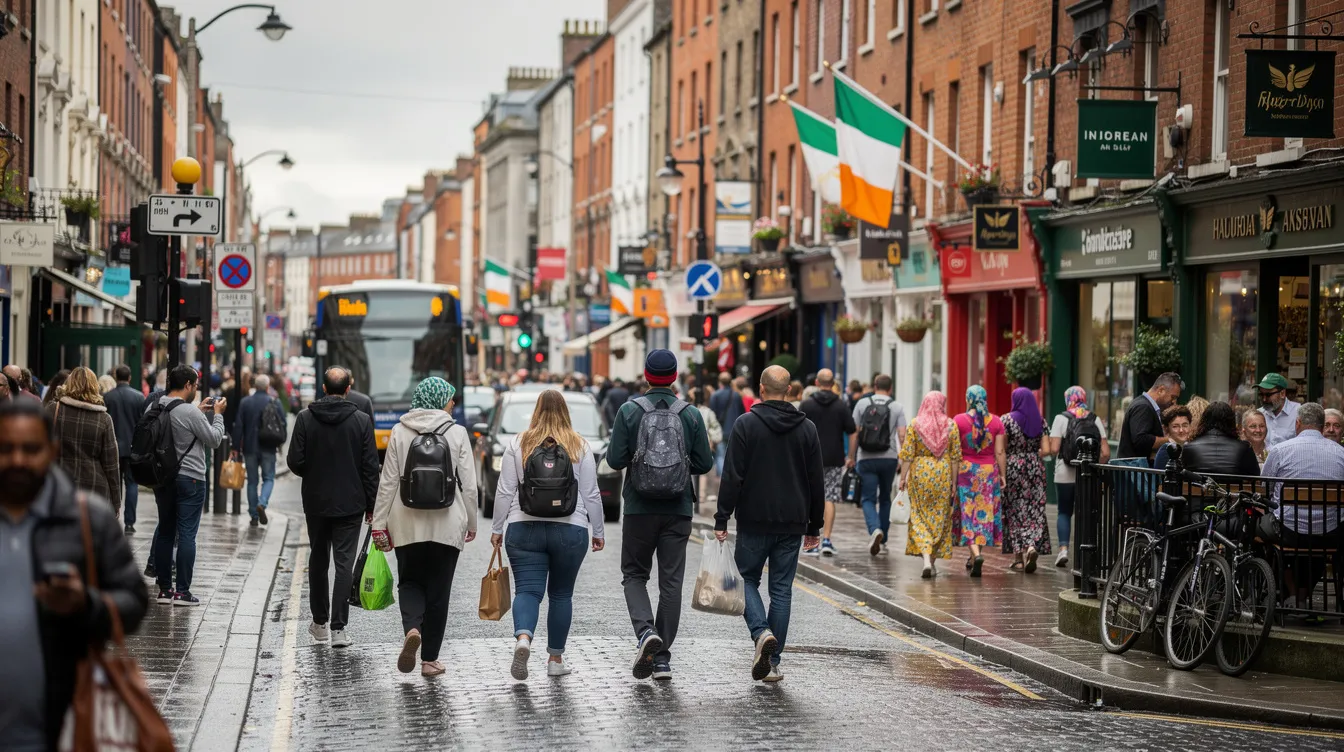
Immigrants in Ireland: Migration Trends, Rights, and Support in 2026
Ireland has transformed from a country people left to one people move to. In 2026, every immigrant in Ireland navigates a layered system of permits, protections, and community supports that shapes daily life in ways most newcomers don't fully anticipate. This guide breaks down the latest data, policy changes, rights, and practical steps for anyone arriving, settled, or simply trying to understand migration in Ireland today.
Key Takeaways
Ireland's shift from emigration to immigration since the 1990s has reshaped the republic's demographics, economy, and public debate. Here are the essential facts:
Net immigration to Ireland in the year to April 2026 was approximately 48,000, a decline from peaks of roughly 80,000 in 2023–2024 driven largely by arrivals from Ukraine under the EU Temporary Protection Directive.
Around 20% of Ireland's usually resident population-over 1 million people as of Census 2022-were born outside the state, making immigrants central to Irish society.
Immigrants arrive via different routes: work permits for migrant workers, EU free movement, international protection for asylum seekers and refugees, family reunification, and student or other residence schemes.
National organisations such as the Immigrant Council of Ireland, the Irish Refugee Council, and Migrant Rights Centre Ireland, alongside state bodies like the International Protection Accommodation Service (IPAS), offer legal aid, advocacy, and direct support.
From Emigration Nation to Immigration Hub
For most of its modern history, Ireland was defined by people leaving. Famine, economic stagnation, and limited opportunity pushed generations to the US, UK, and Australia. That story reversed during the Celtic Tiger boom of the 1990s, when rapid economic growth drew workers from Central and Eastern Europe, Africa, and Asia. Asylum seekers rose from just 364 in 1994 to over 11,634 by 2002, marking a new chapter in Irish migration history.
EU enlargement in 2004-admitting Poland, Lithuania, and others-accelerated inward migration and created established communities across Dublin, Cork, Galway, and regional towns. Ireland's immigrant communities now include Poles, British, and Indians among many other nationalities. By the 2022 Census, more than 1,017,000 residents were born outside Ireland, an increase of over 200,000 foreign-born residents since 2016. The country's demographic profile is now more diverse by nationality, language, and religion than at any point in its modern history.
Recent Migration Trends and Net Migration Figures
Net migration-immigration minus emigration-is the figure that matters most for planning housing, schools, and public services. Here is how it has moved in recent years:
Period (year to April) | Approximate net migration |
|---|---|
2023–2024 | ~80,000 |
2025 | ~60,000 |
2026 | ~48,000 |
Ireland's net immigration peaked at almost 80,000 in 2024, largely influenced by arrivals from Ukraine and strong labour demand. Between March and December 2022, Ireland accepted nearly 68,000 Ukrainian refugees under the EU's Temporary Protection Directive, creating a one-off spike. By April 2026, arrivals had tapered as some Ukrainians returned or moved on.
Net immigration from the US has grown steadily, reaching around 4,000 in 2026-driven by lifestyle migration, tech employment, and some political push factors. Overall, net migration is now shaped by a mix of returning Irish citizens, EU/EEA migrants, non-EU migrant workers, international students, and beneficiaries of international protection. These numbers are directly linked to Ireland's ongoing housing pressures, increased demand on health and education services, and continued policy debates on capacity and integration.
Routes into Ireland: Work, Study, Protection, and Family
There is no single "immigrant visa" for Ireland. People arrive under distinct legal pathways, and the distinction in rights and experiences varies considerably between EU and non-EU migrants.
Work-related migration: Non-EEA migrant workers need employment permits. The Critical Skills Employment Permit targets high-skill roles with higher salary thresholds and faster residency pathways, while the General Employment Permit covers a broader range of sectors. Legal protections exist in Irish law preventing workplace exploitation of migrant workers.
EU/EEA free movement: EU and EEA citizens can live and work in Ireland without a visa. They may bring family members, including some non-EU relatives, under EU Treaty Rights rules.
International protection: Asylum seekers apply through Ireland's protection system and are accommodated by IPAS. After a waiting period, they may access the labour market and education.
Temporary protection: Beneficiaries-mainly Ukrainians arriving from 2022-receive residence rights, work access, and certain social supports without going through the normal asylum process. The Temporary Protection Transition Scheme (TPTS), launched on 30 September 2026, helps eligible beneficiaries plan their next steps.
Family reunification: Recognised refugees and certain non-EEA residents can apply to bring close family members. Policy amendments effective 12 June 2026 raised income thresholds and introduced new accommodation tests. Rules differ by sponsor status.
Other routes include international students, researchers, and investors, though these are more niche.
Rights and Daily Life for Immigrants in Ireland
Rights depend heavily on immigration status. Here is how key areas break down.
Employment: EU citizens and many work permit holders can work like Irish citizens. Asylum seekers gain labour market access only after a specified time in the protection process. Migrant employment rates in Ireland often exceed those of the native-born population. The Workplace Relations Commission handles disputes and enforces minimum wage laws.
Housing: The housing crisis has hit immigrants hard. In 2024, 37% of migrants spent more than 30% of their income on housing compared to just 9% of Irish-born residents. Newcomers experiencing discrimination, lacking rental history, or facing limited social housing availability find the market especially difficult. Irish equality law protects individuals from discrimination in employment and housing, but enforcement gaps remain.
Healthcare and education: Access to public healthcare depends on residency status and specific eligibility criteria-Medical Cards and GP Visit Cards are available based on income and residence. Children living in Ireland have a legal right to free primary and secondary education regardless of immigration status, and the integration of immigrant children into schools can facilitate language acquisition and social connections.
Social inclusion: Language proficiency is essential for migrant integration in Ireland. Barriers such as recognition of foreign qualifications, cultural adaptation, and experience of discrimination reported by some migrants due to nationality, ethnicity, or immigration status all affect daily living. Meanwhile, 20% of people born outside the EU were at risk of poverty compared to 11% of Irish-born residents. Community groups, sports clubs, and local integration projects play a vital role.
Citizenship: Ireland has seen increasing rates of naturalisation and political participation among immigrants. Most non-EEA nationals can apply after five years of reckonable residence, with regular ceremonies held in venues like the Convention Centre in Dublin.
International Protection, Asylum Seekers, and Temporary Protection
International protection is the umbrella term covering both refugee status and subsidiary protection. Applications go through the International Protection Office. Applicants are placed in accommodation managed by IPAS, formerly known for running direct provision centres-which housed approximately 7,400 refugees and protection applicants in 38 centres by 2020. After a waiting period, applicants can access legal advice, basic healthcare, and the right to seek employment.
The government has stated its aim to move away from traditional direct provision towards community-based models, though implementation has been gradual. The scale of need surged after 2022 due to the war in Ukraine, placing pressure on accommodation, education, and local services. EU-wide temporary protection, activated in March 2022, has been periodically extended. Ireland's TPTS from 30 September 2026 helps people transition to longer-term solutions.
The Irish Refugee Council advises asylum seekers on the protection process and family reunification, and monitors conditions in IPAS centres.
National Organisations Supporting Immigrants and Refugees
Migrant support organisations in Ireland provide advocacy and legal aid for various immigration issues. Here are the key ones:
Immigrant Council of Ireland: Offers information and limited legal services on immigration status, residence permissions, citizenship, and anti-racism. Contributes to policy debates and campaigns for fairer procedures.
Irish Refugee Council: Provides advice for asylum seekers and refugees, including help with international protection applications and family reunification. Runs drop-in clinics and supports people leaving IPAS accommodation.
Migrant Rights Centre Ireland (MRCI): A national organisation defending the rights of migrant workers and their families, working on labour exploitation cases and campaigns for regularisation of undocumented workers.
Others: Crosscare Migrant Project, Nasc, and Doras provide regional immigration information, advocacy, and integration support.
State bodies: The Department of Justice (including Immigration Service Delivery and the Home Affairs function), IPAS, and schemes like voluntary assisted return coordinate official responses.
Public Debate, Policy Changes, and Social Tensions
Immigration has become a central political topic in Ireland. Polling in 2023 showed around three-quarters of respondents believing the country was taking in too many refugees, while other surveys found strong support for helping people fleeing war when adequate housing and services are in place.
Recent policy decisions reflect this tension: tighter enforcement measures sit alongside initiatives to regularise long-term undocumented migrants and reform direct provision. Accommodation of asylum seekers and temporary protection beneficiaries has sometimes sparked protests in communities, but also local volunteer support, language classes, and community sponsorship. An informed view should consider both pressures on housing and services and the economic, demographic, and cultural contributions made by immigrants.
Practical Guidance for Prospective and New Immigrants
If you are considering a move to Ireland in 2026 or have recently arrived, keep this checklist in mind:
Visa and permission: Determine the correct route before travelling. Consult official Irish Immigration Service Delivery guidance and reputable NGOs for updates.
Documentation: Prepare your passport, birth and marriage certificates, employment contracts or college offers, proof of funds, and any relevant records.
Housing: Research rental prices in Dublin, Cork, Limerick, and Galway. Rents and deposits are high; sharing accommodation is common. Start early and watch for scams.
Employment: Check recognition of foreign qualifications. Use public employment services and migrant support organisations to find work.
Integration: Join local community groups, language classes, and sports clubs. Everyday connections matter as much as formal rights for feeling at place.
Support: If you face problems with status, exploitation, or discrimination, contact the Immigrant Council of Ireland, the Irish Refugee Council, or MRCI by email or phone rather than navigating complex systems alone.

FAQ
Below are answers to common questions not fully covered above.
How long do I need to live in Ireland before I can apply for citizenship?
Most non-EEA immigrants can apply for naturalisation after five years of reckonable residence in the previous nine years, including one continuous year immediately before the application. Refugees may qualify under slightly different rules. Time spent in the asylum process may or may not count depending on status-check current Department of Justice guidance for your specific situation.
What is the difference between refugee status and Temporary Protection in Ireland?
Refugee status and subsidiary protection are granted after an individual assessment of an asylum claim and usually lead to a more secure, long-term status. Temporary protection is a group-based, time-limited response activated by the EU for people fleeing a specific conflict-such as Ukrainians after February 2022-with rights that can change when the scheme is updated or ends.
Can asylum seekers work in Ireland while their application is being processed?
Asylum seekers do not have immediate access to the labour market on arrival but can apply for permission to work after they have been in the protection process for a set period without a first-instance decision. Check current rules with the Irish Refugee Council or official government sources, as eligibility criteria and permitted sectors can change.
Are family members of migrant workers allowed to join them in Ireland?
Some migrant workers on certain employment permits may sponsor spouses, partners, and dependent children after meeting income and accommodation requirements set out in the Family Reunification Policy updated in June 2026. International students generally face more restrictive rules. Consult the latest guidance from Immigration Service Delivery for your specific permission type.
What can I do if I experience labour exploitation or trafficking in Ireland?
Anyone experiencing serious exploitation, withholding of wages, threats, or trafficking should seek help immediately from Migrant Rights Centre Ireland, the Workplace Relations Commission, or An Garda Síochána. Confidential supports and potential residence options exist for victims of trafficking who cooperate with investigations. You do not need to have a report or news coverage to access these services-reach out directly.