Ireland eVisa: Complete Guide to Online Irish Visa Applications
Key Takeaways
Ireland does not issue a standard electronic visa (e-visa) that lives purely on your passport number. Instead, most visa applicants start their Irish visa application online through the AVATS portal and then submit original documents and their passport to an embassy, consulate, or visa application centre like VFS Global.
Whether you need a visa depends on your nationality, trip purpose, and length of stay. Ireland is outside the Schengen Area, so a Schengen visa or UK visa alone does not allow you to enter Ireland.
The practical steps are straightforward: create an AVATS application, print sign and date the application summary, gather supporting documents and original documents, pay the correct fee, and lodge your file at the right office.
Short stay "C" visas cover tourism and business visits up to 90 days, while long-stay "D" visas are issued for stays exceeding 90 days (study, work, family reunification). Each type has different documents required and processing timelines.
Even with an approved visa, a visa does not guarantee entry into Ireland. The immigration officer at border control makes the final decision on arrival in Ireland based on your documentation and stated purpose.
Introduction: What People Mean by "Ireland eVisa"
When people search for an "Ireland e visa," they usually mean Ireland's online visa application process rather than a fully electronic travel authorisation with no physical paperwork. Ireland does not issue a standard electronic visa. The online process for applying for an Irish visa uses the AVATS system (Automated Visa Application & Tracking System), which handles the digital side of your application. However, travelers who require a visa must complete a traditional physical application process that ends with a visa vignette sticker in their passport.
This article covers who may need a visa to travel to Ireland, how the online system works, documents required, visa fees, timelines, and what happens on arrival in Ireland and separately in Northern Ireland. Note that rules can change, and you should always verify details on the Irish Immigration Service and Department of Foreign Affairs websites shortly before applying.
Do You Need a Visa for Ireland? (Tourist and Business Travel)
Visa requirements depend on your citizenship, residence status, and reason for travel-whether you want a tourist visa, business visa, study permission, or family reunification.
Visa-exempt nationalities for short stays include citizens of 27 EEA countries, the UK, USA, Canada, Australia, New Zealand, and Japan. Some nationalities do not need a visa for short tourist stays in Ireland of up to 90 days. However, being visa-exempt does not mean you can skip border formalities entirely.
Many African, Asian, Middle Eastern, and some Eastern European nationalities are visa required in advance. You can check whether you need a visa using the Irish Immigration Service "Travel Path" tool, which gives an up-to-date list based on your country and passport type.
Certain visitors with a valid UK visa can travel to Ireland under the Short Stay Visa Waiver Programme, but this applies only to specific nationalities and conditions.
A critical point: the Republic of Ireland is not part of the Schengen Area. A Schengen visa or a standard UK visit visa on its own does not grant permission to enter Ireland. An Irish visa simply allows you to travel to Ireland-it does not guarantee entry, which is decided at border control on arrival.
Types of Ireland Visas You Can Apply for Online
Almost all Ireland visas now start with an e-application through AVATS, but the visa type you select in the online form is crucial for approval.
Short Stay "C" Tourist Visa
Short-stay "C" visas are issued for tourism or visits lasting 90 days or less. This covers holidays, family visits, and other non-work trips. These are usually single entry, though a multiple journey visa may be granted based on travel history and documented need.
Short Stay "C" Business Visa
A short stay business visa allows stays up to 90 days for activities like business meetings, conferences, and negotiations. You cannot work for more than 14 days on this visa. A business visa application requires letters from both your employer and the Irish host company.
Long Stay "D" Visa
Long-stay "D" visas are issued for stays exceeding 90 days, covering study, employment, and family reunification. Supporting documents and processing times are more extensive-some join-family cases currently take over two years.
Transit Visa
Transit visas are required if passing through an Irish airport without leaving the transit zone, for certain nationalities. The fee is €25.
If you select the wrong reason for travel in the online form, changing visa type later usually means a new application and new fee. Match your purpose carefully.
Overview of the Ireland "eVisa" Application Flow
Here is the high-level flow from online form to arrival in Ireland:
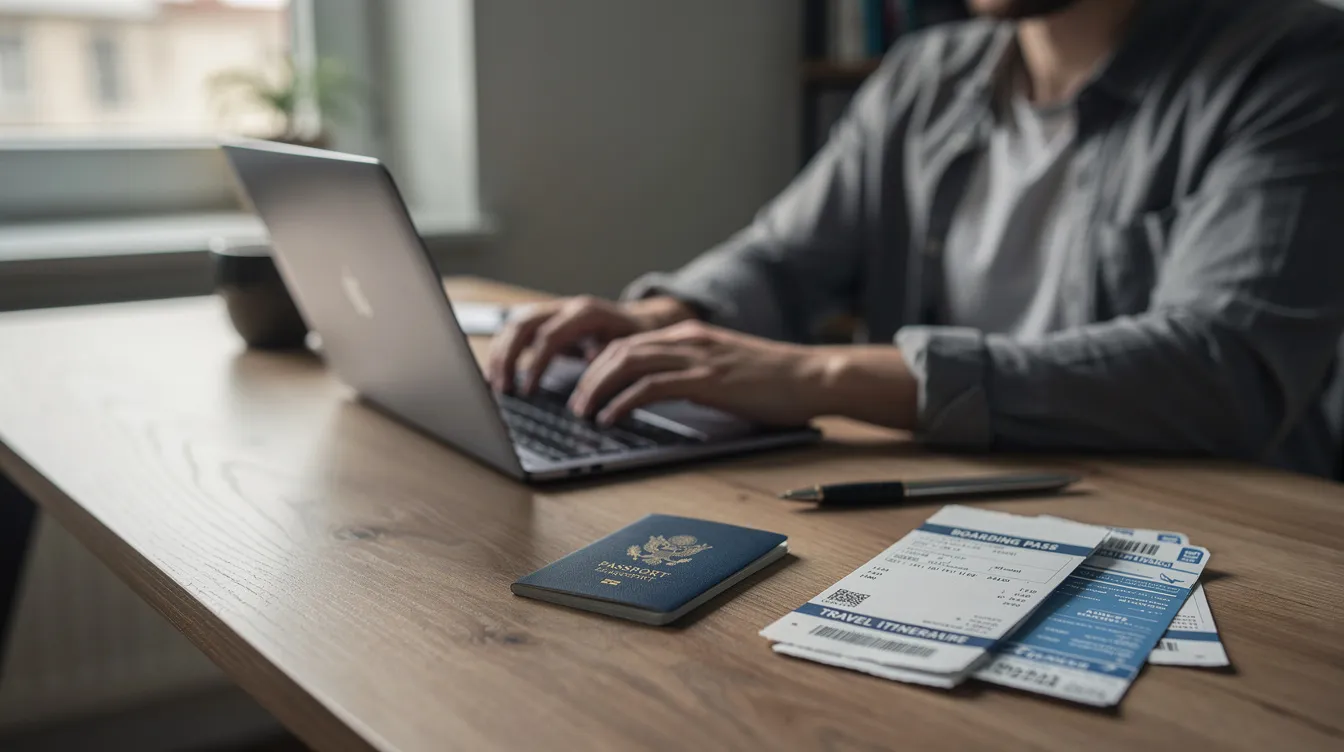
Complete AVATS online: Fill in personal details, travel dates, and reason for travel. The system generates a summary sheet with your Visa Application Transaction Number.
Print, sign, and date: Print the application summary and sign the declaration. For applicants under 18, a parent or legal guardian must sign.
Gather documents: Assemble all supporting documents and original documents as specified for your visa type.
Pay the visa fee: Use the payment methods accepted by your chosen processing office. Include proof of payment in the file.
Submit everything: Lodge your passport, application summary, and other documents at a Visa Application Centre (e.g. VFS Global) or directly at an Irish embassy or consulate, depending on your country. You must apply for the visa from your home country.
Wait for a decision: Processing usually takes several weeks from the moment all documents are received. Your passport is returned with either an approved visa sticker or a refusal letter.
Step 1: Creating Your Application in AVATS
AVATS is the official Irish online visa application platform, used worldwide for Ireland visas and preclearance applications.
What you enter:
Personal data (name, date of birth, nationality)
Travel dates and contact details
Details of previous visas or immigration history
Purpose of travel (tourist visa, business visa, study, family visit, etc.)
Choose "Short Stay (C)" for visits of 90 days or less, and "Long Stay (D)" for stays longer than 90 days. Match the "reason for travel" field to your true purpose.
Answer all questions fully and honestly. Inconsistencies between the online form and supporting documents are a common reason for refusal. Use only English and allowed characters when completing the form.
After completing AVATS, note your Visa Application Transaction Number and immediately print sign and date the application summary sheets. You have 30 days from completing the AVATS form to submit your application to the correct office, so do not delay.
Step 2: Documents Required and How to Prepare Them
Each visa category has specific documentation requirements, but embassies typically require original documents rather than photocopies. You must submit original documents with your visa application.
Core Documents for Most Ireland Visas
Document | Details |
|---|---|
Valid passport | You need a valid passport for at least 6 months post-departure. A valid passport is required for entry into Ireland. |
Passport photographs | Include 2 passport-sized photographs with your visa application. |
Application summary | Printed, signed, and dated AVATS summary sheet. |
Proof of fee payment | Receipt or bank transfer confirmation. |
Financial Documents
Provide recent bank statements covering the last 3–6 months, a bank statement showing sufficient funds, payslips, or business accounts. These demonstrate you can support yourself during the stay without accessing public funds.
Accommodation and Travel Proof
Include hotel bookings or an accommodation plan covering the full short stay, confirmed or provisional travel tickets (flights), and any itinerary supporting your stated visit purpose.
Invitation Letter and Application Letter
For a tourist visa, include a personal letter from the applicant explaining the trip. For a business visa, provide an original letter from your employer and an invitation letter from the Irish host company explaining the purpose, dates, and who covers costs.
Translations and Apostille
Documents submitted for an Irish visa application must be translated into English or Irish if not already in those languages. Some foreign public documents may need apostille or consular attestation.
Evidence of Ties to Home Country
Include proof such as a job contract, business registration, study enrolment, property deeds, or family documents to show you intend to leave Ireland at the end of the visit. A visa officer will look for strong evidence that the applicant plans to return.
Step 3: Where and How to Submit Your Ireland e-Application
The printed application summary will specify the correct submission office-an Irish embassy or consulate, or an authorised visa application centre like VFS Global. You must follow these instructions precisely.
VFS Global acts as an outsourced collection centre in many countries, taking in passports, collecting biometrics where needed, and forwarding files securely to the Irish visa office. In other locations, direct submission to the Irish embassy or consulate is required, either in person by appointment or by registered courier.
Submit your application as a single, clearly labelled package containing:
Passport
Passport photographs
Signed application summary
All original documents and photocopies if you want originals returned
Proof of payment
Biometrics may be required for certain visa applications depending on nationality. Check in advance whether you must attend in person for fingerprints and a live photo. Visa applications must be submitted from your home country.
Fees, Payment Methods, and Typical Processing Times
The Ireland visa fee is set in euro and applies worldwide, but payment methods and local charges vary by embassy or visa centre.
Standard Visa Fees
Visa Type | Fee |
|---|---|
Single entry visa | €60 |
Multiple entry visa | €100 |
Transit visa | €25 |
Visa fees are €60 for single entry and €100 for multiple entry. These are processing fees only and are non-refundable even if your application is refused. If you pay for a multiple journey visa but are only granted single entry, the fee difference is not refunded.
Some categories are exempt from fees: holders of diplomatic or official passports on duty, family members of EU/EEA citizens under Directive 2004/38, and citizens of certain countries including Bosnia, Serbia, Montenegro, and others listed on the Irish Immigration Service fees page.
Payment routes include bank transfer to an official Department of Foreign Affairs or embassy account (with the applicant's name and reference in the description), in-person cash at limited locations, or other local methods as specified on the website for your visa office.
Processing Times
Visa application processing generally takes about 8 weeks for short stay "C" visas from receipt of complete documents. Recent data from parliamentary answers shows average first-instance decisions of about 3.5 weeks for short stay and 6 weeks for long stay "D" visas, though backlogs can extend this. Visa applications should be prepared 3 months before travel to allow sufficient time.
Additional time may be needed if the visa office requests extra documents or must consult security or immigration authorities.
After You Apply: Tracking, Decisions, and Appeals
Once the embassy or visa office receives your file, it goes through an initial completeness check, background assessments, and a final decision by a visa officer.
Tracking your application:
For applications directed to the Dublin visa office, visa decisions are published every Tuesday by transaction number.
Other offices may notify visa applicants by email or through VFS Global tracking tools.
You can contact the embassy or consulate handling your file using the contact details on your summary sheet, quoting your AVATS transaction number.
Visa application decisions typically take about 8 weeks. There are two outcomes:
Approved: A visa vignette is placed in your passport. Certain original documents (birth certificates, marriage certificates) are returned separately.
Refused: Your passport is returned with a written explanation of the reasons. If refused you will receive a refusal letter.
For most short stay "C" visas, there is no formal appeal. Visa applicants must instead reapply with stronger documents addressing each refusal reason. For long stay "D" visas and preclearance routes, appeal procedures usually exist with deadlines and submission instructions included in the refusal letter, directed to the Irish Immigration Service.
Arrival in Ireland: Border Control, Short Stay Rules, and Northern Ireland
A visa only allows you to travel to Ireland. The immigration officer at border control decides whether to grant permission to enter and how long you can stay. Border control can refuse entry even to approved visa holders.

What to expect on arrival in Ireland:
Present your passport and visa to the officer at border control.
Answer questions about trip purpose and itinerary.
Show supporting documents: accommodation bookings, return travel tickets, proof of funds, and an invitation letter if applicable.
Receive a landing stamp defining your permitted stay. The immigration officer at border determines the actual length of your visit.
Visitors on a tourist visa or business visa must leave Ireland before their permission expires, cannot use public funds (except emergency medical care), and cannot work beyond any limited business permission granted.
In rare genuine emergencies, short extensions may be requested in person at the local immigration office before existing permission expires-these are not granted for routine reasons.
Northern Ireland
Northern Ireland is part of the UK and follows separate entry rules. Travelling there generally requires a UK visa or, for some nationals, an Electronic Travel Authorization is needed for non-visa UK travelers. An Irish visa alone does not cover Northern Ireland.
A traveller who wants to visit Dublin and Belfast on one trip may need a multiple entry Irish visa plus a separate UK visa or ETA. Plan visas and routes accordingly by checking the Ireland.com travel advice page for the latest information on visa requirements.
Special Considerations: Families, Minors, and Frequent Travellers
Some applicants face extra rules, particularly children under 18 and those who travel frequently for business.
Minors:
Each family member, including children, needs a separate visa application.
Applications for minors must be submitted by a parent or legal guardian with parental consent forms and birth certificates as original documents.
The visa will typically record whether the child is travelling alone or accompanied, and authorities may request additional supporting documents to safeguard the child's welfare.
Frequent travellers:
A multiple journey visa may be granted to business travellers with a strong travel history and documented need for regular short visits to Ireland.
Multiple entry is not automatic; paying the higher fee does not guarantee it.
Abuse of multiple entry visas-such as staying long-term through repeated short visits-can lead to border control refusing entry or problems with future Ireland visas.
Start your AVATS application early, gather your original documents carefully, and give yourself at least 8–12 weeks before your planned travel date. Bookmark the Irish Immigration Service website and check for updates before you apply.
Frequently Asked Questions about Ireland eVisa
Is there a true Ireland eVisa that I can receive entirely online?
As of 2026, Ireland uses an online application system (AVATS) but still issues physical visa stickers in passports rather than a fully electronic visa linked only to your passport number. Applicants complete the online form and sometimes upload data digitally, but must still submit their passport and original documents to an embassy, consulate, or visa application centre before any travel. Ireland does not issue a standard electronic visa in the way some other countries do.
Can I apply for an Ireland visa on arrival instead of using the online system?
Ireland does not generally offer visas on arrival. Most travellers who need a visa must obtain it in advance via AVATS and the appropriate processing office. Arriving at the airport without a visa when one is required usually leads to being refused permission to enter Ireland and being sent back on the next available flight.
Do I need separate visas for Ireland and Northern Ireland?
Yes. The Republic of Ireland and Northern Ireland are different jurisdictions. Ireland has its own visa system, while Northern Ireland follows UK visa and ETA rules. Unless you are visa-exempt or fall under a specific waiver scheme, you normally need an Irish visa for the Republic and a UK visa or ETA for Northern Ireland if you plan to visit both.
What if my travel dates change after I submit my Ireland e-application?
Small changes of a few days may be acceptable if they still fall within the requested period, but significant changes-a different month or much longer stay-may require a new AVATS application and a new fee. Contact the embassy or visa office handling your file for written guidance before booking new tickets or making major changes.
Can I study or work in Ireland on a tourist visa or short stay business visa?
A tourist visa is strictly for visits such as holidays or family trips and does not allow work or long-term study in Ireland. A short stay business visa only allows specific short-term business activities (such as business meetings and site visits) and limited work of 14 days or less. Full employment or extended study requires an appropriate long stay "D" visa and, after arrival, registration for an Irish Residence Permit. A re entry visa may also be needed if you leave and return during a long stay.