
Ireland Visa Agency: Expert Support for Your Irish Visa Application
Key Takeaways
An Ireland visa agency helps non-EU/EEA nationals prepare, submit, and track Irish visa applications across short stay 'C', long stay 'D', medical treatment, family reunification, study, and work categories.
Visa agencies cannot guarantee visa approval or bypass official processing channels, but they reduce refusals by verifying required documents, forms, and timelines against Irish Immigration Service rules.
Processing times for short stay visas are approximately eight weeks after the visa office receives all original documents, while family reunification visa applications can take up to 12 months or longer.
The article provides a step-by-step overview of the application process, common refusal reasons, and how a reputable Ireland visa agency can help you avoid costly mistakes.
Irish visa rules changed significantly in 2024–2026, especially around family reunification thresholds, student immigration, and nationality-specific requirements - making professional guidance more valuable than ever.
Introduction: Why Use an Ireland Visa Agency?
Irish visa rules have become increasingly complex in 2026, with frequent policy updates from the Department of Justice and Department of Foreign Affairs reshaping eligibility criteria, financial thresholds, and documentation standards. For foreign nationals trying to enter Ireland - whether for tourism, business, study, medical treatment, or joining family members - the sheer volume of changing rules makes mistakes easy and consequences expensive.
An "Ireland visa agency" is a private service that supports applicants with their Irish visa, not a government body. All visa decisions rest with Irish immigration authorities alone. Visa agencies in Ireland assist with navigating the complexities of immigration laws, and consultation with an immigration agency can help identify the appropriate visa type before you even begin filling out forms.
Typical users include tourists planning holidays, business travellers attending conferences, students enrolling in degree programmes, patients seeking medical treatment, and families applying for Join Family reunification visas. Key benefits an agency provides include document checks, timeline planning, liaison with embassies and visa offices, and explaining the critical difference between an entry visa and actual permission to stay once you arrive. The rest of this article is a practical, sectioned guide to choosing and using an Ireland visa agency effectively.
Overview of Irish Visa Types an Agency Can Help With
An Irish visa is an entry visa that lets you travel to the Irish border, but it does not itself guarantee admission. An immigration officer at the port of entry still decides whether to grant you permission to land. Applicants from a visa required country must obtain the appropriate visa before travelling.
Here are the core categories an agency works with:
Visa Type | Purpose | Maximum Stay |
|---|---|---|
Short stay C visa | Tourism, business, family visit, medical treatment | Up to 90 days |
Long stay D visa | Study, employment, Join Family reunification | Over 90 days |
Re-entry visa | Non-EEA residents leaving and returning to Ireland | Varies by permission |
A short stay visa covers holidays, conferences, short courses, or private medical treatment. It is often issued as a single entry visa, though a multiple entry visa option exists for certain frequent travellers. A Travel Visa Ireland in this category allows stays up to 90 days per visit.
Long stay D visas are intended for stays longer than 90 days, such as degree programmes, employment permits, or family reunification under the Non-EEA Family Reunification policy updated on 12 June 2026. Visa-required citizens must apply from their home country, and an agency should explain clearly which visa type fits the applicant's purpose to avoid applying under the wrong same category.
How an Ireland Visa Agency Supports Your Application Process
The full lifecycle of a visa application moves through assessment, online form submission, document gathering, lodging at the embassy or consulate, tracking, and final decision. Each phase has specific pitfalls, and agencies provide services such as visa eligibility guidance and application form assistance across all of them.
A good agency begins with an eligibility assessment based on nationality, purpose of travel, and current Irish immigration rules - including the latest 2024–2026 changes. They then walk clients through the online AVATS visa application system, where applications for Irish visas are submitted online. Accuracy of travel dates, entry type (single entry vs multiple entry), and purpose of visit must be exact, because even minor inconsistencies can trigger a refusal. Some platforms have reduced the average application time to 2 minutes through streamlined digital tools, though the document-gathering phase naturally takes longer.
The agency produces a personalised checklist of required documents, including original documents and certified translations. They also provide timeline planning: when to start, how long processing times usually take for specific embassies like the Dublin visa office, New Delhi, or Ottawa. Corporate visa applications can be managed online by travel managers when a company sends multiple foreign employees to Ireland, and agencies familiar with these workflows save considerable time.
Required Documents: How Agencies Help You Get Them Right
Missing or inconsistent required documents are one of the most common reasons for Irish visa refusal. Getting every piece right the first time is not just helpful - it is essential.
Here is what a typical agency verifies:
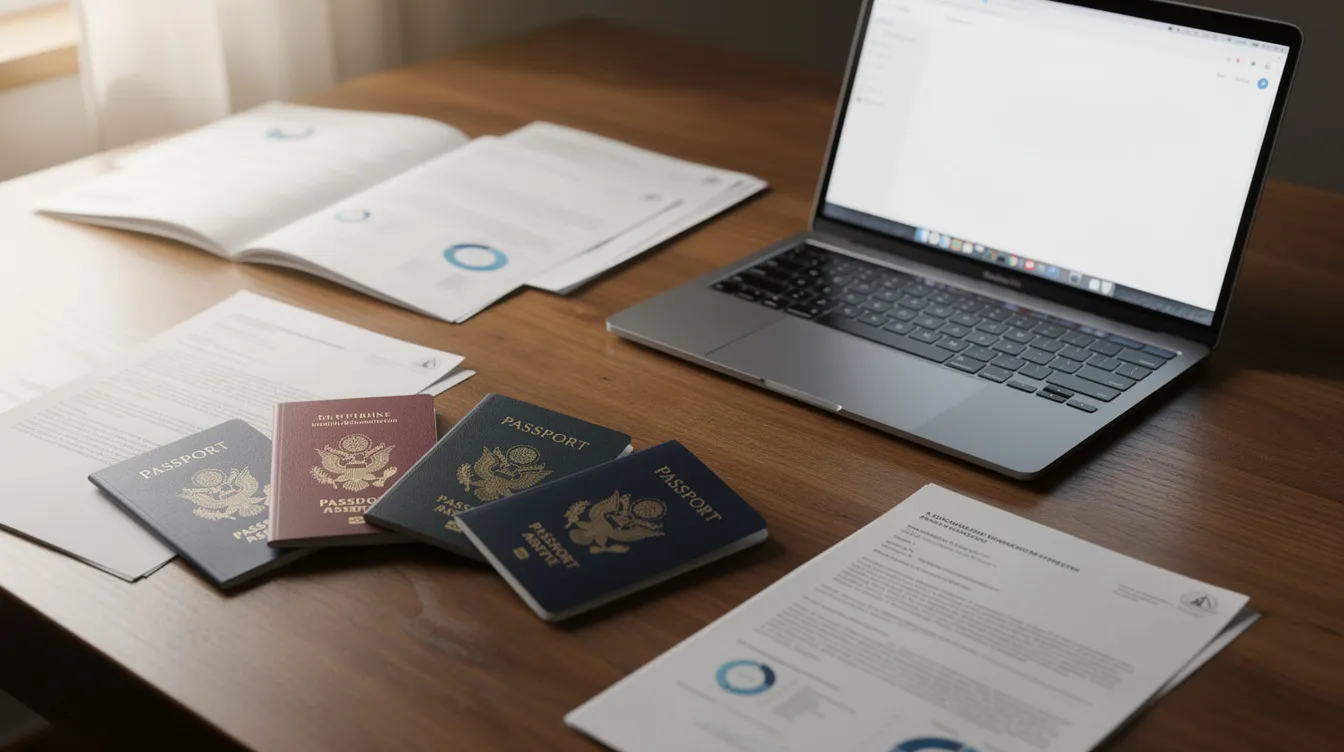
A valid passport with at least six months validity after your planned departure date and sufficient blank pages
A completed application summary sheet from the AVATS system
Recent passport-sized photos meeting Irish specifications
Visa fee payment proof
Financial evidence typically includes:
Bank statements covering the last six months
Payslips or employment contracts
Tax returns or Revenue documentation
Sponsorship letters (if someone else is funding your trip)
Proof you can support yourself without accessing Irish public funds
Agencies help applicants gather proof of accommodation - hotel bookings, tenancy agreements, or host invitation letters - and detailed travel plans including return flights. For non-English or non-Irish documents, agencies coordinate sworn translations and organise originals and copies so visa offices can review them efficiently. Visa applications must include original documents unless specified otherwise by the particular visa office. Official biometric collection and document submission are managed by designated commercial providers in many countries, and your agency should know the local process.
The visa application must be submitted at least three months before travel to allow adequate processing time. Starting earlier is always safer.
Short Stay 'C' and Medical Treatment Visas
General short stay visas cover tourism, business visits, and family visits, while Medical Treatment visas are a specialised short stay category with additional documentation requirements. Both fall under the C visa classification.
A short stay C visa permits a visit of up to 90 days and is usually issued as a single entry visa. For tourists and family visitors, an agency assists with proof of ties to your home country - employment letters, property ownership documents, or evidence of family commitments that demonstrate your intent to leave Ireland after your visit.
The Medical Treatment visa allows stays up to 90 days and has its own specific rules:
Applicants must prove treatment cannot occur in their home country
A confirmed appointment with a private hospital in Ireland is required
No minimum financial amount is specified, but proof of funds covering treatment and living costs is needed
Processing time for the Medical Treatment visa is approximately eight weeks
An agency can coordinate medical documentation, cost estimates from Irish hospitals, and referral letters from the applicant's home doctor. They ensure the evidence clearly demonstrates why the specific medical treatment must happen in Ireland rather than elsewhere.

Long Stay, Join Family, and Study Visas
Long stay D visas are more complex than short stay applications and benefit most from specialist agency support. The stakes are higher, the documentation burden is heavier, and policy changes hit this category hardest.
Join Family (Non-EEA Family Reunification): The new policy document was published on June 12, 2026, introducing significant changes. Irish citizens must earn €75,000 in three years to sponsor a spouse or child - up from roughly €40,000 previously. Category C sponsors (General Employment Permit holders) must provide suitable accommodation evidence and cannot reside in social housing to qualify. Dependent adult relatives face even steeper thresholds: approximately €96,929 gross annual income for one dependent adult.
Agencies help sponsors demonstrate:
Suitable accommodation (size, non-overcrowding, RTB registration for rentals)
Income meeting the relevant financial threshold
Marriage certificates, birth certificates, and custody documentation where applicable
Private medical insurance for dependents
Family reunification and EU treaty rights applications fall under the services of immigration agencies, who coordinate documentation across multiple countries and legal systems.
Student visas require verifying that the course is on the latest eligible list, ensuring tuition payment evidence, and preparing study plans. Agencies also assist with work and employment permit visa applications - including managing applications for Critical Skills and General Employment Permits - by coordinating with Irish employers and checking Department of Enterprise conditions. Foreign employees in Ireland can apply for corporate visas through employer-managed processes.
Dealing with Processing Times, Delays, and Tracking
Irish visa processing times vary significantly by category, location, and season. Published targets are not always met, and this is where realistic expectations matter most.
Visa Category | Typical Processing Time |
|---|---|
Short stay / tourist visa | ~8 weeks |
Business visa | 3–8 weeks |
Join Family (Category B sponsor, Dublin) | 12–18+ months |
Student visa | 8–12 weeks |
Medical Treatment visa | ~8 weeks |
The Dublin visa office was, as of September 2026, processing Join Family applications received in mid-2024 - implying wait times exceeding 15 months for some long stay family routes. Family reunification visa applications can take up to 12 months or more depending on the sponsor category and complexity.
Agencies track applications using visa application transaction numbers, Dublin weekly decision lists, and local embassy tracking tools. Many platforms now provide real-time status updates for visa applications, keeping clients informed without constant manual checking. Where delays exceed published timelines, an experienced agency can help draft status enquiries - without guaranteeing faster outcomes.
Plan travel only after getting a decision. A reputable agency will warn you not to book non-refundable flights before the visa is granted.

After the Decision: Entry Visa, Arrival, and Re-Entry Issues
Once a visa is approved, the visa sticker in your passport shows validity dates, number of permitted entries, and whether it is a short stay or long stay type. Reading these details correctly matters.
Agencies brief clients on how to check the entry type (single entry vs multiple entry visa) and ensure travel plans fit within the validity period. Holding an Irish visa is not a guarantee of entry - an immigration officer at the airport or port still decides whether to grant permission to land. Anyone who does not meet conditions at the border can be refused entry.
Travellers should carry copies of key documents submitted with the visa application: accommodation confirmations, return flights, insurance, appointment letters for medical treatment or study, and financial proof. For residents who need to leave Ireland and return during their permission period, agencies explain when a re-entry visa is required and how the updated application process works via the Customer Service Portal.
Choosing a Trustworthy Ireland Visa Agency
Ireland visa agencies are unregulated in many countries, so applicants must choose carefully. A poor choice can cost money and, worse, lead to a refused application that complicates future attempts.
Key checks before engaging any agency:
Clear physical address and contact details
Transparent pricing with a written service agreement
No guarantees of visa approval - only support with the application process
Familiarity with recent Irish policy updates (March 2024 nationality changes, 2025 student reforms, 2026 family reunification thresholds)
Avoid agencies that claim to "speed up" processing times or have "special connections" inside the Irish embassy or Department of Foreign Affairs. Legitimate immigration advisors cannot guarantee expedited processing of applications. Irish immigration agencies must keep up-to-date with changing visa rules and standards - ask them about recent policy changes to test their knowledge.
Verify online reviews and professional memberships. For complex cases, look for agencies that cooperate with qualified Irish immigration solicitors. For context, established providers like VisaHQ have processed 500,000 visas since 2003, illustrating the scale at which experienced agencies operate, though size alone does not guarantee quality for your specific case.
Costs, Fees, and What an Agency Typically Includes
Official Irish visa fees are set by the Irish government and are separate from any private service fees charged by an Ireland visa agency. Understanding this distinction upfront prevents confusion.
Typical official fees include:
Single entry visa: €60
Multiple entry visa: €100
Transit visa: €25
Biometrics fees in certain countries (varies by location)
Agency fees usually cover eligibility assessment, document checklists, application form completion, document organisation, and submission guidance. A clear quote should indicate what is not included - government visa fees, courier costs, translation fees, medical reports, or travel insurance are typically extra.
Compare value, not just price. An agency experienced with medical treatment visas, Join Family appeals, or student visa changes will often save more in avoided refusals than they cost in fees. Ask whether the company has handled cases in the same category as yours and how many they process full time.
Common Mistakes Applicants Make Without an Agency
Many Irish visa refusals are avoidable and stem from paperwork or information errors. According to RTÉ's analysis of visa data, approximately 63,000 people were refused visas to Ireland across 2024–2025, with an overall approval rate of about 82.5%. Errors in visa applications can lead to delays or refusals, making document pre-checks essential.
Frequent errors include:
Incomplete financial history (e.g., providing only 3 months of bank statements instead of the last six months)
Inconsistent travel dates between forms and tickets
Missing accommodation proof
Failure to prove intent to return to your home country after a short stay
Large, unexplained recent cash deposits in bank accounts
Common misunderstandings also cause problems. Ireland is not part of the Schengen Agreement, so a Schengen area visa does not grant access to Ireland. Similarly, UK visa rules do not automatically apply under the Common Travel Area - separate Irish visa requirements exist. For medical treatment visas, weak evidence that treatment is unavailable at home, or lack of clear proof of ability to pay hospital costs, frequently leads to refusal.
An agency's pre-submission review specifically targets these problem areas, checking every detail a visa officer will scrutinise.
Appeals, Refusals, and When to Seek Legal Advice
Even well-prepared applications can be refused. Refusal letters from the Irish Immigration Service list specific reasons, and understanding these is the first step toward a successful appeal.
An agency can help by:
Interpreting refusal reasons against current policy
Gathering missing or stronger documents
Preparing appeal submissions within set deadlines (often 2 months from refusal date for short stay visas)
Advising honestly on the likelihood of success
For complex refusals involving family reunification, citizenship disputes, or contested legal interpretations, applicants may need to consult an Irish immigration solicitor for potential judicial review - this goes beyond the scope of a normal agency.
Agencies should be transparent about appeal prospects and base advice on current policy, case law, and recent court developments. They should never promise outcomes.
Keep complete copies of every document you submit. This simplifies any future appeal or re-application and saves weeks of re-gathering evidence.
Conclusion
Irish visa rules are detailed and frequently updated, particularly across the 2024–2026 period for family, student, and nationality-specific requirements. An Ireland visa agency adds value by matching applicants to the correct visa type, managing required documents, minimising errors, and explaining realistic processing times and outcomes.
Irish immigration authorities and the Department of Justice make all visa decisions. No agency can guarantee approvals or faster processing - only stronger, more complete applications. Start early: at least three months before intended travel for short stay visas, and six to twelve months ahead for family or study visas.
Use this article as a checklist when speaking with any Ireland visa agency, ensuring you obtain thorough, up-to-date guidance on your Irish visa application.

Frequently Asked Questions about Ireland Visa Agencies
Is an Ireland visa agency mandatory for getting an Irish visa?
No. Use of an Ireland visa agency is entirely optional. Applicants can apply directly through the Irish government AVATS portal and their local embassy or visa office. Many people choose agencies for convenience, language support, and experience with complex categories like medical treatment, Join Family, or study visas. Using or not using an agency has no official impact on how the Irish authorities assess the application.
Can an Ireland visa agency speed up the processing time?
Only Irish immigration authorities control processing times. Agencies cannot shorten official queues or provide premium processing for Irish visas. What an agency can do is avoid delays caused by missing documents or incorrect forms, which indirectly prevents unnecessary extensions of processing time. Be wary of any agency that promises "fast-track" Irish visas or guaranteed decision dates - this is a clear warning sign.
Does using an Ireland visa agency increase my chances of approval?
No private agency can guarantee approval. However, professional preparation can reduce common refusal reasons such as incomplete evidence or inconsistent information. Agencies familiar with Irish visa trends and refusal patterns help clients present clearer explanations of their visit purpose and ties to their home country. Final outcomes always depend on your personal circumstances and Irish immigration law, not on the agency.
How early should I contact an Ireland visa agency before travelling?
Contact an agency at least three months before planned travel for short stay visas, and six to twelve months ahead for long stay, Join Family, or study visas due to longer processing times. Early contact gives time to collect original documents, arrange translations, and address complex issues like accommodation requirements or financial thresholds. Last-minute requests leave almost no room to fix problems if the visa is delayed or refused.
Can an Ireland visa agency help if my visa has already been refused?
Yes. Agencies often assist with analysing refusal letters and preparing appeals or fresh applications, depending on the refusal reasons. For serious or repeated refusals - especially those involving family reunification, citizenship, or rights under EU and Irish law - applicants may also be referred to specialist immigration solicitors. Quick action is important because appeal deadlines are strict, and waiting too long may force a full re-application instead of an appeal.