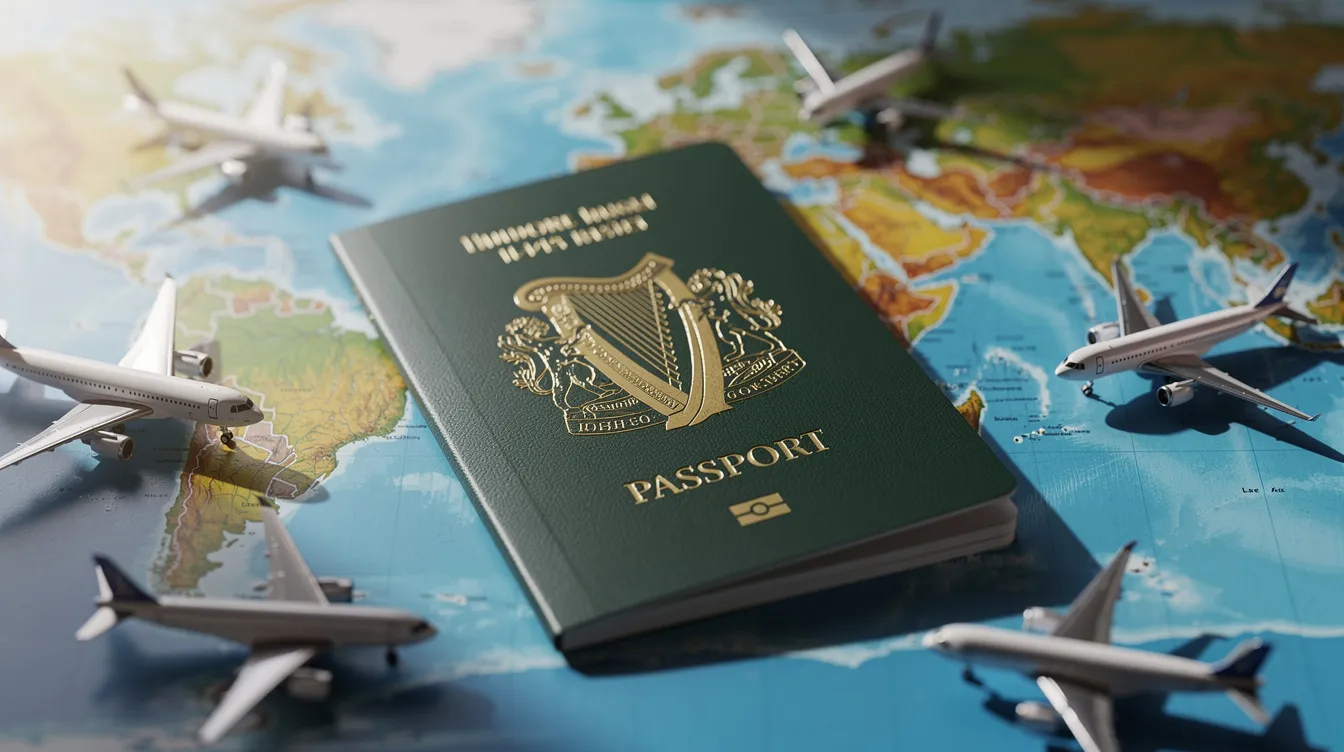
Irish Passport Visa-Free Travel: Where Irish Citizens Can Go Without a Visa
An Irish passport is one of the most powerful travel documents globally, consistently ranking in the top tier worldwide. If you hold one, you already have access to a remarkable number of countries without the hassle of applying for a visa in advance. But "visa free" doesn't always mean zero paperwork, and the rules vary widely depending on your destination.
This guide breaks down exactly where Irish citizens can travel visa free in 2026, what conditions still apply, and how to make sure your passport is ready for your next trip.
Key Takeaways
Holders of an Irish passport enjoy strong global mobility, with simplified entry to the vast majority of the world's countries. Here's what matters most:
Irish passport holders can travel to around 191 visa-free countries and territories (including visa-on-arrival and eTA destinations), depending on which passport index you reference.
Irish citizens enjoy free movement within the European Union, the European Economic Area, and Switzerland, and can live and work in the UK under the Common Travel Area without a visa.
Visa-free rules almost always apply only to short tourism or business stays (typically 30–90 days). Working, studying, or settling abroad generally requires a separate visa or permit.
Even visa-free entry requires a valid passport meeting specific validity and condition requirements set by each destination.
Rules change regularly. Always double-check official government sites or the embassy or consulate of your destination before travelling.
What Is an Irish Passport and Why It's So Powerful
An Irish passport is an internationally recognised travel document issued to every eligible Irish citizen by the Department of Foreign Affairs. Irish passports are issued by the Passport Service of the Irish Government, and you must be an Irish citizen to apply for a passport-whether through birth on the island of Ireland, descent from an Irish citizen, or naturalisation.
ePassports have been issued since October 2006, meaning all current Irish passports contain a biometric chip storing the holder's facial image. This supports automated eGate entry at airports worldwide and adds a layer of security that many countries now require.
The Irish passport ranks among the top passports globally. According to the Henley Passport Index, Irish citizens had visa-free or visa-on-arrival access to around 185 countries in mid-2026, placing the passport 4th in the world.
Why does it rank so high? A few key reasons:
Ireland's EU membership grants free movement across all member states for living, working, and studying.
The Common Travel Area with the UK allows unrestricted travel and residence rights-independent of EU membership.
Broad bilateral visa waiver agreements with countries across every continent.
Strong diplomatic relationships and alignment with major travel authorisation systems like the US ESTA and Canada eTA.
Where Can I Travel Visa Free with an Irish Passport in 2026?
Irish passport holders can travel visa free or with visa-on-arrival or eTA-style authorisation to approximately 191 destinations. The exact count varies between providers-the Henley Passport Index reports around 185, while other sources like eVisas.io count up to 198 when including eVisa and visa-on-arrival options.
The term "visa free" in this article includes destinations where you can enter without a traditional consulate-issued visa-covering true visa-free entry, visa on arrival, and electronic travel authorisations.
Here are some popular destinations Irish citizens can visit without a standard visa for short stays:
Europe: All EU/EEA countries, Switzerland, and most European microstates
UK: No visa needed under the Common Travel Area
United States: The United States requires an ESTA before travel for Irish citizens (not a visa, but a mandatory pre-travel authorisation)
Canada and Australia: Electronic Travel Authorization is needed for entering Canada and Australia
Asia: Japan, South Korea, Singapore, Hong Kong, and others
Latin America: Argentina, Brazil, Chile, Mexico, and more
Irish citizens may need a visa for destinations outside the EU where no waiver agreement exists. Countries like India and Vietnam require a visa prior to travel for Irish citizens, for example.
Visa-Free Travel in Europe for Irish Citizens
As EU citizens, Irish passport holders enjoy the broadest possible access across Europe. With a valid Irish passport, you can enter, live, work, and study in any EU member state without a traditional visa-no time limit as long as you meet local residence registration rules.
For short visits, EU citizens can enter other EU states for 90 days without a visa in any 180-day period within the Schengen Area. Longer stays involve local registration rather than a visa application.
Key points for Irish citizens in Europe:
Free movement applies across all 27 EU states plus Iceland, Norway, Liechtenstein (European Economic Area), and Switzerland.
Microstates such as Andorra, Monaco, San Marino, and Vatican City are visa free with minimal entry requirements.
Ireland is not part of the Schengen zone, so Irish citizens use their passport (not a national identity card in most cases) when crossing into Schengen states. Note that other EU nationals entering Ireland must show a passport or national identity card.
Passport validity requirements inside the EU are less strict for EU citizens, but airlines may still insist on 3–6 months remaining validity as a condition of carriage.
Countries like Germany, France, Italy, Spain, the Netherlands, Denmark, Finland, and Norway are all fully accessible without a visa for any duration.
Common Travel Area and Travel to the UK & Northern Ireland
The Common Travel Area is a longstanding arrangement between the Republic of Ireland, the United Kingdom (including Great Britain and Northern Ireland), the Channel Islands, and the Isle of Man. It predates both EU membership and Brexit, and it remains fully operational today.
The Common Travel Area allows Irish citizens to live and work in the UK without a visa. Irish and British citizens can travel freely between Ireland and the UK without routine immigration checks or any form of permission.
Here's what you need to know in practice:
Irish citizens do not need a visa, work permit, or UK Electronic Travel Authorisation (ETA) to enter or reside in Northern Ireland or anywhere in the UK.
From 2024–2026, many non-Irish, non-UK visitors to the UK require a UK ETA, but Irish citizens are fully exempt under the CTA.
While no formal border immigration controls exist between Ireland and Northern Ireland, travellers should carry a valid passport or official photo ID. Airlines and ferry companies may still require a passport even when law permits other ID.
The CTA also grants Irish citizens extensive rights to access healthcare, education, and social services in the UK-rights that continue post-Brexit under the Windsor Framework.

Irish Passport Visa-Free Access by Region
This section gives a regional overview so you can quickly see where your Irish passport is strongest.
Europe: Almost entirely visa free. All EU/EEA states, Switzerland, the UK, and most microstates and Balkan countries allow visa-free entry for Irish citizens.
Americas: Visa-free access to much of Central and South America, including Argentina, Brazil, Chile, and Mexico, usually for 30–90 day stays. Many Caribbean nations permit visa-free travel for Irish passport holders. The US requires ESTA; Canada requires eTA.
Asia–Pacific: Popular Asian destinations permit visa-free entry for Irish citizens, including Japan, South Korea, Singapore, and Hong Kong. Visa on arrival and eVisa options are available for several countries in Asia and Africa-for example, Thailand and Vietnam offer eVisa options. Countries like India and Vietnam require a visa prior to travel. Australia and New Zealand (note: often referred to by its short form, Zealand, in indexing) require electronic authorisation.
Africa: Several countries in Africa allow Irish citizens to enter visa-free for short visits, including Morocco, Tunisia, and Kenya. Others-such as South Sudan-require advance visas. Conditions vary widely across the continent.
Middle East: Some destinations like Jordan and the UAE offer visa-free or visa-on-arrival access. Iran and several others require a valid visa arranged in advance.
Don't rely on a static list. Country-level rules change, sometimes with little notice. Always verify before booking.
Visa-Free Does Not Mean No Conditions: Entry Rules to Watch
Even when you travel visa free on an Irish passport, immigration authorities at your destination can refuse entry if you don't meet their conditions. Here's a practical checklist:
Passport validity: Visa-free travel typically requires passport validity extending beyond travel dates-often by 3 or 6 months. Some countries (e.g. the US under ESTA) allow entry up to the passport expiry date, but may limit your permitted stay.
Blank pages: Many countries require at least one blank page for entry stamps.
Proof of onward travel: Border officers may ask for proof of a return or onward ticket.
Sufficient funds: You may need to show evidence of enough money to cover your stay.
Accommodation details: Some countries require a hotel booking or letter of invitation.
Digital authorisations: Many countries require digital authorizations for visa-free entry. An eTA, ESTA, or similar system is not a C visa or traditional visa-but it's mandatory, and you must submit the form online before departure.
Health requirements: Some destinations retain vaccination or health insurance rules post-COVID. Check official sources close to your departure date.
Airline and carrier policies can differ from a country's actual immigration law. You could be denied boarding even if the destination would legally admit you-so verify with your airline too.
Applying for or Renewing an Irish Passport for Visa-Free Travel
To benefit from visa-free access, your Irish passport must be valid and in good condition. Many destinations won't let you in if your passport has fewer than six months of validity remaining.
Passport Online is the fastest way to apply for or renew your passport (or your child's passport), and it's available 24/7 from anywhere in the world once you have your supporting documents ready. Standard validity is 10 years for most adults.
Key things to keep in mind:
Processing times vary by season. Summer and pre-holiday periods see longer waits, so submit your application well before planning any long-haul trip.
Your application may be refused if identity is not proven-make sure all documents are complete and accurate.
You can appeal a refused passport application in writing to the Passport Service.
Frequent business travellers whose primary passport is often lodged at an embassy or consulate for visa processing may be eligible for a second passport to maintain visa-free travel flexibility-contact the Department of Foreign Affairs for guidance.
Irish Passports for Children and Family Travel Visa Free
Every child, including infants, needs their own Irish passport for international travel and visa-free entry abroad. Children cannot travel on a parent's passport.
A child's passport is valid for 5 years-shorter than an adult's-which means it's more likely to fall foul of the 3–6 month validity requirements that many destinations impose on arrival.
Practical tips for family travel:
Parents or guardians must sign the application for a child's passport. Both parents' consent is usually required.
Renew children's passports well before peak travel seasons to avoid delays.
If a child is travelling alone, with one parent, or with a person who is not a legal guardian, many destinations require documents such as a letter of parental consent or proof of relationship.
If passport surnames differ between family members, carry birth certificates or other proof linking parents and children. This can smooth visa-free entry and prevent delays at borders.
Some countries apply different rules to unaccompanied minors, regardless of citizenship-check your destination's specific requirements.
Irish Citizens, Dual Nationals and Northern Ireland: Special Situations
Many people on the island of Ireland hold more than one citizenship or live a cross-border life between Ireland and Northern Ireland. This can affect how you travel.
People born in Northern Ireland may be eligible to hold an Irish passport as Irish citizens, a UK passport as British citizens, or both.
Dual nationals should generally enter and leave a country using that country's passport. For example, use your Irish passport to benefit from EU/EEA visa-free arrangements abroad, and your UK passport when entering Great Britain.
Crossing the land border between Ireland and Northern Ireland is usually without routine checks, but all travellers should carry valid photo ID. Non-Irish, non-UK nationals may have additional UK permission or ETA requirements.
Some countries do not recognise dual nationality or treat you differently based on which passport you present. Check official guidance for dual nationals before each trip.
Citizenship and identity choices matter when planning travel: the passport you use determines which visa-free rules apply.
How to Check Current Visa-Free Rules Before You Travel
Visa policies change frequently. Never rely solely on general articles or outdated lists when planning a trip abroad.
Here's a step-by-step approach:
Start with the Irish Department of Foreign Affairs travel advice pages for country-specific guidance.
Check the embassy or consulate of your destination country for the latest visa, eTA, and entry requirements.
Cross-reference with your airline's booking tool or IATA's travel regulations database, which most carriers use at check-in.
If you're transiting through another country (e.g. entering via the UK to reach a third destination), verify transit visa rules separately.
Recheck all requirements a few days before departure-new eTA systems, health declarations, or policy changes can appear with short notice.
Your future trip depends on getting this right. A few minutes of checking can save hours of problems at the border.
Frequently Asked Questions about Irish Passport Visa-Free Travel
Do I always need a visa if I want to work or study abroad, even with an Irish passport?
In most non-EU countries, yes. Visa-free or short-stay entry for Irish citizens usually covers tourism and brief business visits only-not employment or long-term study. Within the EU/EEA and Switzerland, Irish citizens can live, work, and study without a traditional visa thanks to free movement rights, though you may need to register with local authorities after a set period. For any non-EU country, anyone planning employment, an internship, or a long study programme should apply for the correct national visa or permit in advance, even if that country is normally visa free for a short visit.
Can I enter Ireland visa free if I am not an Irish citizen but hold a visa for the UK?
Non-EEA, non-UK citizens generally need a visa to enter Ireland, even if they hold a UK visa. However, under the Short-Stay Visa Waiver Scheme (valid until at least 31 October 2026), eligible nationals with a valid UK visit visa can enter Ireland without a separate Irish visa for short stays. The list of participating countries and conditions is maintained by the Irish Immigration Service-check it before you travel.
How long must my Irish passport be valid to travel visa free?
Requirements vary by destination, but many non-EU countries expect at least 3 or 6 months of validity beyond your planned departure date and at least one blank page for entry stamps. Within the EU/EEA, rules are less strict for EU citizens, yet airlines may still enforce their own minimum validity as a condition of carriage. If you're planning international trips, renew your passport well before it drops below 6 months of remaining validity.
Is visa-free the same as not needing any online registration or eTA?
Not always. "Visa free" in everyday language can still involve an electronic travel authorisation or online pre-registration that you must complete before departure. For example, Irish citizens need an ESTA for America, an eTA for Canada, and similar systems for Australia and other countries. These are not visas in the traditional sense-no consulate visit or interview is required-but failing to complete them will prevent you from boarding your flight. Always check whether an eTA, advance passenger information form, or health declaration applies to your destination, and submit it several days before you fly.
What should I do if I'm refused entry even though my destination is visa free for Irish passports?
Border officials always have the final say on entry, regardless of your visa-free status. If you're refused, stay calm, cooperate fully, and request clear written reasons for the refusal-this documentation may be needed for future applications or appeals. Contact your airline about rebooking options and, where appropriate, reach out to the nearest Irish embassy or consulate for assistance. To reduce the risk of refusal, always carry proof of your accommodation, return or onward tickets, evidence of sufficient funds, and a clear explanation of your purpose of visit.