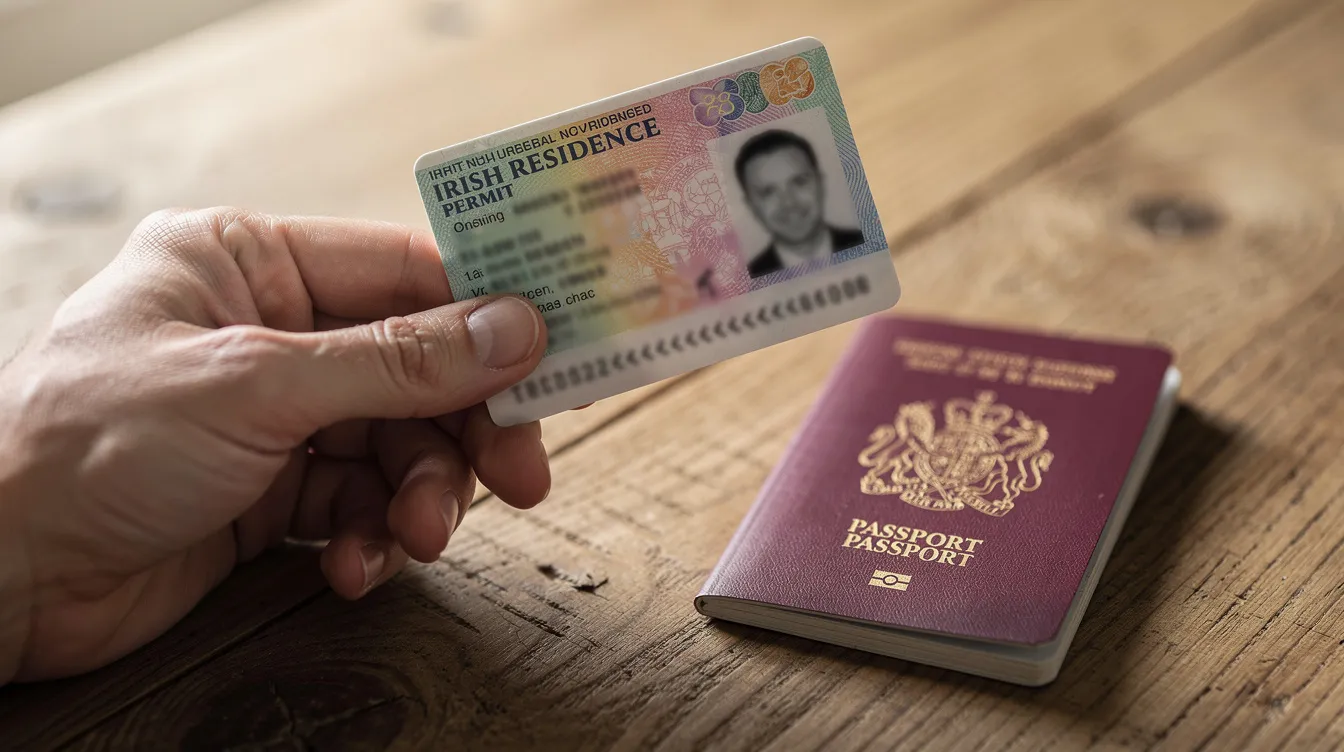
Irish Re-Entry Visa: Do You Still Need One to Enter Ireland?
If you live in Ireland on a work permit, student visa, or family permission, you've probably asked this question before booking a flight home: do I still need a re entry visa to come back? The answer, for most people, is no. But the detail matters, and getting it wrong can leave you stranded at an airport. This guide covers exactly who needs what, when, and how to stay on the right side of Irish immigration rules.
Key Takeaways
On 13 May 2019, Ireland abolished the re-entry visa system for most non-EEA residents. If you hold a valid Irish Residence Permit (IRP card) and a valid passport, you can usually leave Ireland and re-enter without applying for a separate re entry visa. This single change removed a long-standing source of cost and delay for thousands of residents.
That said, the system is not entirely gone. Here's what you need to know at a glance:
Re-entry visas are required for visa-required nationals who do not yet hold a valid IRP or GNIB card. If you arrived on a single-entry D visa and haven't registered yet, you may need a fresh visa or multiple entry visa to return after travel.
Re-entry visas are not needed for valid IRP/GNIB card holders. Your card plus your passport is enough to re-enter Ireland, provided your immigration permission hasn't expired.
Entry visas and re-entry visas are different. An entry visa lets you enter Ireland for the first time. A re entry visa (now mostly abolished) was historically required for short trips outside Ireland and then coming back.
Even with a valid visa or IRP card, immigration officers and airlines can still refuse boarding or entry if documents are missing, expired, or if immigration conditions have been breached.
Rules and Immigration Service Delivery policies can change. Always check the latest official guidance from ISD and the Department of Justice before you plan any travel.
Overview: Abolition of Irish Re-Entry Visas (2019 Onwards)
On 13 May 2019, Ireland's then-Minister for Justice and Equality announced the abolition of the re-entry visa system for most non-EEA residents registered with immigration. The change was managed by what is now known as Immigration Service Delivery, under the Department of Justice.
Before this date, visa-required nationals who wanted to leave Ireland for short trips and return needed to apply for a separate re entry visa from within the state. This process added cost, created processing backlogs, and made spontaneous travel nearly impossible.
From 13 May 2019, adults holding a valid IRP card or an unexpired legacy GNIB card no longer need a re-entry visa to leave and re-enter Ireland, as long as their immigration permission remains valid.
The reform was introduced to simplify travel for legally resident non-EEA nationals, cut administrative delays, and align Ireland's system more closely with practices in other EU member states. The IRP card's strengthened security features (biometrics, EU-standard format) helped justify the change.
Today, re-entry visas are generally restricted to exceptional or emergency scenarios. However, the concept still appears on older guidance, in online forums, and on some embassy websites. If you find a reference to re-entry visas, check the date-it may be outdated.
Entry Visas vs. Re-Entry Visas: What Is the Difference?
Understanding the difference between these two types of visa is the quickest way to avoid confusion. An entry visa is issued to someone abroad who wants to enter Ireland for the first time. A re entry visa was historically needed by residents already living in Ireland who planned to travel and return.
Entry visas come in two forms: short stay C visas (valid for 90 days or less) and long stay D visas (for stays over 90 days). They can be single entry or multiple entry. There are five main types of Irish visas depending on your purpose of travel-tourism, study, employment, family reunification, and others.
Re-entry visas were part of an older system for registered residents from visa-required countries who needed permission to come back after leaving the state. This system has been largely abolished since 2019.
Today, when people ask about re entry visas, they usually mean one of two things: using a multi-entry C or D entry visa for several trips, or simply leaving and coming back with a valid IRP card and permission, without any extra visa.
A visa of any type only controls permission to travel to a port of entry. An immigration officer at the border still decides whether a person can actually enter Ireland. A visa is not a guarantee of admission.
The British Irish Visa Scheme and Ireland's Short Stay Visa Waiver Programme relate to entry visas, not classic re-entry visas. They operate under different rules and apply to specific nationalities.
Who No Longer Needs an Irish Re-Entry Visa?
Since 13 May 2019, most legally resident non-EEA nationals with valid IRP cards are fully exempt from needing re-entry visas. If you are registered and your card is in date, you can travel freely and re-enter Ireland.
Adults from visa-required countries (including nationals of India, Russia, and Turkey) who hold a current IRP card and a passport valid beyond their planned date of return.
Children already registered and holding their own IRP cards, in line with ISD rules.
Long-term residents on standard permissions such as Critical Skills Employment (Stamp 1), General Employment, Student (Stamp 2), Stamp 4 (family members, certain workers), and other stamp types with valid IRP cards.
Nationals from countries that do not require an entry visa for Ireland never need a re-entry visa, regardless of whether they hold an IRP card.
These individuals normally only need their passport plus valid IRP card to re-enter Ireland, as long as they return before their immigration permission expires. They do not need to apply to any visa office or submit a re-entry visa application for short or repeated trips abroad.
Old GNIB cards, phased out from 2017 onward, continue to be honoured until their printed expiry date. They carry the same weight as IRP cards for re-entry purposes and are replaced by IRP cards when renewed or reissued.
Who May Still Need a Visa for Re-Entry Situations?
While the formal re-entry visa system has been abolished for most residents, some visa-required nationals will still need valid entry visas when coming back-especially before they receive IRP cards.
First-time D visa holders who leave Ireland during the initial registration process, before they are issued with IRP cards, may need a multiple entry D visa or a fresh visa to return. If your long stay D visa was single entry, leaving Ireland before registration means you may be unable to return without obtaining a new visa.
Certain children and dependants who are not yet registered for IRP may still need visas, depending on age and local practice. The requirement for re-entry visas for children under 16 has been suspended, but children under 16 must be accompanied by a parent or guardian with a valid Irish residence permission for travel. Applications for minor re-entry visas must be submitted online through official channels.
If individuals have expired permissions or no valid IRP, they cannot apply for a standard re-entry visa. A person whose Irish immigration permission has expired while abroad cannot rely on an old IRP card and may need a new long stay visa or preclearance before re-entry.
Individuals whose visas were cancelled, or who breached conditions (such as unauthorised employment), can be refused entry even if a visa sticker still appears valid. A new visa may be required.
Postal applications for standard re-entry visas are not accepted. All applications must go through the ISD online system.
ISD guidance recommends requesting a multiple entry visa when applying for the first long stay visa if you know you will have to travel home before getting your IRP. If a visa-required person is already abroad and lacks valid re-entry documents, they should apply for the appropriate Irish visa through their nearest Irish embassy or consulate.
Anyone in doubt-for example, those awaiting protection decisions or with complex statuses-should seek written clarification from Immigration Service Delivery or an immigration adviser before leaving Ireland.

Using an IRP Card to Enter Ireland After Travel Abroad
For most residents, the IRP card has effectively replaced the old re-entry visa. It proves legal residence in Ireland and is presented together with the passport when boarding and on arrival.
An IRP card displays your name, date of birth, immigration stamp type (e.g., Stamp 1, 2, 3, 4), card expiry date, and registration number.
Both the IRP card and passport must remain valid for the whole trip. Avoid travelling close to the expiry date-delays or missed flights can push your return past the validity window.
Carry the physical IRP card when leaving and re-entering. Airlines and border staff normally will not accept a photocopy or scan as a substitute.
In practice, a visa-required national with a valid IRP card can travel directly back to Ireland from abroad without any extra re-entry visa, and may transit through some countries that accept residence cards for transit purposes (though each transit country's rules must be checked separately).
Travellers should also carry supporting documents such as employment letters, proof of ongoing study, or tenancy agreements, especially if they have spent extended time abroad but intend to remain in Ireland as their main residence.
If an IRP card is lost or stolen abroad, the person should contact their nearest Irish embassy or consulate. Emergency re-entry visas may be considered for individuals who need to travel urgently without their IRP card, but emergency re-entry visas cannot be requested from outside Ireland-they must be arranged through ISD before departure where possible. If you are already outside the state, the embassy may issue a facilitation letter or advise on obtaining a new entry visa.
Multiple Entry Visas and Short-Stay Re-Entry Scenarios
For those who still require a visa to enter Ireland-for example, first-time long stay visa holders without IRP cards yet-a multiple entry visa can function as a modern equivalent of re-entry permission.
Single entry visas allow one trip into Ireland. Multiple entry visas (C or D) allow several entries during the visa's validity period. You can request multiple entry when submitting your online visa application through ISD or embassy systems.
Typical uses of multiple entry visas include frequent business trips, commuting between Ireland and a home country, or urgent family visits while maintaining residence in Ireland.
Multi-entry visas allow short trips only, not residency. Multi-entry C visas do not let a person "reset" 90-day stays repeatedly to live in Ireland. Doing so can lead to refusal of entry by immigration authorities.
Multi-entry D visas (e.g., for Critical Skills Employment or PhD study) generally allow repeated re-entry during the life of the visa and while the related IRP card and immigration permission remain valid.
Multiple re-entry visas expire with the GNIB or IRP card. Holding a multiple entry visa does not override immigration rules on residence or naturalisation; time spent outside Ireland still counts as absence for long-term residence and citizenship calculations.
Maximum Time You Can Stay Outside Ireland and Still Re-Enter
Irish law does not set a simple "maximum number of days outside Ireland" for re-entry if your visa and permission are still valid. But there are practical limits, and returning after extended absence can create problems.
If your entry visa and IRP card are still valid on the date you land, immigration officers usually permit re-entry, even if you have been abroad for several months. Re-entry visas have no restrictions if you return before expiry.
Re-entry visas allow stays of up to 90 days outside Ireland. Re-entry visas must be valid upon return to Ireland. The maximum stay outside Ireland is generally considered to be 90 days for those relying on re-entry provisions; returning after 90 days may lead to entry refusal.
Re-entry is at the discretion of immigration authorities. There is no fixed "90-day outside Ireland" rule written into statute for residents returning on long stay permission, but frequent or lengthy absences can raise questions about genuine residence.
Long absences mainly affect:
Eligibility for naturalisation, which examines the number of days physically present in Ireland over a span of years. Excessive absences can result in refused applications.
Residence-based permissions where ISD expects Ireland to be your main place of living. Spending the majority of the year abroad may prompt questions at renewal.
Travellers who expect to be outside Ireland for extended periods (over six months in a year) should collect evidence of continuing ties-a job, home lease, family in Dublin or elsewhere in the country-and ideally get professional advice. Final decisions on admission at the border are always at the discretion of immigration officers, who can look at travel history, purpose, and compliance with prior conditions.
Immigration Service Delivery (ISD) Guidance and Covid-Era Updates
Immigration Service Delivery, part of the Department of Justice, regularly issues updates about visa processing, IRP cards, and travel disruptions. The Covid-19 period demonstrated how quickly policies can shift.
During 2020–2021, ISD published FAQs and temporary policies about expired or expiring IRP cards. Many residents were advised not to travel until they had renewed documents.
Some holders of expired IRP cards were granted automatic extension of immigration permission inside Ireland, but this did not always guarantee hassle-free re-entry if they travelled abroad. By June 2020, some visa offices began partially reopening, but backlogs persisted.
ISD sometimes restricts or prioritises certain visa categories (e.g., employment, study, family reunion) during global events, which can affect first-time entry visas and practical re-entry options.
Readers should always check the latest ISD website notices on visas and residence cards, as well as embassy or consulate announcements in their country of residence, since local practices may vary.

Practical Travel Tips When Leaving and Re-Entering Ireland
Small mistakes with documents are a common cause of boarding denials and delays at ports of entry. Here's how to avoid them.
Before departure, check your passport, IRP card, and (if relevant) entry visa are valid for the entire travel period plus a safety buffer. Many airlines and immigration services expect at least six months of passport validity.
Carry your IRP card and passport together at all times. Airlines will often check both at check-in and again at boarding when flying back to Ireland.
Keep copies (paper and digital) of your IRP card, visas, and important documents in case of loss. Supporting documents for re-entry visa applications typically include a valid passport and proof of travel circumstances.
Bring proof of ongoing ties to Ireland: employment contracts, university enrolment letters, tenancy agreements, or a PPS number letter. These are especially useful after long trips abroad.
Check transit visa requirements for any country you are connecting through. Some states accept IRP cards for transit similarly to Schengen residence permits, but many do not. Never assume your Irish visa or IRP card gives you automatic transit rights.
For emergency travel (family illness, funerals, urgent medical treatment), follow visa rules but keep evidence of the emergency. This documentation can help explain long absences or late returns to immigration officers.
How to Get Advice or Help with Irish Entry and Re-Entry Issues
Although the re-entry visa system has been simplified, Irish visa and residence rules remain technical and changeable. Individual circumstances can quickly make things complicated.
Contact Immigration Service Delivery directly if you have doubts about permission expiry dates, unusual travel patterns, or complex statuses such as international protection or switching from student to worker.
Use the official ISD contact channels, local registration offices, or Irish embassies and consulates for up-to-date information on entry visas and IRP cards.
Consider consulting a qualified immigration adviser or solicitor for multiple entry visa strategies during the first year in Ireland, situations involving long absences abroad, expired permissions, or previously refused visas.
Keep written records of any advice received (emails, letters from ISD or embassies) and carry copies when travelling. Having official written confirmation can resolve questions quickly at check-in or the border.
While general online information is useful, individual circumstances-criminal history, overstays, changes in family situation-can radically change the chance of approval at re-entry. Personalised advice is often worthwhile and can save considerable time and stress.
FAQ: Irish Re-Entry Visas and Coming Back to Ireland
Do I need a re-entry visa if I have a valid IRP card?
Since 13 May 2019, most adults from visa-required countries who hold valid IRP cards no longer need separate re-entry visas to re-enter Ireland. You simply present your passport and IRP card at the border. However, you must still respect the expiry date and conditions of your Irish immigration permission. If the IRP card or permission expires while you are abroad, you may be refused entry or need a new visa. If your son or daughter also holds an IRP card, the same rule applies to them.
My long-stay D visa is single entry and I must travel home before I get my IRP card. What should I do?
Where possible, request a multiple entry D visa at the application stage if you know you must travel soon after arrival in Ireland. If you already hold a single-entry visa and must travel, contact ISD or the relevant Irish embassy to ask whether a new visa will be required for re-entry. Be prepared to submit your passport, proof of registration appointment, and an acknowledgement letter from your employer or university.
Can I be refused entry even if my entry visa and IRP card are still valid?
Yes. A visa and IRP card do not guarantee re-entry. Immigration officers retain discretion at ports of entry and can refuse admission for reasons such as suspected abuse of conditions, false information, or security concerns. To reduce this risk, comply fully with the conditions of your permission, carry supporting evidence of genuine residence in Ireland, and be ready to explain the purpose and length of your trip.
What happens if my IRP card expires while I am outside Ireland?
If the card and underlying permission expire while you are abroad, you cannot rely on the old card to re-enter Ireland. If a person's immigration permission has expired, they generally need to establish a new basis for entering Ireland. Contact your local Irish embassy or consulate and ISD as early as possible. Options may include applying for a new D entry visa or seeking written confirmation of an extension if a special policy applies. During Covid-19, temporary measures allowed some flexibility, but those have since lapsed.
Do I need an Irish visa to travel elsewhere in Europe once I am in Ireland?
An Irish entry visa or IRP card does not act as a Schengen visa and generally does not allow you to travel to other European countries. Separate visas are usually required for each state. However, specific programmes like the British Irish Visa Scheme allow certain nationals to visit both Ireland and the UK on one visa for a short period. Chinese and Indian nationals can use a single short stay visa under this scheme, but eligibility is limited and must be checked carefully before you apply. Always verify the detail with the relevant embassy before you travel on behalf of yourself or your family.