
Irish Visa for the UK: How the British-Irish Visa Scheme Works (2026 Guidance)
If you're planning a trip that includes both Ireland and the UK, you've probably wondered whether a single Irish visa covers both countries. The short answer is: only in very specific cases. This article breaks down exactly how the British Irish Visa Scheme works, who qualifies, and when you still need a separate UK visa.
Quick Answer: Do You Need an Irish Visa to Visit the UK?
A standard Irish visa does not automatically allow you to enter the UK. The only exception is for certain eligible travellers who hold a short-stay visitor visa endorsed under the British Irish Visa Scheme (BIVS). Under this scheme, nationals of India and China who apply from their home country can use a single BIVS-endorsed visa to travel between the Republic of Ireland and the UK, including Northern Ireland.
For most nationalities, an Irish visa is valid only for Ireland. British and Irish citizens do not need a visa to travel between the UK and Ireland, thanks to the Common Travel Area. And because neither Ireland nor the UK is part of the Schengen Area, Schengen visa rules are completely irrelevant here.
Before you apply, run through this quick checklist:
Nationality: Are you a citizen of India or China, applying from your home country?
Visa type: Is your visa a short-stay C visitor visa with "BIVS" printed on it?
Purpose: Is your visit for tourism, business, or visiting family?
Duration: Will your stay in the UK fall within 90 days?
First entry: Will you arrive first in the country that issued the visa (e.g. Dublin for an Irish BIVS visa)?
Irish visas are categorized into short-stay and long-stay types. Short-stay C visas allow visits lasting 90 days or less, while long-stay D visas are for stays longer than 90 days.
Rules have changed since the UK left the European Union on 31 January 2020, with the transition period ending on 31 December 2020. Always check the latest government guidance before making travel plans.
Overview: Ireland, the UK, the European Union and the Common Travel Area
Understanding the political relationship between Ireland, the UK, and the EU is an important element for anyone researching irish visa uk travel. These three entities overlap in ways that directly affect visa applications and border controls.
The Republic of Ireland remains a member of the European Union. The United Kingdom left the EU on 31 January 2020. Despite this split, both countries participate in the Common Travel Area (CTA), a bilateral arrangement that predates either state's EU membership. The CTA allows British and Irish citizens to move, work, and live freely across both countries, with broad rights including access to healthcare, education, and voting in certain elections.
However, the CTA does not automatically remove visa requirements for persons from third countries. If you are not a British or Irish citizen, your entry conditions are determined by each country's immigration law, subject to cooperation agreements like BIVS.
Neither Ireland nor the UK is part of the Schengen Area. This means Schengen visas cannot be used to enter either country, and the border-free travel zone of continental Europe does not extend to the Irish-UK travel corridor.
Here is a simple comparison:
EU membership: Ireland - yes; UK - no
Schengen Area participation: Ireland - no; UK - no
Common Travel Area participation: Ireland - yes; UK - yes
What Is the British Irish Visa Scheme (BIVS)?
The British Irish Visa Scheme is a bilateral arrangement between the Irish and UK governments. It allows eligible visitors to travel to both countries on a single short-stay visa, provided that visa carries the "BIVS" endorsement.
BIVS currently covers only nationals of India and China (including Hong Kong and Macau) who apply from their home country. The visa must be a standard visitor category - tourism, business, or certain family visits - for stays of up to six months in the issuing country. The period of stay in the other country may be limited to 90 days, depending on the direction of travel.
The scheme launched in October 2014 with a phased roll-out and has been updated periodically since. An Irish short-stay C visa endorsed "BIVS" may permit entry to the UK. Likewise, a UK standard visitor visa with the same endorsement may allow travel to Ireland.
What BIVS does and does not do:
Does: Allow a single visa for short-stay visitor travel across both the UK and Ireland
Does not: Apply to work visas, student visas, or long-stay D visas
Does not: Grant any right to settle, claim residency, or take up employment in either state
Does not: Cover nationalities outside the current eligible list (India and China)
Who Can Use an Irish Visa to Travel to the UK?
Irish visa requirements depend on nationality and immigration status. Not everyone with an Irish visa can cross into the UK. Here is a practical checklist of the main eligibility conditions:
You must hold an Indian or Chinese passport and have applied from your home country
Your visa must be a short-stay visitor category C with "BIVS" printed on the visa sticker
Your visit purpose must fall within permitted visitor activities (tourism, business, visiting family)
You must arrive first in the state that issued the visa - so with an Irish BIVS visa, you should land in Dublin or another Irish port before continuing to the UK
Your total stay in the UK must not exceed 90 days when entering via Ireland
Non-EEA nationals living in the UK who want to visit Ireland separately require an Irish visa - holding UK residency does not waive Irish entry requirements.
If your Irish visa label does not bear the BIVS endorsement, it will not be accepted for UK entry and you will need a separate UK visa.
Groups who cannot rely on BIVS include:
Persons seeking employment, long-term study, or permanent family reunification in the UK
Nationals outside the India/China eligibility list
Travellers whose itinerary starts in the UK rather than Ireland
Anyone subject to UK immigration control for security or previous-immigration reasons
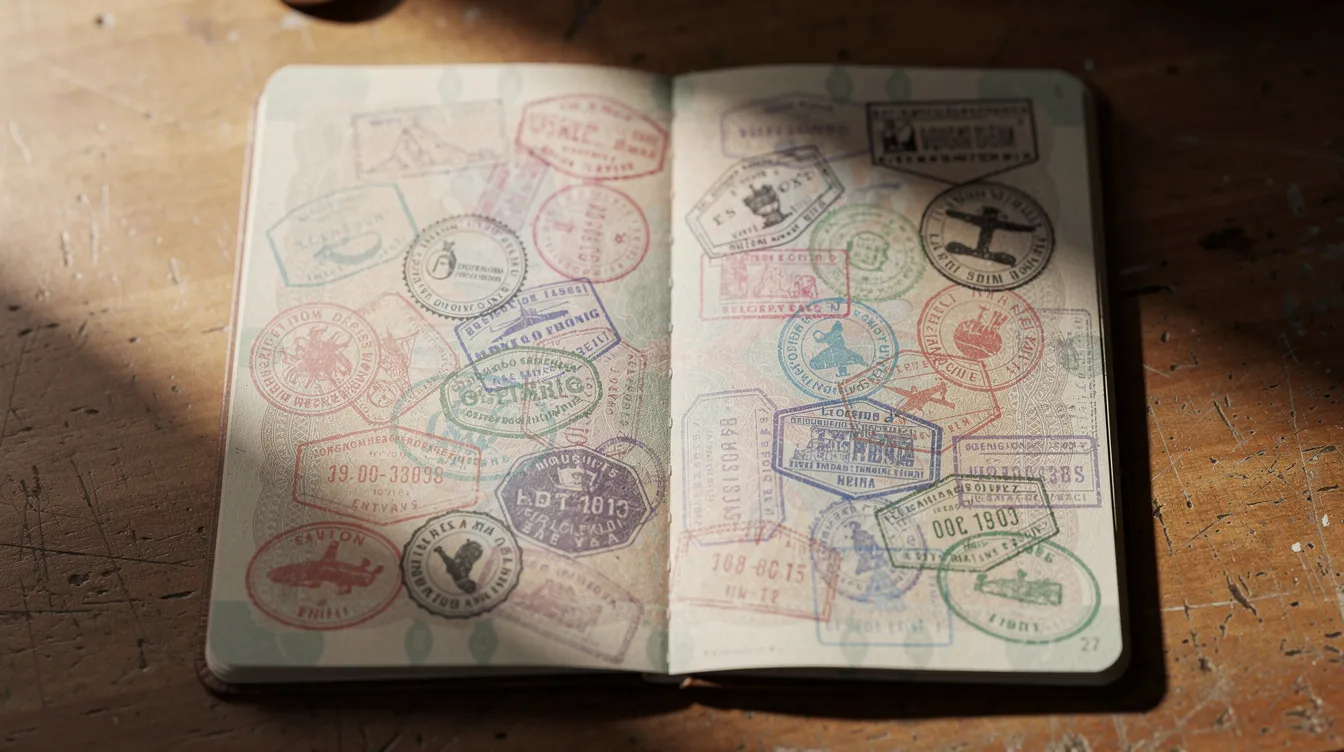
Types of Irish Visas and What They Allow in the UK
Not all Irish visas carry the same weight when it comes to onward travel to the UK. Understanding the category of your visa is essential before planning a cross-border trip.
The primary Irish visa types relevant here are:
Short-stay C visas: Issued for visits lasting 90 days or less - tourism, business, conferences, and some family visits. Visa fees vary by type: €60 for single-entry and €100 for multiple-entry.
Long-stay D visas: For stays longer than 90 days, covering study, employment, and family reunification.
Transit visas: For passing through Irish airports or seaports without entering the state.
Only certain short-stay C visitor visas, properly endorsed under the British Irish Visa Scheme, may be used to visit the UK. Long-stay D visas - even if technically eligible for endorsement - do not grant entry to the UK under UK visitor rules.
For short-stay C visas with BIVS endorsement, consider this example: an Indian tourist receives a 90-day Irish C visa marked "BIVS," flies to Dublin, spends a week exploring Ireland, then takes a flight to London within the permitted period. This is a valid use of the scheme.
For long-stay D visas, the picture is different. An Indian student with a D visa for a course at a Dublin university cannot use that visa to travel to the UK. They would need to apply for a separate UK visa if they wanted to visit London or Belfast during their studies.
Step-by-Step: Applying for an Irish Visa If You Plan to Visit the UK
The application process is similar to a standard Irish visa application, but travellers who also want to visit the UK must plan carefully around BIVS rules. Ireland requires applicants to apply from their country of legal residence.
Here are the main steps:
Confirm BIVS eligibility: Check whether your nationality is covered (currently India and China) and that you're applying from your home country.
Choose the right visa category: Select "Short Stay (C) Visitor Visa" in the application system. The application process typically involves filling out the AVATS online system.
Gather supporting documents: A valid passport is required for applying for an Irish visa. You will also need your travel itinerary (including the UK leg), accommodation bookings in both Ireland and the UK, and proof of the purpose of your visit.
Prepare your financial evidence: Applicants must show proof of adequate finances to avoid state burden. Applicants must submit a complete financial portfolio - bank statements alone are insufficient to prove finances. Include payslips and tax documentation in financial submissions. Health insurance documentation is necessary for financial proof.
Submit biometrics: Visit the Visa Application Centre in your country to provide fingerprints and submit documents.
Explain your UK travel plans: Clearly state your intention to travel onwards to the UK in your cover letter and itinerary. Ensure consistency across all documents to support credibility.
Processing times for Irish visas typically take 21 to 45 days, but applicants in 2026 should allow at least eight weeks plus a buffer. Visa applications are assessed individually by Irish Immigration.
Irish Immigration advises against booking travel before visa approval. Do not purchase non-refundable flights or accommodation until you have received your decision.
Common Mistakes and Reasons for Refusal (Irish and UK Angles)
An Irish visa - especially one intended for use under BIVS - can be refused for many of the same reasons as a UK visitor visa. Incomplete documentation can lead to visa application rejection, and avoiding common errors saves both time and cost.
Typical refusal reasons for BIVS travellers include:
Insufficient financial proof: Inconsistent financial evidence can result in application denial. Proof of dependency requires detailed financial support documentation - not just a single bank statement.
Unclear travel plans: Vague or inconsistent itineraries, especially around the UK leg of the journey, raise red flags.
Failure to prove a genuine relationship: If visiting family, inadequate relationship proof is a common reason for visa refusals. Detailed relationship timelines help prove relationship authenticity - provide a timeline from where you met to present. Supporting documents include texts, emails, and photographs.
Course choice inconsistency: For those combining a visit with educational plans, course choice inconsistency with background can lead to rejection.
Non-disclosure: Previous visa refusals must be disclosed in applications. Honest disclosure of any past refusals for either Ireland or the UK is critical - failure to disclose can result in an automatic refusal.
Mistakes specific to BIVS usage include assuming that any Irish visa automatically allows entry to the UK, not checking that "BIVS" is printed on the visa sticker, or planning to arrive first in the UK on an Irish-issued BIVS visa when the rules require arrival in Ireland.
Both Irish and UK immigration officers make independent decisions at the border. Even with a valid visa, entry is not guaranteed if the officer is not satisfied.
Pre-application checklist:
Are all documents internally consistent (dates, names, figures)?
Have you disclosed all past refusals?
Is your itinerary realistic and supported by bookings?
Does your financial evidence cover the entire trip?
Does your visa sticker show the "BIVS" endorsement?
Irish Visa vs UK Visa: When You Still Need a Separate UK Visa
Many travellers searching for information on an irish visa for the UK actually need a standard UK visa. This is especially true for work, study, long-term stays, or if you are not covered by BIVS.
Scenarios where you still need a separate UK visa:
Your nationality is not covered by BIVS
Your trip starts in the UK rather than Ireland
You plan long-term study or employment in the UK
You intend to stay in the UK beyond 90 days
You are coming to the UK for a purpose not covered by visitor rules (e.g. taking up residency)
Family members of UK citizens may need specific permissions to join them in Ireland - holding a UK family visa does not automatically grant Irish entry rights, and vice versa.
The Irish Short-Stay Visa Waiver Programme allows certain UK visa holders to visit Ireland without a separate visa, but this works in the opposite direction and does not replace the need for a UK visa when travelling from Ireland.
Also note that the UK is rolling out the Electronic Travel Authorisation (ETA) system. Having an Irish visa does not exempt you from future UK ETA requirements if your nationality falls under that scheme.
Impact of Brexit and EU Status on Irish and UK Visas
The UK's withdrawal from the European Union reshaped travel, residency, and work rights across these islands. While Brexit did not abolish the Common Travel Area between Ireland and the UK - it was reaffirmed by a Memorandum of Understanding in 2019 - it did fundamentally change the position of EU nationals in the UK.
EU/EEA nationals now generally need permission under post-Brexit immigration rules to live and work in the UK. Ireland, as an EU member state, continues to apply EU free-movement principles for citizens of other EU countries. This creates a split: an EU citizen can move freely to Ireland but faces a points-based immigration system if they want to settle in the UK.
For third-country nationals, the practical development is that border rules between the UK and Ireland now operate entirely under each country's domestic visa laws - not EU law. The minister responsible for immigration in each jurisdiction sets the conditions independently.
For up-to-date post-Brexit guidance, consult official EU, UK, and Irish government pages rather than relying on outdated media reports or informal sources.
When and Why to Seek Professional Immigration Advice
Immigration rules for Ireland, the UK, and the British Irish Visa Scheme change regularly. Mistakes can lead to refusals, border denials, or restrictions on future travel. Professional immigration advice is worth the investment in the right circumstances.
Situations where tailored advice is strongly recommended:
Complex travel plans involving multiple entries across Ireland and the UK
Previous visa refusals or immigration breaches in either country
Mixed-nationality families where different members hold different immigration statuses
Plans combining short-term visits with longer-term study or work intentions
Cases involving proof of dependency, which requires detailed financial documentation
A regulated immigration adviser or solicitor can review your eligibility for BIVS, ensure your Irish visa strategy aligns with your real travel goals, and help prepare supporting documents to the required level. Make sure the adviser specialises in Irish and UK immigration law and that you can verify their regulatory status with the appropriate council or professional body in each jurisdiction.
Do not rely solely on informal online sources or unverified approval rates. Base your decision on clear rules, an official source from each government, and, where appropriate, expert advice.
Frequently Asked Questions About Irish Visas and the UK
Here are the most common questions travellers raise about using an Irish visa in the UK.
Can I visit Northern Ireland using only an Irish visa? Northern Ireland is part of the UK. If your Irish visa carries the BIVS endorsement and you meet all conditions (correct nationality, arrived in Ireland first, within 90 days), you may travel to Northern Ireland. Without BIVS, you need a UK visa.
How long can I stay in the UK on an Irish BIVS visa? If you hold an Irish-issued BIVS visa and enter the UK from Ireland, your stay in the UK is generally limited to 90 days or the remaining validity of your Irish permission, whichever is shorter.
Do I need a separate UK visa if I am an EU citizen living in Ireland? For short visits, many EU citizens are visa-exempt for the UK. However, for living and working in the UK, you now need permission under post-Brexit immigration rules. Your Irish residence does not automatically grant UK entry for employment or long-term purposes.
What happens if my Irish visa expires while I am in the UK? Your permission to be in the UK is based on the conditions granted at the UK border, not the Irish visa expiry date. However, you could face difficulties returning to Ireland if your Irish permission has also lapsed. Always account for your full travel period before your departure date.
Can I transit through London Heathrow on my way to Dublin using only an Irish visa? Not necessarily. The UK treats transit through its airports as a separate matter under UK transit visa rules. Depending on your nationality, you may need a UK Direct Airside Transit Visa even if your final destination is Dublin. Check the UK's transit visa requirements for your country before booking.
Does an Irish visa grant access to the Schengen Area? No. Ireland is not part of the Schengen Area, so an Irish visa provides no right of entry to Schengen countries. Similarly, a Schengen visa does not allow entry to Ireland or the UK. These are entirely separate systems.
Where should I check for the latest information? Always verify your situation against the most recent guidance from Irish Immigration Service Delivery, UK Visas & Immigration, and relevant EU migration portals. Rules can change at any time, and what was written in September of one year may not apply by the time you travel.
Getting your Irish visa and UK travel plan right starts with understanding whether BIVS covers your specific situation. Take the time to confirm your eligibility, prepare thorough documentation, and - if your case involves any complexity - seek professional immigration advice before you apply.
Publish or Export