
Short Stay Visa Ireland: Complete Guide to Irish 'C' Visit Visas
Key Takeaways
A short stay visa for Ireland (the 'C' visa) lets non-EEA nationals visit Ireland for up to 90 days for tourism, business, family visits, or medical treatment, without the right to work or access public funds.
This visa does not cover travel to Northern Ireland or the rest of the UK; a separate UK visa is required for that.
Applicants must submit a complete visa application with required documents (passport, finances, accommodation, travel plans, proof of purpose) at least 8 to 12 weeks before their intended arrival.
First-time visitors are usually granted single entry only. Multiple entry short stay visas are reserved for limited cases with strong travel history.
Extensions of an Irish short stay visa are rarely granted; only exceptional cases like serious medical emergencies or humanitarian grounds qualify.
Introduction: What Is a Short Stay Visa for Ireland?
The Irish short stay 'C' visa is the standard visit visa for foreign nationals who want to enter Ireland for up to 90 days within a 180-day period. Short-stay visas are intended for non-EEA nationals from visa-required countries, and they cover specific temporary purposes, not long periods of residence. The Ireland visit visa permits entry for up to 90 days.
Here is what the Irish short stay visa is and what it is not:
Covers: tourism, family or friend visits, short business trips, conferences, short courses (under 90 days), and private medical treatment.
Does not cover: employment (paid or unpaid), long-term study, access to Irish public healthcare or social services.
Cannot be converted: holders cannot switch from a C visa to a long-stay work or study visa from inside Ireland. They must leave Ireland and apply from abroad.
No UK access: the visa is valid for the Republic of Ireland only. Visiting Northern Ireland requires a separate UK visa.
Short-stay 'C' visa holders must return to their home country after their visit. If your permission expires while you are still in Ireland, you are in breach of immigration law.
Why Visit Ireland on a Short Stay Visa?
Ireland draws visitors for reasons ranging from the obvious (Dublin, Galway, the Wild Atlantic Way) to the practical (business meetings, medical appointments, family reunions).
Tourism: the Cliffs of Moher, Ring of Kerry, and Dublin's literary heritage attract millions of visitors annually. A tourist visa covers holidays and leisure travel.
Family reunions: if a family member or friend lives in Ireland, a visit family or friend visa allows a stay of up to 90 days.
Business: Ireland hosts European headquarters for Apple, Google, Meta, and hundreds of other firms. Short business trips for meetings, contract signings, or negotiations fit under the C visa.
Medical treatment: some visitors travel for planned procedures at Irish private hospitals, using the medical treatment visa category.
Combined trips: many visitors plan to visit Northern Ireland (Belfast, the Giant's Causeway) as part of the same trip. This requires a separate UK visa, a point that catches many travellers off guard.
Ireland's direct air connections from cities like Dubai, Delhi, New York, Toronto, and most European capitals make it practical for short trips of one to four weeks.
Types of Irish Short Stay Visit Visas
Short-stay C visas fall under different categories based on travel purpose. Each sub-type requires specific evidence, but all share the same core rules: maximum 90 days, no employment, no access to public funds.
Tourist Visa: for individuals traveling for holidays or leisure. You need an itinerary, accommodation bookings, and flight reservations.
Family or Friend Visit Visa: the family or friend visit visa allows visits for social purposes up to 90 days. Requires an invitation letter from the host in Ireland, proof of their immigration status, and evidence of the relationship.
Business Visa: the business visa allows visits for business activities up to 90 days. However, if any paid or unpaid work is involved, it must start and end within a single 14-day period. Business visit visas permit stays of up to 14 days for work-related activities.
Conference/Event Visa: for attending a specific event, performance, or tournament. Same 14-day work cap if any remuneration is involved.
Transit Visa: for passing through an Irish airport without entering the country. Fee is €25.
Medical Treatment Visa: for private healthcare procedures in Ireland. Covered in its own section below.
Each type has its own checklist. The Irish government publishes visa checklists by category.
Single Entry vs Multiple Entry Short Stay Visas
When you fill out the AVATS application, you select either a single entry or multiple entry journey type. Here is the difference:
Single entry: permits one entry into Ireland during the visa's validity window. This is the default for most first-time applicants and tourists.
Multiple entry: permits several entries during the validity dates. Typically reserved for frequent business visitors or people with established immigration history in Ireland or the UK.
The 90-day-in-180-day rule applies to both. Holding a multiple entry visa does not grant 90 fresh days per trip; it means you can split your 90 days across several visits.
The visa officer decides which type to issue based on your previous travel pattern, evidence of ties to your home country, and the strength of your application. Requesting multiple entry on a first application without a clear, documented reason for repeated travel often results in a single entry grant instead.
Fees differ: €60 for single entry, €100 for multiple entry.
Eligibility Criteria for an Irish Short Stay Visa
To be eligible for an Irish short stay visa, applicants must meet the following conditions:
Be a citizen of a visa-required country, or lawfully resident in one, and apply from that country. Applications submitted while travelling in a third country (without legal residence there) are typically refused.
Show a genuine, temporary reason to visit Ireland: tourism, a family event, a business meeting, medical treatment, or similar.
Prove strong ties to the home country. This means evidence of employment, property, enrolled children, or other obligations that demonstrate you will leave Ireland when your permission ends.
Have enough money to cover flights, accommodation, food, insurance, and any other costs for the full duration of the trip. Applicants must show proof of sufficient funds without relying on work in Ireland or Irish public services.
Hold a valid passport with at least six months of validity beyond your planned departure from Ireland.
Have no serious criminal record and no history of immigration violations in Ireland, the UK, or the Schengen area.
Strong ties to the home country are necessary to demonstrate the temporary nature of the visit. If a visa officer cannot see a clear reason for you to return, the application is likely to be refused.
Required Documents for a Short Stay Visa Application
Missing or inconsistent required documents is one of the top causes of visa rejection. Below is a checklist of the following documents you will need.
Core documents (all applicants):
Document | Details |
|---|---|
Valid passport | At least 6 months validity beyond planned departure; include previous passports if available |
AVATS summary form | Printed, signed, and dated |
Passport photos | Two recent photos, signed on the back with your AVATS transaction number |
Visa fee receipt | €60 (single entry) or €100 (multiple entry) |
Residence proof | If applying outside your passport country, proof of at least 3 months remaining legal residence after your planned return |
Financial evidence:
Bank statements covering the last 6 months
Employment letter or payslips (or business registration if self-employed)
If sponsored: sponsor's letter, their bank statements, and a copy of their ID
Visa applications must include evidence of sufficient financial support. Applicants must show proof of sufficient funds for their stay.
Travel and accommodation:
Confirmed or provisional flight bookings
Hotel reservations, or an invitation letter from a host in Ireland with their address, immigration status, and accommodation details
Detailed travel itinerary covering the full visit
The visa application requires proof of accommodation and insurance.
Purpose-specific extras:
Family visit: proof of relationship (birth certificates, marriage certificates), host's IRP card or passport copy
Business: invitation from the Irish company, meeting agenda
Minors: birth certificate, parental consent from both parents
Medical treatment: referral letter, Irish provider confirmation, cost estimate (see next section)
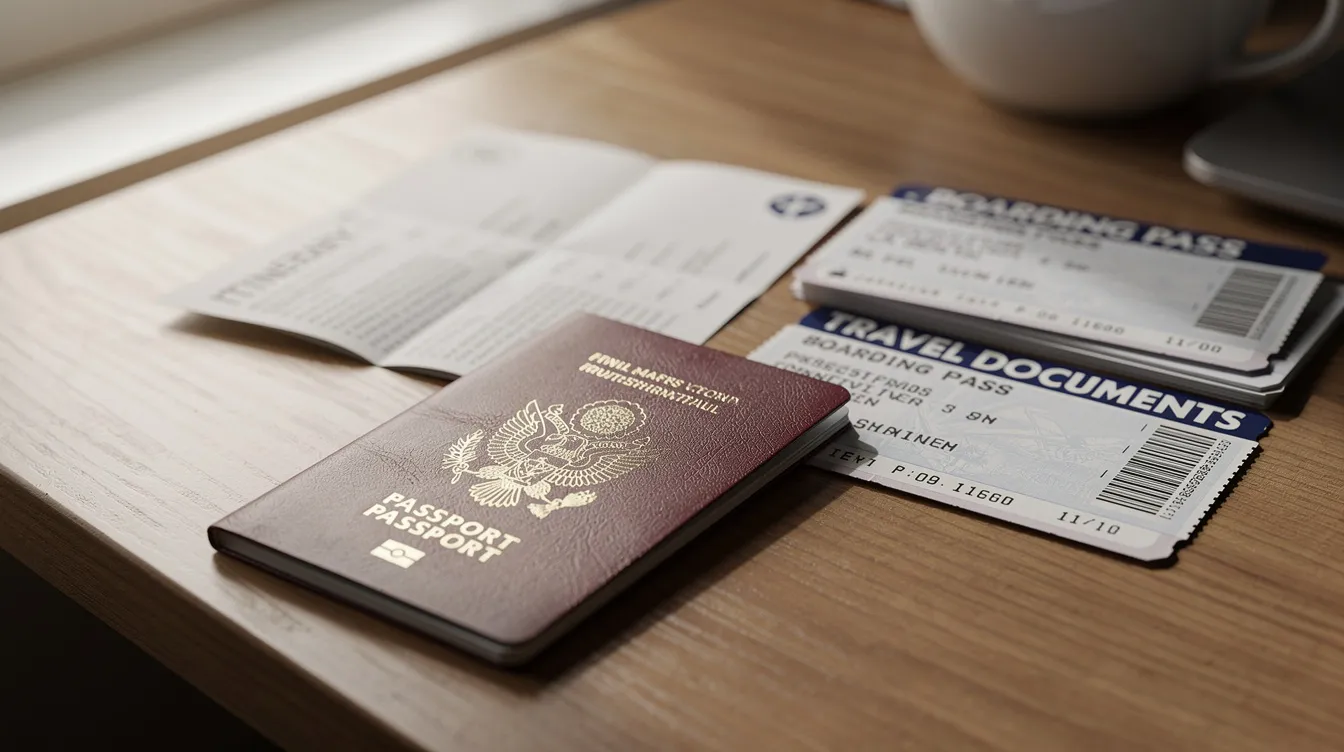
Step-by-Step: How to Apply for an Irish Short Stay Visa
The application process for short-stay visas is conducted online through the Irish AVATS system. A completed online application form is a key requirement for short-stay visas.
Follow this sequence:
Complete the AVATS form online. Select "Short Stay (C)" as the visa type, then pick the correct reason for travel (tourist, business, family, medical treatment, etc.). Choose single or multiple entry.
Print and sign the summary sheet. The system generates a multi-page summary. Print it, sign each page, and note the transaction number.
Pay the visa fee. €60 for single entry or €100 for multiple entry. The fee is non-refundable, even if the application is refused.
Gather all required documents. You have 30 days from completing the AVATS form to submit your documents. Late submissions cause delays.
Submit everything to the correct Irish visa office. This may be an Irish embassy, consulate, or a visa application centre, depending on your country. The AVATS summary sheet names the correct office.
Attend biometrics (if required). Applicants must provide biometric information if from specific countries, including India, Nigeria, China, and Pakistan. This means visiting a visa application centre in person for fingerprints and a photo.
Visa applications should be submitted at least three months before travel. Given that processing takes around 8 weeks, applying fewer than 10 weeks before your trip creates a real risk of delays.
Ireland Medical Treatment Visa (Short Stay 'C' for Medical Care)
The Ireland medical treatment visa is a sub-category of the short stay C visa for foreign nationals who need private medical care in Ireland. The medical treatment visa allows stays up to 90 days.
What you need to show:
A referral letter from a doctor in your home country explaining the diagnosis and why the treatment cannot be performed locally or closer to home.
A confirmation letter from the Irish private hospital or clinic, naming the procedure, expected dates, and estimated duration.
A detailed cost estimate for the treatment itself.
Proof that you can pay all medical and living expenses (accommodation, food, local transport) without working in Ireland or using the Irish public health system.
A typical acceptable financial package includes personal bank statements showing adequate funds, a letter from an employer confirming leave, and receipts for any advance payments to the Irish medical provider.
The medical treatment visa does not cover treatment in public hospitals. All care must be at a private provider, at the applicant's expense.
Processing Time, Visa Fees and Possible Refusals
Processing times: The processing time for short-stay visa applications typically ranges from 8 to 12 weeks from the date the Irish visa office receives all documents. Visa processing typically takes up to eight weeks in most cases, but peak seasons (summer, Christmas) and high-volume embassies can push this longer.
Fees:
Visa type | Fee |
|---|---|
Single entry short stay | €60 |
Multiple entry short stay | €100 |
Transit | €25 |
Additional service charges at visa application centres vary by country. Some nationalities are exempt from fees under bilateral agreements; check the latest Irish government fee list before you apply.
Common reasons for visa refusal:
Weak financial evidence (bank statements too short, balances too low, unexplained large deposits)
Unclear or inconsistent travel plans
No proof of ties to home country (no employment letter, no property, no dependents)
Incomplete document submission
Previous immigration violations in Ireland, the UK, or Schengen countries
False or misleading documents (can result in a 5-year ban)
If your application is refused, the refusal letter will list the specific reasons. You can appeal within the stated deadline (usually two months). Address every refusal ground with new or clearer evidence. A previous visa rejection does not automatically block future applications, but you must disclose all past refusals in any new visa application.
Validity, Duration of Stay and Visa Extensions
The visa sticker in your passport shows validity dates, but the final decision on how long you can stay belongs to the immigration officer at the port of entry. A visa does not guarantee entry; final admission is at the immigration officer's discretion. The officer stamps your passport with the permitted duration, which is normally up to 90 days.
Short stay visas allow a maximum stay of 90 days within any 180-day period, regardless of single or multiple entry status. Visa holders must leave before their visa expires. Overstaying is illegal and can result in deportation or future visa problems.
Extensions: short stay visas cannot typically be extended. The immigration service grants extensions only for exceptional circumstances:
Unexpected serious illness or medical complications during the visit
Humanitarian emergencies
Other circumstances entirely beyond the visitor's control
Routine extension requests for tourism, social visits, or business reasons are not approved. If your travel plans change, you are expected to leave Ireland on or before the date stamped in your passport and apply for a new visa from abroad if you wish to return.
Travel to Northern Ireland and the Short Stay Visa Waiver Programme
An Irish short stay visa covers only the Republic of Ireland. It does not grant permission to enter Northern Ireland, which is part of the United Kingdom. If you plan to visit Northern Ireland (for example, Belfast or the Giant's Causeway), you need a valid UK visa in addition to your Irish visa, unless your nationality does not require a UK visa.
Short Stay Visa Waiver Programme (SSVWP):
The Short Stay Visa Waiver Programme resumed on Oct. 31, 2021. Under this programme, nationals of certain countries who hold a valid UK short stay visa may travel to Ireland without a separate Irish visa, provided they first cleared UK immigration using that visa.
Key SSVWP rules:
24 countries are now eligible under the Short Stay Visa Waiver Programme, including India, China, Türkiye, Saudi Arabia, Philippines, Vietnam, and Ukraine.
Your visit to Ireland must end before your UK leave to remain expires.
Maximum stay in Ireland under the waiver is 90 days or the remaining days on your UK permission, whichever is shorter.
The UK's introduction of Electronic Travel Authorisations (ETAs) from 1 February 2024 changed eligibility: only those with valid UK short stay visas (not ETAs) qualify.
The programme is currently valid until 31 October 2026, but the Irish government can amend or end it at any time. Always check the official Irish Immigration Service website for the latest list of eligible countries before making travel plans.
FAQ: Short Stay Visa Ireland
Can I work or study on an Irish Short Stay 'C' visit visa?
A C visa does not allow general employment. You cannot take up paid or unpaid work, run a business, or access employment in Ireland. The only exception is very limited business activity (meetings, contract signings, performances) that starts and ends within a single 14-day window.
Short courses under 90 days (language programmes, non-degree training, conferences) are permitted. Any study lasting longer than 90 days requires a separate long stay 'D' student visa, which you must apply for from outside Ireland.
Can I apply for a different Irish visa while I am in Ireland on a visit visa?
In most cases, no. Visitors cannot switch from a short stay C visa to a long stay work, study, or family visa from inside Ireland. You must leave the country and apply at the relevant Irish embassy or consulate in your country of residence.
Very narrow exceptions exist (for example, certain humanitarian cases), but these are not routine. Plan your immigration path before you travel rather than hoping to change status after arrival.
Do I need travel insurance for an Irish short stay visa?
Travel or medical insurance is not always listed as a mandatory requirement, but visa officers and border officials may ask for it, particularly for medical treatment visa applicants. At a minimum, your policy should cover emergency medical costs, trip cancellation, and repatriation.
For applicants from countries like Peru, Indonesia, Kosovo, or North Macedonia, where consular assistance from Ireland may be limited, insurance provides practical protection as well as strengthening your application.
How far in advance should I apply for a short stay visit visa to Ireland?
Submit your online visa application and documents at least 8 to 12 weeks before your intended travel date. The processing time for short stay visas is typically eight weeks, but during busy periods (June through August, December), it can stretch longer.
Applying early gives you time to respond to requests for additional documents, correct errors, or lodge an appeal if the decision goes against you. You can apply up to three months before your planned travel date.
If my Irish visit visa is refused, will it affect future applications?
A previous refusal does not automatically prevent future approvals, but you must fully disclose past refusals on every subsequent application. The visa officer will check whether you addressed the original grounds for refusal.
Providing false documents or misleading information is treated far more seriously. The Irish naturalisation and immigration service can impose a multi-year ban (up to 5 years) on applicants who submit fraudulent evidence. A ban of this kind can also affect UK or Schengen visa decisions in the future. The best advice: submit honest, complete, well-organized evidence every time. If something in your application is refused, read the refusal letter carefully, gather stronger proof, and apply again with a clear plan.