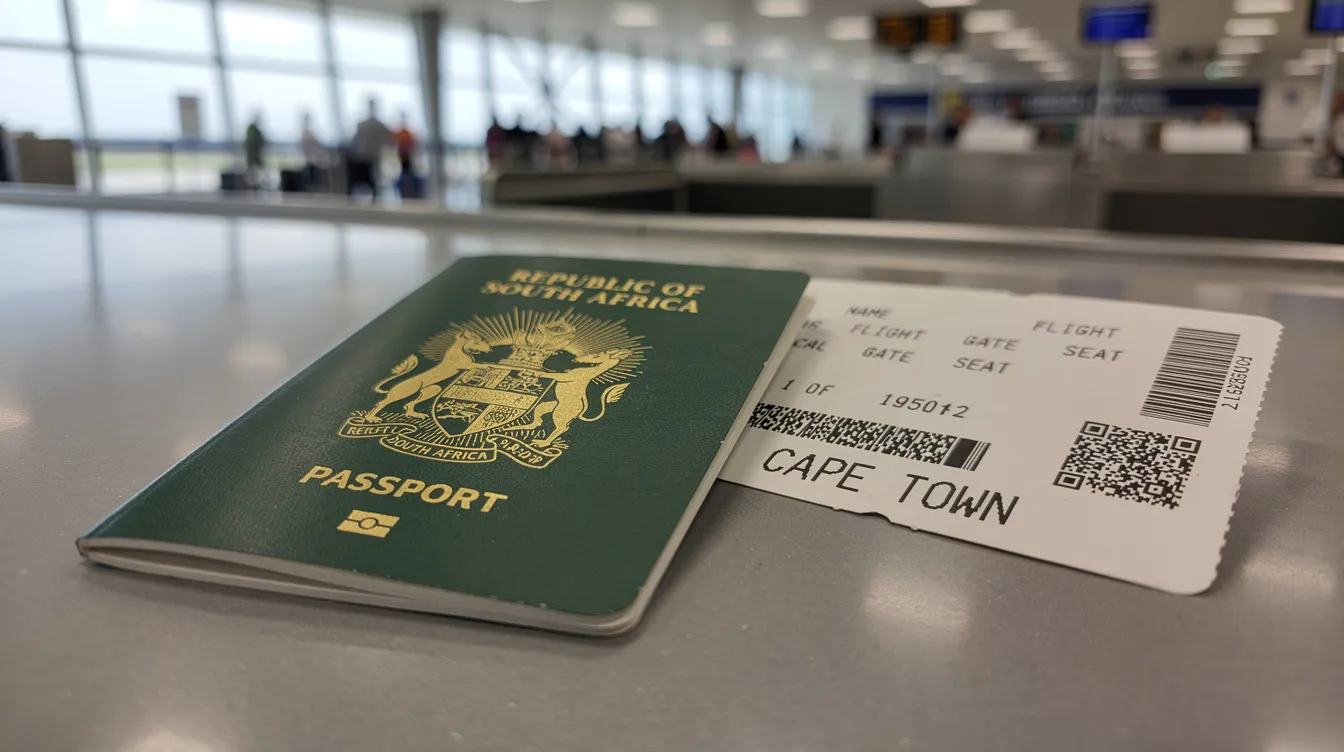
South Africa to Ireland Visa: Complete Guide for South African Citizens
Every South African citizen planning to visit Ireland must secure an Irish visa before boarding a flight. Since 10 July 2024, South African nationals have been classified as visa required for the Republic of Ireland. This guide covers each visa category, the application process from South Africa, required documents, processing times, and what to expect at the Irish border.
Key Takeaways
A South African citizen is a visa-required national for Ireland. No visa on arrival exists; you must obtain an Irish visa in advance for tourism, study, work, or family visits.
Processing times for Irish visas from South Africa run approximately 6 to 8 weeks for family visit applications and up to 12 weeks for tourist visa applications. Submit your visa application up to 90 days before your intended travel date.
Irish visas are separated into short-stay and long-stay categories. A Short Stay Visa (Type C) covers stays up to 90 days; a Long Stay Visa (Type D) covers stays over 90 days, including work, study, and family reunification.
EU Treaty Rights routes and preclearance categories (joining EU/EEA family members, De Facto Partner, Minister of Religion) follow different procedures and processing timeframes.
Travel to Northern Ireland is governed by UK immigration law, not Irish. Holding a valid Irish visa does not grant entry to Northern Ireland; South African travellers may need a separate UK visa.
Overview: Do South African Citizens Need an Irish Visa?
South Africans are visa required for Ireland. There is no provision for visa on arrival. Every South African passport holder must apply through the official Irish visa system before travelling.
Being visa required means airlines will refuse boarding to any South African citizen who does not hold an appropriate Irish visa. South Africans need a visa to work or study in Ireland, and also for tourism, business, visiting family, conferences, and transit through Irish territory.
An Irish visa functions as pre-entry clearance only. Final permission to enter Ireland is granted by an immigration officer at the port of entry, who may refuse admission based on standard immigration controls regardless of the visa.
Main travel purposes requiring an Irish visa include short-stay tourism, business visits, visiting family or friends, academic study, employment, and long-term residence or family reunification. As of mid-2026, applicants should always cross-check current Irish visa requirements on the Irish Immigration Service Delivery website before starting an application; the department updates policies periodically.
Irish Visa Types for South African Travellers
Choosing the correct visa type determines how long you can stay, whether you can work, and how extensions or family reunification operate. South Africans can apply for Short Stay Visas for 90 days or Long Stay Visas for stays over 90 days.
The Short Stay Visa (Type C) covers stays of up to 90 days. Typical uses: tourism, short business trips, conferences, medical attention at a private facility, and visiting family or friends in Ireland.
The Long Stay Visa (Type D) is required for stays over 90 days. Common routes include employment under a valid permit, study programmes longer than one academic term, and family reunification with Irish or EU/EEA nationals.
Specialised categories a South African might encounter include Join Family, Employment Permit, Study, Volunteer, Minister of Religion, and preclearance-based routes. Holding an Irish visa does not automatically allow work, study, or access to public funds unless the visa and any associated residence permission explicitly grant that right.
Short Stay Visa (Type C) for South Africans
The Short Stay Visa is the most common Irish visa for South African tourists and visitors. It allows a maximum stay of 90 days in any 180-day period. A visa-free stay for South Africans is limited to 90 days, and you must leave Ireland on the date stamped in your passport by the immigration officer upon arrival.
Typical short stay sub-types include:
Tourist: holiday travel around Ireland
Business: meetings with Irish companies or clients
Conference: attending a specific event with proof of registration
Exam: sitting a professional or academic examination
Medical Treatment: pre-arranged private hospital appointment with proof of ability to pay
Visit Family/Friends: staying with a host who provides an invitation letter
Key conditions: no access to employment in Ireland (except narrow exceptions such as paid performances or tournaments under 14 days), no switching to long-term residence from inside Ireland, and extensions for overstaying are rarely granted in Ireland. Applicants for a short-stay visa should provide relevant supporting documents showing they will return to South Africa, including proof of employment, property, or family commitments.
Single-entry visas allow one entry while multiple-entry visas allow multiple visits. First-time visa applicants from South Africa are more likely to receive single-entry visas; frequent business travellers with a clean travel history may qualify for multiple-entry.
Long Stay Visa (Type D), Work Visas and Study Routes
A Long Stay Visa is required where a South African plans to live in Ireland for more than 90 days, typically for work, study, or family settlement. Employment permits are required for South Africans to work in Ireland.
Main employment-based options:
Critical Skills Employment Permit: for occupations on the Critical Skills list; minimum salary of €38,000 for listed roles with a degree, or €64,000 for most other occupations. Permit duration is at least 2 years.
General Employment Permit: for roles not on the Critical Skills list; requires additional labour market testing.
Intra-Company Transfer: for employees of multinational companies transferring to an Irish branch.
Atypical Working Scheme: for short-term or contract-based work not covered by standard permits.
A valid employment permit, issued by the Department of Enterprise, Trade and Employment, is normally required before applying for an employment-type Irish visa.
Student visas require full-time enrolment at a recognised Irish programme, proof of paid fees, English-language qualifications, and sufficient funds. Some long stay family routes and EU Treaty Rights routes require a preclearance approval letter before the South African applicant can apply for a D visa.

EU Treaty Rights, Family Routes and Preclearance
EU Treaty Rights in Ireland derive from EU free movement law under Directive 2004/38/EC. They apply to qualifying family members of EU, EEA, or Swiss citizens residing in Ireland.
A South African who is a spouse, registered partner, qualifying de facto partner, dependent child, or dependent parent of an EU/EEA/Swiss citizen may follow a different process with stronger residence rights. Family members of EU citizens can apply for residency in Ireland, including residence cards valid for up to 5 years.
Preclearance categories include De Facto Partner of an Irish national, Join Family of a UK national under the Common Travel Area, Minister of Religion, and Volunteer. South African nationals in these categories often must secure preclearance before travelling.
Processing times for EU Treaty Rights and preclearance applications are published separately by Irish Immigration Service Delivery and can differ from standard visa timelines. Some "Join Family" routes currently report processing periods exceeding 2 years.
Step-by-Step Irish Visa Application Process from South Africa
Here is a concise, chronological guide for the south Africa to Ireland visa process:
Choose your visa type. Determine whether you need a Short Stay (C) or Long Stay (D) visa based on your purpose and duration.
Complete the AVATS form. Visa applications are processed online via the AVATS system. Select "South Africa" as your country of residence, choose your reason for travel, and select single or multiple entry. Print, sign, and date the summary sheet.
Gather supporting documents. Assemble all travel documents, financial evidence, and purpose-specific paperwork (see next section).
Pay visa fees. If AVATS directs your application to the Dublin visa office, pay online and include proof of payment.
Submit your application. Lodge the signed summary, passport, and supporting documents at the Irish Embassy in Pretoria, the Consulate-General, or the designated Visa Application Centre in South Africa. Appointments may be required.
Biometrics collection may apply depending on current policy; the AVATS form will indicate whether fingerprints or a live facial photo are needed. Do not book non-refundable flights or accommodation until your Irish visa is granted.
Required Documents for South African Applicants
Exact document lists vary by visa category, but most South African visa applicants must prepare a core set.
Core documents:
Valid South African passport with at least 6 months validity beyond your return date
Two recent passport-style colour photographs
Signed AVATS application summary
Detailed cover letter explaining purpose, itinerary, and duration of stay
Financial and ties evidence:
Original bank statements for the last 6 months
Salary slips and employment letter on company letterhead
Proof of leave approval from employer
Business registration documents (if self-employed)
Proof of property ownership or family commitments in South Africa
Invitation and accommodation documents:
Signed invitation letter from your host in Ireland
Copy of the host's passport or Irish residence permission
Proof of relation (birth certificate, marriage certificate) for family visits
Accommodation booking confirmation
Any document not in English or Irish must include a certified translation with the translator's contact details and a declaration of accuracy. Additional documentation may be requested by the visa office depending on circumstances.
Visa Fees, Processing Time and Decisions
Visa fees vary based on entry type; single-entry fees are generally lower than multiple-entry fees. South African applicants should confirm the current euro fee and any local service charges in rand on the official Irish Immigration website. Tourist visas for South Africans are free and valid for 90 days. Some categories are fee-exempt, particularly under EU Treaty Rights or for diplomatic passports, though third-party visa application centres may still charge handling fees.
Short-stay visa applications typically take a minimum of 8 to 12 weeks for processing. Visa processing times can take up to 8 weeks for family visit applications. Processing times can exceed 8 weeks during peak application periods, and unforeseen delays can extend processing times beyond stated durations. Long Stay visa processing times are available on the Visa Decisions page published by Irish Immigration Service Delivery. Visa decisions are made in date order from the application date.
After a decision: if approved, the visa office returns your passport with a visa vignette showing permitted dates. If refused, a refusal letter lists the reasons and, for Long Stay cases, typically includes the right to appeal within a stated timeframe.
Travelling to Ireland (and Onward to Northern Ireland)
Even with an approved Irish visa, a South African citizen must satisfy the immigration officer at the border. Carry these items when arriving:
Printed visa decision letter
Invitation letters and accommodation confirmations
Proof of funds (recent bank statement)
Return or onward flight booking
Travel insurance documentation
Ireland and Northern Ireland are separate jurisdictions for immigration purposes. An Irish visa does not grant entry to Northern Ireland, which is part of the UK. A South African person travelling from the Republic of Ireland to Northern Ireland normally needs a valid UK visa. Check UK guidance before booking cross-border travel.
Overstaying a visa can lead to fines and penalties. Overstaying may result in a ban from entering Ireland and can affect future Irish, Schengen, and UK applications. Breaching conditions such as working on a tourist visa carries the same risk.
Practical Tips for South African Applicants
Apply early. Short Stay visas should be applied for 90 days in advance. Visa applications should be submitted up to 90 days before travel to account for processing times of 8 to 12 weeks.
Keep copies. Maintain digital scans and physical copies of every document, including the AVATS summary and submission confirmation.
Be consistent. Forms, letters, and financial evidence must match on names, dates, and occupation. Inconsistencies trigger delays or refusals.
Write a clear cover letter. Explain your itinerary, funding plan, and ties to South Africa. This helps the visa officer process your application faster and gives you the benefit of a well-organised submission.
Get insurance. Purchase travel and medical insurance for the full duration of your stay. Medical attention in Ireland can be expensive for visitors without cover, and the distance from South Africa makes repatriation costly.
For further information on transitional arrangements or priority processing under specific circumstances, contact the Irish Embassy in Pretoria or visit the Irish Immigration Service Delivery website.
Frequently Asked Questions
Can a South African citizen get an Irish visa on arrival?
No. South African citizens are visa required and must obtain the correct Irish visa in advance from outside Ireland. Arriving without a valid visa will normally result in the airline refusing boarding or the immigration officer refusing entry at the border. There is no provision for visa on arrival for South African nationals under current law.
How long can a South African stay in Ireland on a Short Stay (C) visa?
The Short Stay C visa allows a maximum stay of 90 days in any 180-day period. The exact duration is stamped by the immigration officer on arrival. You must leave Ireland on the date stamped in your passport. Overstaying beyond the permitted period harms future visa applications and can result in removal from the country. Extensions for overstaying are rarely granted.
Can I work in Ireland on a tourist or visit visa as a South African?
A tourist or standard visit visa does not permit a South African citizen to work for any Irish employer or company, whether paid or unpaid. To work legally, you need an approved employment permit and a corresponding Long Stay D visa, followed by the correct residence permission after arrival. Register with immigration after arriving to obtain the appropriate stamp.
Does an Irish visa allow me to visit other EU countries or the Schengen Area?
Ireland is not part of the Schengen Area. An Irish visa does not permit entry to Schengen destination countries such as France, Germany, or Spain elsewhere in Europe. South Africans must apply separately for a Schengen visa from the embassy or consulate of the main Schengen country they plan to visit.
What can I do if my Irish visa application from South Africa is refused?
Refusal letters list specific reasons and indicate whether the Minister has granted a right of appeal. Long Stay (Type D) refusals generally include the right to request a review. For some Short Stay C cases, the right of appeal may not be accepted. If an appeal is allowed, address each refusal reason with stronger or additional evidence and submit within the deadline stated in the refusal letter. You can also advise a solicitor for support with complex cases.