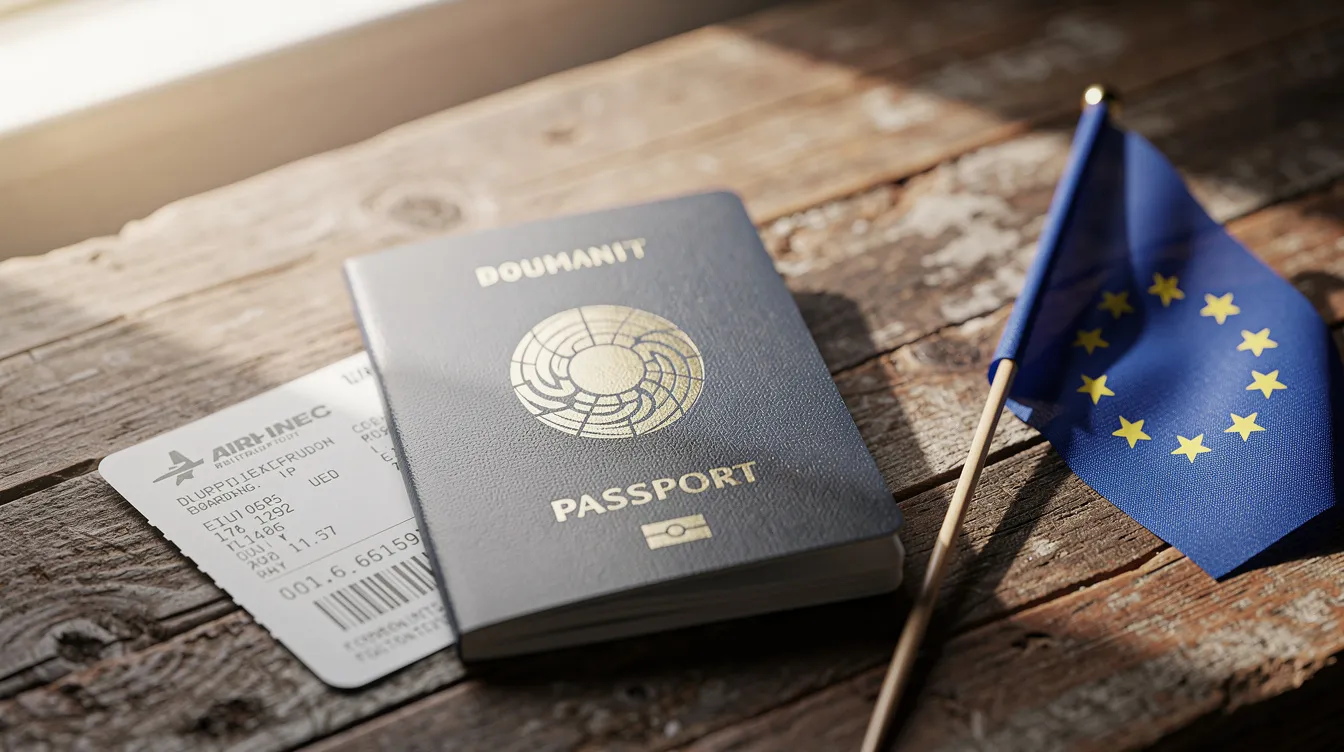
Visa for Germany from Ireland: Complete Guide for 2024
Planning a trip, a career move, or a family reunion in Germany while living in Ireland? The rules around getting a visa for Germany from Ireland are straightforward once you understand them, but they trip up thousands of people every year. This guide walks you through who needs a visa, which type to apply for, and exactly how to get one from Ireland.
Key Takeaways
Irish citizens do not require a visa to enter Germany for short or long stays. Other EU/EEA nationals living in Ireland are in the same position. However, non-EU nationals in Ireland from visa-required countries usually need to apply for a German visa before travel.
Germany is part of the Schengen Area, while Ireland is not. An Irish residence permit alone does not exempt visa-required nationals from Schengen visa rules. You must determine if you need a short-term Schengen visa or a long-term national visa.
A short-term visa (Schengen Type C) covers stays up to 90 days for tourism, business, or family visits. A long-term visa (Type D) is for stays exceeding 90 days, such as work, study, or family reunification.
Applications from Ireland go through the German Embassy in Dublin or its authorized visa centre. Appointments, biometric data collection, and specific documents are required.
Visa requirements may change at any time. Always check with embassies and the official German Embassy site before you start your application.
Do You Need a Visa to Travel from Ireland to Germany?
Whether you need a visa depends on your nationality, the length of your stay, and the purpose of your travel. Simply living in Ireland does not automatically exempt you from Germany's visa rules.
Here are the three main groups of travellers:
Irish and other EU/EEA/Swiss citizens: No visa is needed for any length of stay in Germany. For stays exceeding 90 days, you must register at a German town hall, but no advance visa application is required.
Non-EU nationals with Irish residence from visa-exempt countries: If you hold a passport from a country like the United States, Canada, Australia, or Brazil, you generally do not need a short-stay visa for Germany. Your nationality grants you visa-free entry for up to 90 days.
Non-EU nationals from visa-required countries: If your passport is from a country such as India, Pakistan, Nigeria, or China, you must apply for a German visa in advance. Non-EU nationals living in Ireland may require a visa to enter Germany, regardless of their Irish residence status.
A few additional points play an important role here:
Even if you hold an Irish Residence Permit (IRP), Stamp 1, Stamp 2, or Stamp 4 permission, you may still need a visa for Germany if your nationality is on the Schengen visa-required list. The only notable exception involves Stamp 4 EUFam holders, whose permits reference Article 10 of Directive 2004/38 EC. These holders are considered exempt from the Schengen visa requirement when entering Germany.
Non-Irish family members of EU citizens who live in Ireland register through ISD or local GNIB offices to obtain their residence permission. Effective 8 July 2024, registration responsibility transfers to ISD in Cork and Limerick for certain applicants, so check with the relevant Department of Justice office if you are applying in a county outside Dublin.
Nationals of South Africa and Botswana need a visa for Ireland from July 2024 under updated rules. Additionally, South African and Botswana nationals need a visa from 10 July 2024 for short stays in the Schengen area, which means they now need both an Irish visa and a German Schengen visa if they are travelling through Ireland to Germany.
The 90-days-in-any-180-day rule applies to all short-stay visits. Time spent in any Schengen country counts towards this limit, so if you visited France for two weeks, those days reduce your remaining allowance for Germany in the same 180-day period.

Types of German Visas When Applying from Ireland
Before you apply, you must determine whether you need a short-term Schengen visa or a long-term national visa. These two categories cover almost every situation for people in Ireland.
Short-stay Schengen Visa (Type C):
A short-term visa is for stays up to 90 days in any 180-day rolling period.
Typical purposes include tourism, business trips, visiting family or friends, attending conferences, or completing short training courses in Germany.
This visa usually does not allow you to take up employment or start a career in Germany. If your trip involves paid work, you almost certainly need a national visa instead.
The visa fee for adults is €90, with an additional service fee of approximately €30 if you apply through the authorized visa centre, bringing the total to around €120.
Long-stay National Visa (Type D):
A long-term visa is for stays exceeding 90 days.
Purposes include employment (including EU Blue Card jobs), student visas, vocational training, research positions, and family reunification with a spouse or children already in Germany.
Applications for long-term national visas may require additional supporting documents specific to the purpose of the stay, such as a job contract, university admission letter, proof of qualifications, or marriage and birth certificates.
Visa sponsorship may be available for eligible international candidates, particularly in sectors facing labour shortages. For example, visa sponsorship may be available for eligible international healthcare candidates, where a company or hospital team in Germany acts as the sponsoring employer.
The fee for a national visa is €75, plus any service charges from the visa centre.
This visa is often the first step before obtaining an electronic residence card in Germany.
Already hold a multi-entry Schengen visa from another country?
If you have a valid multi-entry Schengen visa issued by, say, France or the Netherlands, you can generally use it to enter Germany for a short stay, provided Germany is not your main destination or the visa's conditions allow it.
However, if Germany is your primary destination for the trip, or if you plan to work or study there, a German-issued visa is required.
Key differences for residents of Ireland:
Work visas require a qualifying job offer that meets salary thresholds and German labour-market rules. Holding an Irish work permit does not transfer to Germany.
Some family reunion and study visas have language requirements (often A1 German for spouses joining a partner in Germany).
In most cases, you must apply from outside Germany. You cannot enter on a tourist visa and then switch to a work or study visa once you arrive.
How to Apply for a German Visa from Ireland
Applications are usually lodged in Ireland at the German Embassy in Dublin or through its outsourced visa application centre. Every applicant must follow a structured process in order to obtain the correct visa.

Here is the step-by-step process:
Step 1 - Check if you need a visa. Use the German Federal Foreign Office visa navigator or the EU's online visa checker. Enter your nationality, purpose of stay, and planned length of visit.
Step 2 - Identify your visa type. Decide whether your situation calls for a short-stay Schengen visa (Type C) for tourism or business, or a long-stay national visa (Type D) for work, study, or family reunification.
Step 3 - Book an appointment. For short-stay visas, book through the visa application centre. VisaMetric is the authorized external partner for managing visa applications in Ireland. For national visas, register via the German Consular Services Portal, which will direct you to either the Embassy or the visa centre. Note that from 1 July 2025, visa applications are being transferred to TLScontact as the new service provider.
Step 4 - Complete the application form. For short-stay visas, fill out the VIDEX form online, print it with the 3D barcode, and sign it. For national visas, the Consular Services Portal generates the relevant forms after you submit your details.
Step 5 - Gather your documents. Required documentation for visa applications typically includes a valid passport and proof of accommodation. Here is the full checklist:
Valid passport: must be issued within the last ten years, valid for at least three months beyond your planned departure from the Schengen area, with at least two blank pages.
Irish residence permission: a valid IRP card, GNIB card, or permission letter, ideally valid for several months beyond your trip.
Proof of legal residence in Ireland: utility bill, tenancy agreement, or PPS-related documentation.
Travel health insurance with a minimum coverage of €30,000 is required for short stays in the Schengen area. The policy must cover all Schengen countries and the full duration of your stay.
Flight reservations (return or onward tickets) and accommodation bookings, or an invitation letter from your host in Germany with their address and contact details.
Proof of funds: Irish bank statements for the last three months, payslips, an employment letter, or a sponsor's financial documents. German authorities generally look for evidence that you can support yourself during the trip, with an informal reference of roughly €45 per day in some guidance.
For work, study, or family visas: job contract, university admission letter, proof of academic qualifications, marriage or birth certificates as applicable.
Step 6 - Attend your appointment. Go to the visa centre or Embassy in person. Submit your documents, provide biometrics (fingerprints and photograph). Biometric data collection is mandatory for visa applications for all applicants aged 12 and over.
Step 7 - Pay the fee and wait. Fees are paid in euro at the time of your appointment. Short-term visa processing generally takes about 15 calendar days once the application reaches the Embassy, though appointment wait times at the visa centre can add 2 to 6 weeks depending on the season. For national visas, processing can take several months depending on the category and volume.
Apply well in advance of your planned travel date. End-to-end timelines of 3 to 9 weeks are realistic for short-stay visas, and national visa applicants should allow several months.
The visa centre (currently VisaMetric, transitioning to TLScontact from July 2025) is responsible for collecting your documents and biometrics and forwarding everything to the Embassy. The Embassy team makes the final decision on your visa. The visa centre does not have the authority to approve or refuse applications.
Some applicants may qualify for reduced or waived fees. Children under a certain age, students, and certain family members of EU citizens may be subject to lower charges. Check the German Embassy Dublin site for the latest fee schedule.
Traveling from Ireland to Germany After You Get Your Visa
Holding a visa does not guarantee entry into Germany. German border police retain the responsibility to check your documents when you arrive, and they can refuse entry if something does not add up.

Here is what to carry and keep in mind when you travel from Ireland:
Documents to have on you:
Passport with your German visa (or valid Schengen multi-entry visa).
Irish residence card or permission letter showing your legal place of residence in Ireland.
Copies of hotel bookings or your invitation letter, return or onward flight ticket, and travel insurance certificate.
Evidence of funds or employment in Ireland if relevant-a recent payslip or employer letter can demonstrate ties to Ireland and your intention to return, which matters for safety and credibility at the border.
Border controls from Ireland to Germany:
Because Ireland is not in the Schengen Area, passengers flying or sailing from Ireland to Germany pass through full border control on arrival. There is no open-border arrangement for this route, unlike travel between two Schengen countries.
Airlines at Dublin, Cork, Shannon, and other Irish airports may also check your visa and travel documents at boarding. Arrive at the airport early and have everything accessible.
Practical tips for your trip:
If you plan to leave and re-enter the Schengen Area from Ireland during the same trip (for example, flying back to Dublin mid-trip and then returning to Germany), ensure your visa supports multiple entries.
Keep a running count of days spent in the Schengen Area. Overstaying the 90-day limit can result in fines, future visa refusals, or entry bans that could change your travel plans for years.
After arrival on a long-stay visa:
You typically must register your address at the local German town hall (Einwohnermeldeamt) within days of arrival. After that, visit the Foreigners' Office (Ausländerbehörde) to start the process of converting your national visa into a residence permit card.
Be prepared to show proof of health insurance, your accommodation contract, and-depending on your visa category-language certificates or integration course enrolment.
FAQ
Below are answers to extra questions about German visas for people living in Ireland that were not fully covered above.
Can I apply for a German visa in Ireland if I am only visiting Ireland as a tourist?
Generally, no. The German Embassy in Dublin requires applicants to be legally resident within its consular district. If you are only visiting Ireland on a short trip, you are not considered a resident and should apply for your German visa from your home country instead. Exceptions are rare and must be discussed directly with the Embassy.
Does having an Irish work permit or Stamp 4 mean I automatically get a German work visa?
No. Irish immigration permission does not transfer to Germany. Even if you hold a Stamp 4 and have built a career in Ireland, you must still meet Germany's own criteria for a work visa. That means having a qualifying job offer from a German company, meeting any applicable salary thresholds (for example, for the EU Blue Card), and providing proof of recognised qualifications. Your Irish status may support your application by showing professional experience, but it is not a substitute for German requirements.
Can I travel to other Schengen countries from Ireland if I have a German-issued Schengen visa?
Yes. A valid German Schengen visa generally allows travel to all Schengen countries across Europe for short stays. However, Germany should be your main destination (or where you spend the most days), and the total time in all Schengen states must respect the 90-day limit within any 180-day period.
Do children living in Ireland need a visa to visit Germany with their parents?
It depends on each child's nationality, not only the parents'. If a child holds a passport from a visa-required country, they need their own visa. Minors also need additional documents such as a birth certificate and, if not travelling with both parents, a notarised consent letter from the absent parent or legal guardian. If the child is an EU or EEA national, no visa is needed.
Where can I find the most up-to-date rules for German visas from Ireland?
Always check the official German Embassy Dublin website for the latest visa forms, fees, appointment systems, and any new rules. The German Federal Foreign Office visa service portal is another reliable site. Avoid relying solely on third-party guides-including this one-because rules, fees, and processing times can change from one year to the next. Bookmark the Embassy page and review it before you start any application.