Visa to Turkey from Ireland: 2026 Guide for Irish Citizens
Planning a trip from Ireland to Türkiye? Whether you're chasing the buzz of Istanbul's Grand Bazaar, floating over Cappadocia in a hot air balloon, or closing a deal with a Turkish partner, the first question on your mind is probably about visa requirements. This guide breaks down everything Irish citizens need to know about entering Türkiye in 2026, from passport rules to overstay penalties, so you can make informed decisions before you book that flight.
Key Takeaways
Irish citizens do not need a visa, e visa, or electronic visa to enter Türkiye for tourism and short business travel, provided the stay does not exceed 90 days in any 180-day period.
No e visa application is required for Irish citizens for short stays. However, different rules apply for work, study, or long-term stays, which typically require a specific visa or residence permit.
Your Irish passport must be valid for at least 150 days on the date of entry. Turkish immigration authorities may also ask for proof of onward travel, accommodation details, and sufficient funds. Failing to provide these can result in being refused entry.
Irish Passport Cards are not accepted to enter Türkiye. You must carry a full Irish passport book.
Overstaying the 90 days carries serious consequences: fines based on the number of days overstayed, potential deportation, and re-entry bans lasting from one month to five years. Medical treatment, work, or study often require specific visas or a residence permit obtained in advance.
Do Irish Citizens Need a Visa to Enter Türkiye from Ireland?
The short answer: no. Irish citizens do not need a visa to enter Türkiye for tourism or short business travel, as long as the total stay does not exceed 90 days in any 180-day period. Ordinary passport holders can enter visa-free, and there is no requirement to apply for a turkey visa or e visa in advance.
This visa exemption covers a wide range of non-paid activities:
Tourism and sightseeing
Visiting friends or family members
Short business meetings, conferences, and trade fairs
Cultural events and similar visits
Think of it as covering the most common trips Irish travelers make: a week exploring Istanbul's mosques and markets, a fortnight on the Aegean coast in Bodrum, a family holiday at the all-inclusive resorts of Antalya during the summer months, or a long weekend of hot air ballooning over the fairy chimneys of Cappadocia.
What the exemption does not cover is paid employment, long-term study at a Turkish university, or any stay that extends beyond the 90-day window. Those scenarios require a separate visa to enter Türkiye, obtained before travel from the Turkish Embassy in Dublin.
Entry Requirements for Irish Citizens in 2026
Visa-free travel does not mean you can stroll into the country with nothing but a smile. Turkish authorities still enforce entry requirements at the border, and border police have the authority to refuse entry if you cannot satisfy them.
Here are the core requirements every Irish citizen should meet:
Requirement | Details |
|---|---|
Valid Irish passport | Must be a full passport book (not a passport card) |
Passport validity | At least 150 days from the entry date |
Purpose of visit | Consistent with tourism or business travel |
90/180-day rule | No more than 90 days in any rolling 180-day period |
Proof of accommodation | Hotel bookings, rental confirmation, or host address |
Return or onward ticket | Evidence you plan to leave Türkiye within 90 days |
Sufficient funds | Enough money to support yourself for the trip |
Border officers may request any of these supporting documents, so have them ready. A valid Irish passport alone gets you through the door, but the extras prevent delays or refusals.
It is strongly advised to check the latest guidance from both the Turkish Ministry of Foreign Affairs and the Irish Department of Foreign Affairs close to your travel date, as rules can change at short notice.
Irish Passport Validity and Document Rules
Türkiye requires your passport to be valid for at least 150 days on the date of entry. This figure comes from Turkish law: the 90-day permitted stay plus a mandatory 60-day buffer. Some older advice mentions at least six months as a rule of thumb, and using that as a safety margin is sensible if your passport is borderline.
A few more document rules to keep in mind:
Your passport must be in good physical condition. Major tears, water damage, or detached pages can lead to airlines refusing boarding or Turkish authorities denying entry.
If your passport is damaged or close to expiry in 2026, renew it through the Irish Passport Service well before your trip. Processing times for Irish passport renewals can vary, so don't leave it to the last minute.
Children must travel on their own passports. Adding children to a parent's passport is not accepted by Turkish authorities or airlines.
Visa requirements depend primarily on the traveler's passport nationality, not their residency status. So even if you live outside Ireland, it is your Irish passport that determines your visa-free access.
Can You Enter Türkiye with an Irish Passport Card?
No. The Irish Passport Card is not a valid travel document for entry into Türkiye. It is designed primarily for travel within the EU, EEA, Switzerland, and the UK. Türkiye sits outside that zone.
If you're flying from Dublin, Cork, Shannon, or any other Irish airport to Türkiye, you must bring your full Irish passport book. Airlines will check your travel documents at the gate, and they will refuse boarding if you present only a passport card for a flight to Türkiye.
You can carry both your passport book and passport card if you like, but only the passport book allows you to enter Türkiye.
Passport cards are not accepted as a valid travel document by Turkish authorities under any circumstances, regardless of the purpose of your visit.
How Long Can Irish Citizens Stay in Türkiye Without a Visa?
Irish citizens can stay a maximum of 90 days within any 180-day period under the visa-exempt regime. This is the same rule that applies to many foreign nationals visiting Türkiye on short stays.
The critical detail is that this is a rolling window, not a calendar-year calculation. Here's a practical example:
You enter Türkiye on 1 May 2026 and stay for 30 days, departing on 31 May.
You return on 1 August and stay another 40 days, departing on 10 September.
You've now used 70 of your 90 days within the 180-day window that started on 1 May.
You can return, but you only have 20 days left before 28 October (180 days after 1 May).
To track your time, check your passport stamps for exact entry and exit dates. Online stay calculators also exist, though Turkish authorities do not provide an official tool specifically for Irish travelers. If you travel frequently for business, keeping a simple spreadsheet of your entry and exit dates is a practical safeguard.
Understanding the 90/180-Day Rule and 'Visa Runs'
The 180-day reference window moves with each passing day. On any given date you are in Türkiye, Turkish authorities can look back 180 days and count how many of those you spent in the country. If the total hits 90, you must leave.
This means that leaving Türkiye after using nearly all 90 days and re-entering immediately does not reset the allowance. You must wait until enough days drop out of the trailing 180-day window before you can legally re-enter.
Attempting quick "visa runs" to nearby countries like Greece or Cyprus as a workaround will not legally reset your 90 days. Turkish law explicitly prohibits using this strategy.
Using dual passports to circumvent the rule is also prohibited. If you hold both an Irish passport and another nationality's passport, Turkish authorities track stays by identity, not by document.
If you genuinely need to spend more than 90 days in Türkiye in any 180-day period, the correct approach is to apply for a residence permit or a long-stay visa before your allowed time runs out.
What Happens on Arrival in Türkiye for Irish Travelers?
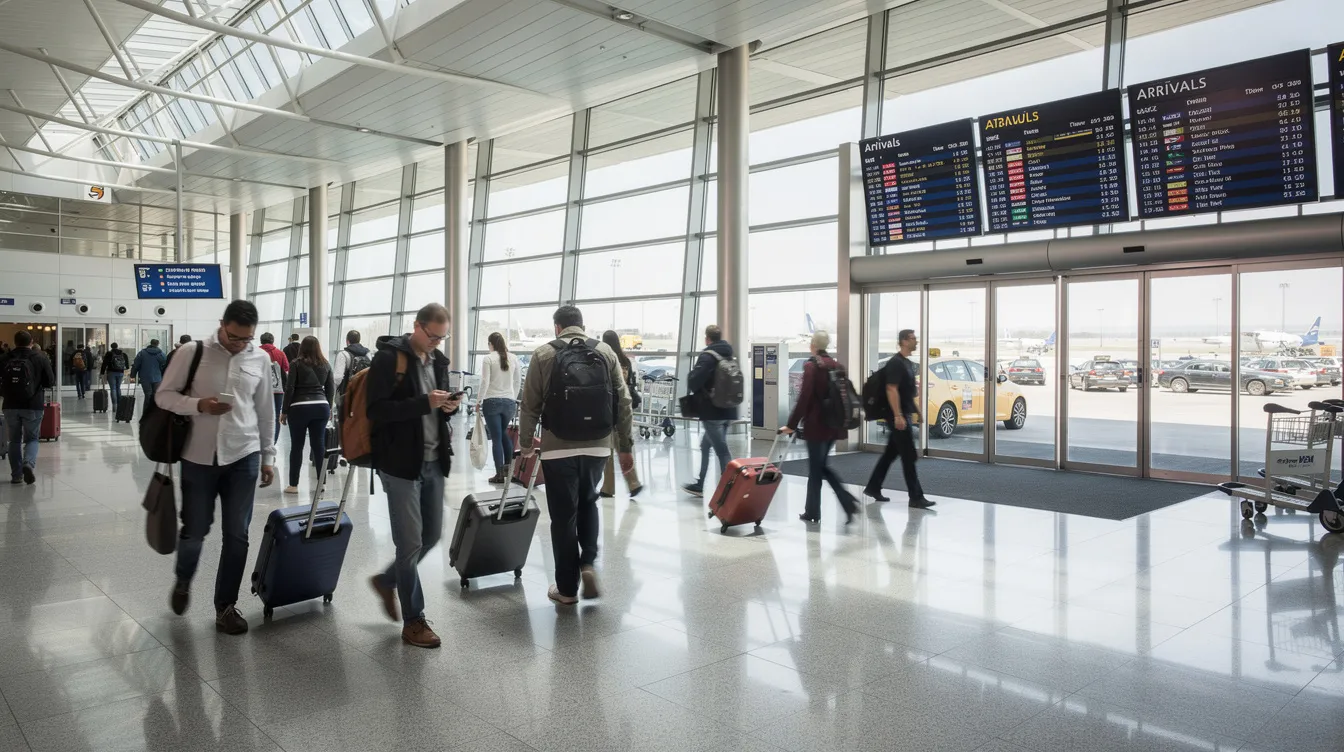
Here's what a typical arrival looks like at major Turkish airports such as Istanbul (IST) or Antalya (AYT):
Your flight lands and you follow signs toward passport control.
As an Irish citizen, you bypass any visa desks or sticker visa counters entirely. There is no visa fee to pay and no visa on arrival to purchase.
You join the queue for passport control, where a border officer checks your passport, its validity, and your stamps.
The officer may ask questions: purpose of visit, how long you plan to stay, where you are staying, and whether you have a return ticket.
Once satisfied, they stamp your passport with the first entry date and you proceed to baggage reclaim.
Having printouts or digital copies of hotel bookings and return flights ready on your phone or tablet speeds up the process. If border police have concerns about your visit - unclear accommodation, no onward travel plans, or insufficient funds - they can delay or deny your entry.
Electronic Visa (e Visa) and When Irish Citizens Might Need It
Irish citizens normally do not need to apply for a Turkish e visa or electronic visa for short tourist or business stays in 2026. The e visa system exists as an online pre-authorization for nationalities that do require a visa, and Türkiye offers electronic visas for many nationalities around the world. Irish passport holders, however, are exempt and do not appear on the e visa eligibility list.
There are two scenarios where the e visa might become relevant for someone traveling from Ireland:
Dual nationals: If you hold a second passport from a country that does require a visa and you plan to travel on that document, you must check whether that nationality is eligible for an e visa.
Non-Irish travel document holders: Residents of Ireland who are not Irish citizens and travel on a different passport should verify their own visa requirements through the Turkish Ministry of Foreign Affairs website.
Be wary of external "visa agents" offering to sell visas to Irish citizens for short stays. These services are usually unnecessary and sometimes charge a visa fee for a product you do not need. If you hold a valid Irish passport, you can enter Türkiye without any visa application.
Business Travel from Ireland to Türkiye
Short business travel - meetings, conferences, trade fairs, contract negotiations - is allowed under the 90-day visa-free regime for Irish citizens. Many Irish companies have growing ties with Türkiye, and direct flights from Dublin on carriers like Turkish Airlines make the trip convenient.
However, there are limits. Paid employment with a Turkish company, long-term assignments, or setting up a business typically require a work visa and a residence permit obtained in advance. The line between "attending a meeting" and "working" can be blurry, so carry supporting documents to clarify your status:
Invitation letters from Turkish partners or clients
Conference registration confirmations
A letter from your Irish employer explaining the purpose and duration of the trip
Frequent business visitors should carefully track their total days spent in Türkiye to comply with the 90/180-day limit. If your role requires regular travel, consider whether a residence permit or work visa might be more appropriate.
Medical Treatment and Health-Related Travel
Türkiye has become a popular destination for Irish travelers seeking medical treatment such as dental care, cosmetic surgery, hair transplants, and laser eye procedures. Most of these treatments are fully completed within a few days or weeks, making them perfectly compatible with the 90-day visa-free tourist stay.
Key considerations for medical travelers:
Book with licensed, accredited clinics and obtain written treatment plans before departure.
Routine medical travel for procedures completed within 90 days can usually be done under visa-free entry.
Longer-term medical treatment, rehabilitation programs, or participation in clinical studies may require different permissions. Check with both the Turkish clinic and the Turkish Embassy in Dublin before booking.
A European Health Insurance Card is not valid in Türkiye. Irish travelers must pay for all medical treatment out of pocket or through private insurance.
Comprehensive travel insurance that specifically covers planned medical procedures and potential complications is essential. Standard holiday policies often exclude elective surgery, so read the fine print.
Refused Entry: Common Reasons and How to Avoid Problems
Visa-free status does not guarantee entry into Türkiye. The final decision always lies with Turkish border officers, and they can refuse entry to anyone who does not meet the requirements.
Common reasons Irish citizens could be refused entry:
Passport not valid for at least 150 days from the entry date
Damaged or deteriorated passport book
No proof of onward travel or a return ticket
No clear accommodation plan (hotel booking, rental, or host details)
Suspicion of intent to work illegally
Previous overstay on record or an outstanding entry ban
Inability to demonstrate a sufficient amount of funds for the duration of the stay
To minimize risk, carry printed or digital evidence of your hotel reservation, return flights, bank statements or credit cards, and any relevant invitation letters. If you are refused entry, Turkish authorities may return you to your point of origin at your own expense or at the airline's discretion.
If held for questioning or denied entry, contact the Irish Embassy or consulate in Türkiye for consular assistance. They cannot overrule Turkish immigration decisions, but they can provide guidance and support.
Overstaying in Türkiye: Fines, Bans, and How to Rectify It
Staying beyond 90 days without a residence permit is a violation of Turkish immigration rules, even for visa-exempt Irish citizens. Overstaying even one day can lead to serious penalties.
The consequences escalate with the length of overstay:
Overstay Duration | Consequence |
|---|---|
Any overstay | Administrative fines calculated by the number of days overstayed |
3–6 months | Entry ban of 1 month |
6 months–1 year | Entry ban of 3 months |
More than 1 year | Entry ban of up to 5 years |
Deportation may occur for significant overstays in Türkiye, and the cost of removal typically falls on the traveler. Fines for overstaying are calculated by the number of days and are imposed at departure points.
If you realize you might overstay due to an emergency - illness, flight cancellation, or other unforeseen circumstances - contact the local Provincial Directorate of Migration Management as early as possible. They can advise on options, which may include applying for a short-term residence permit or obtaining documentation that explains the circumstances.
Keep careful records of your entry and exit dates, and always plan to leave Türkiye before your allowed stay expires. The consequences of overstaying can follow you for years.

Long-Stay, Work, and Study Visas for Irish Citizens
Visa-free access for Irish citizens lasts up to 90 days and does not grant the right to live, work, or study long-term in Türkiye. If your plans go beyond a short visit, you need the appropriate national visa.
Typical long-stay categories include:
Work visa: Required for paid employment or long-term business assignments. The employer in Türkiye usually initiates the application process. Processing time for work permit decisions is generally around 30 days once documentation is complete, according to Turkey's investment agency.
Student visa: For enrollment at a Turkish university or language program. After arrival, students apply for a student residence permit through the e-ikamet online system.
Family reunion visa: For Irish citizens joining family members who are Turkish nationals or legal residents.
Long-term residence permit: For retirees, property owners, or those with other qualifying ties to Türkiye.
Digital Nomad Visa: Türkiye offers this option for remote workers. It requires proof of income of 3,000 USD monthly.
Longer stays beyond 90 days require a specific visa or residence permit application, submitted either from Ireland at the Turkish Embassy or, in some cases, from within Türkiye before the visa-free period expires.
Application Process and Processing Times for Turkish Long-Stay Visas
For Irish residents applying for a long-stay visa, the general process looks like this:
Complete online forms: Visa applications can be submitted online for Türkiye through the consular portal.
Book an appointment: Schedule a visit to the Turkish Embassy in Dublin or the relevant consulate.
Submit documents in person: Attend with your documents, biometrics, and passport photos.
Wait for processing: Processing times vary by visa type and season, but allow several weeks minimum.
Typical documents requested during the application process include:
A valid Irish passport (with sufficient validity beyond your intended stay)
Passport-sized photographs
Proof of sufficient funds (bank statements, salary slips)
Health insurance valid in Türkiye
Accommodation details in Türkiye
Work contract, university enrollment letter, or other purpose-specific documents
Police clearance certificate, if requested
Apply well ahead of your intended travel date. Processing times can stretch during peak periods, and missing a deadline could delay your trip significantly.
For further information and the most up-to-date timelines, fees, and any changes to visa processes in 2026, check the official Turkish consular websites directly. The Turkish Embassy in Dublin is the primary point of contact for Irish citizens.
Travel Insurance, Healthcare, and Safety Considerations
Travel insurance is not a legal entry requirement for Irish visitors to Türkiye, but both Irish and Turkish authorities consider it strongly advised. Here's why:
The European Health Insurance Card and its successor schemes are not valid in Türkiye. This means Irish travelers must pay for any medical treatment out of pocket or rely on private insurance.
Hospital and emergency costs in Türkiye, while often cheaper than in Ireland, can still be substantial - especially for surgery, ambulance transfers, or evacuation.
Standard travel insurance policies should cover medical emergencies, evacuation, trip cancellation, lost luggage, and any planned activities like water sports or adventure tourism.
On general safety, Türkiye is a popular destination with Irish tourists, and most tourist areas are safe. However:
Avoid demonstrations and large political gatherings.
The Irish Department of Foreign Affairs advises a "high degree of caution" for certain areas near the Syrian border.
Follow local laws regarding photography near military installations, respect for religious sites, and conduct during public holidays.
Practical Tips for Traveling from Ireland to Türkiye
A few practical pointers to round out your planning:
Flights: Direct flights from Dublin to Istanbul are available year-round, with Turkish Airlines among the main carriers. Connecting flights via London, Amsterdam, or other European hubs serve Antalya, İzmir, and Dalaman, particularly during the summer months.
Currency: The official currency is the Turkish Lira. Euros can be exchanged at airports, banks, and exchange offices. ATMs are widely available in cities and resorts, and credit cards are accepted in most tourist areas.
Documents: Keep both printed and digital copies of your passport, insurance policy, medical treatment agreements (if applicable), and hotel bookings in separate locations. If your phone dies or your bag is lost, a backup copy can save your trip.
Customs: Check Turkish customs rules before packing. Restrictions apply to bringing certain medicines, large sums of cash (declare amounts over €10,000 equivalent), and exporting cultural artifacts or antiques from the country.
Registration: If staying with friends or in a private rental, your host may need to register your presence with local authorities. Hotels handle this automatically.

Frequently Asked Questions About Traveling from Ireland to Türkiye
Do I need to apply for an e Visa if I hold an Irish passport?
No. For standard tourism or short business trips up to 90 days, Irish citizens do not need to apply for an e visa or electronic visa. You can enter Türkiye visa-free using a valid Irish passport. The e visa system is designed for nationalities that do require pre-authorization, and Irish ordinary passport holders, diplomatic passport holders, service passport holders, and official passport holders are all exempt for short stays.
Can I enter Türkiye if I already used 90 days earlier this year?
It depends on the rolling 180-day window. If you have already spent 90 days in Türkiye within the last 180 days, you must wait until enough days have passed outside that window before re-entry is permitted. Leaving and immediately returning does not reset the count.
What if my flight transits through Türkiye on the way to another country?
If you remain in the airside transit area and do not pass through Turkish passport control, you generally do not need any visa. However, if you exit the transit area to enter Türkiye - even briefly - you must meet the same entry requirements and 90/180-day rules as regular visitors.
Can I bring prescription medication from Ireland into Türkiye?
You may usually bring personal prescription medicines in their original packaging, accompanied by a doctor's letter stating the medication name, dosage, and medical necessity. Check Turkish regulations in advance if you carry controlled substances, strong painkillers, or large quantities. Turkish customs officers may inspect medications at entry.
Is it possible to switch from visa-free status to a residence permit while in Türkiye?
In some cases, yes. Visitors can apply for a short-term residence permit from within Türkiye before their 90 days expire, using the e-ikamet online system and then attending an appointment at the local migration management office. However, approval is not automatic, and overstaying while waiting for a decision can still lead to penalties. Start the process early and obtain legal advice if needed.