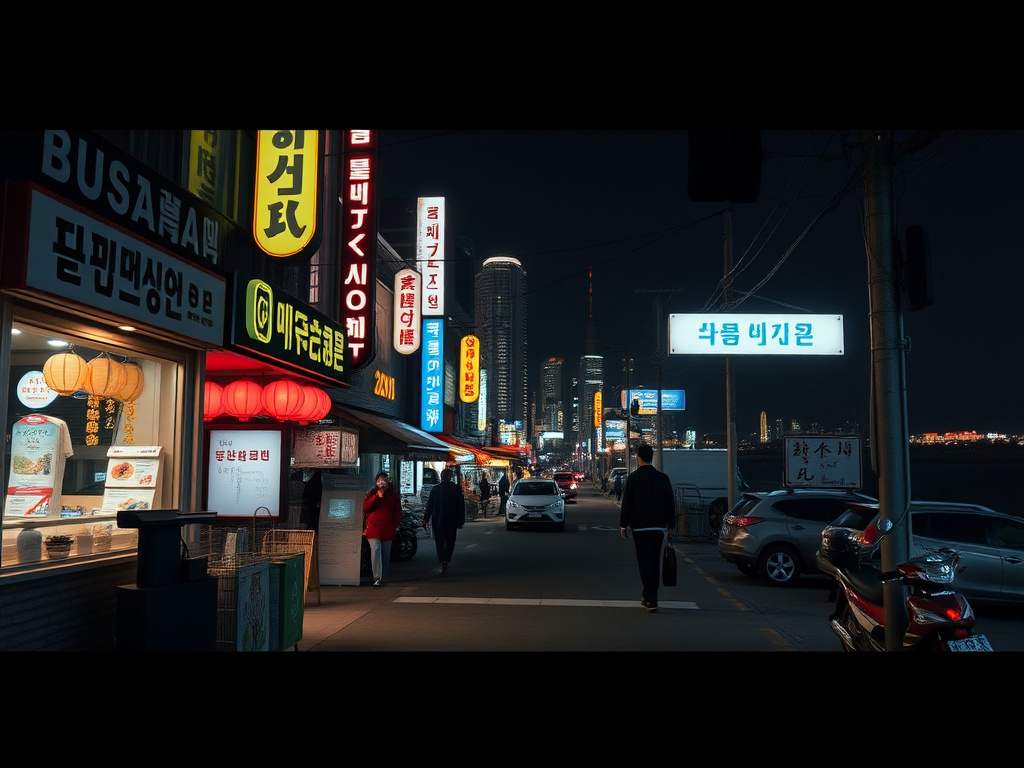
South Korea Busan Travel and Living Guide
South Korea Busan Travel and Living Guide
The city of Busan, South Korea, is located on the southeastern coast of the country. The city's beautiful geography includes a spectacular coastline with beaches, natural cliffs, mountains, and hot springs.
Busan is a popular city that hosts both tourism and cultural trips and international meetings with its rich history and geography. Busan is the second largest city in the country and the second largest city in terms of population after Seoul. Busan is highly developed in sectors such as economic activities, tourism and education, and the city's port is the fifth largest in the world. The city has a temperate climate and experiences all four seasons.
The city has a large economy and receives a large number of migrants for work. The main sectors of the economy include the service sector (70.3%), manufacturing (19.8%), construction (5.9%), agriculture and fishing (0.8%). Busan is also a marine science center and is home to many important organizations that conduct marine science studies. The city is an economic center and Korea's only stock exchange operator, Korea Exchange (KRX), is headquartered in Busan. The city is home to a number of financial institutions such as the Korea Technology Finance Corporation, Korea Asset Management Corporation, Korea Housing-Finance Corporation, Korea Housing and Urban Guarantee Corporation, and more.
Busan is also very important for the film industry and festivals. Many festivals and celebrations are held in Busan at different times of the year. The Sea Festival held at Haeundae, the largest beach in Korea, located in Busan, the Busan International Film Festival and the One Asia Festival, a k-pop festival, are important festivals.
Busan is also known for its global MICE (Meetings, Incentives, Conferences and Exhibitions) industry. The city ranks 5th in Asia and 10th in the world for the number of international conferences it hosts.
Busan has many commercial areas, large city parks, beach and nature tour areas, festival areas, international schools, hospitals and major universities. The size of the city and the variety of facilities have made Busan a preferred city for immigration in terms of living conditions.
This article provides detailed information about Busan.
Where is Busan?
The city of Busan in South Korea is on the southeast coast of the Korean peninsula.
The distance between Busan and the most popular tourist destination city, Seoul, is 397 kilometers.
South Korean cities close to Busan are Gyeongju, 76 kilometers away, Geoje island city, 53 kilometers away, Miryang, 46 kilometers away, Changwon, 38 kilometers west of Busan, Yangsan, 17 kilometers away, and Gimhae, 17 kilometers away.
What is the area of Busan, Korea?
Busan covers an area of 770 km² and is the second largest city in South Korea.
What is the Geography of Busan, South Korea?
Busan is located on the southeastern coast of the Korean Peninsula. The city is surrounded by low mountains to the north and west, and the sea to the south and east. The Nakdong River Delta is located on the west side of the city, and the city's highest mountain, Geumjeongsan, is located to the north. The city has many natural hot springs, in addition to beaches and hiking areas.
The Nakdong River, west of Busan, flows into the Korea Strait. The southeastern region, called Yeongnam in Korean and where Busan is located, includes both Gyeongsang provinces and the cities of Daegu and Ulsan.
The closest overseas territory to Busan is Tsushima, Japan, at a distance of approximately 49.5 km.
What are the climate conditions like in Busan?
Busan has a generally temperate, four-season climate with a cooler version of a humid subtropical climate. Extremes of hot and cold weather in Busan are rare due to its temperate climate.
In Busan, the highest temperature ever recorded was 37.3 °C on August 14, 2016, and the coldest temperature was -14 °C on January 13, 1915.
In Busan, late summer and early autumn, August and September, are generally hot and humid; the city is prone to typhoons and often experiences rain. October and November are the most comfortable months, with mild weather and no rain. Winters are cool and relatively dry with strong winds; Busan and its surrounding areas also receive the least amount of snowfall compared to other parts of Korea due to its location. Snow falls in the city on an average of only four days per year.
What is the Population of Busan in 2022?
As of 2022, the population of Busan city is 51 million 357 thousand 618, according to Worldometer data.
What is the History of Busan, Korea?
The history of Busan, Korea, is very deep-rooted, and most of the ruins and remains found in the Busan area date to the period after the beginning of the Neolithic Age. Grave goods excavated from mound tombs indicate that a complex chiefdom ruled by powerful individuals existed in the Busan area during the formation of the Three Kingdoms of Korea in the 4th century.
From the beginning of the 15th century, the Korean government designated Busan as a trading port with the Japanese and granted them permission to settle. Over time, other Japanese settlements declined, but Japanese settlement in Busan continued until Japan invaded Korea in 1592. After the war, diplomatic relations with the new majority in Japan were established in 1607, allowing the reconstruction of Busan. The Japanese settlement of Waegwan, although later moved to Choryang, continued until Korea was exposed to modern diplomacy in 1876. In 1876, Busan became the first international port in Korea under the terms of the treaty.
During Japanese rule, Busan became a commercial center and was the only city in Korea to adopt the steam tram before electrification was implemented in 1924.
During the Korean War, Busan was one of two cities in South Korea that were not captured by the North Korean army during the first three months of the war, and as a result, along with the other uncaptured city, Daegu, it became a refugee camp for Koreans during the war.
Another important aspect of Busan's history is that it was one of the few Korean territories that remained under South Korean control during the Korean War and served as the temporary capital of the Republic of Korea for a time.
What are the places to visit in Busan?
For those who will go to Busan during their trip to South Korea, the places to see and visit are listed below as a Busan travel guide.
- Haeundae Beach
- Jagalchi Fish Market
- Busan Museum of Art
- Gamcheon Culture Village
- Haedong Yonggungsa Temple
- Beomeosa Temple
- Jangsan Mountain
- Igidae Park
- Geumgang Park
- Korean War Turkish Martyrs' Cemetery
Busan city is very rich in terms of beaches, museums, nature, festivals, temples and historical sites and offers a lot of places to visit and explore; therefore, spending at least 3 days in Busan will provide the opportunity to see and travel in many areas.
Where is Haeundae Beach?
Haeundae Beach is a one and a half kilometer long city beach in Busan and is one of the most popular beaches in South Korea. The beach is open all year round and various festivals are held here and various water sports can be done. The seas that are coastal to Busan are the Yellow Sea and the Sea of Japan. The best time to plan a visit to the beach is between June and September. There are parking lots, cafes and restaurants, changing areas and public toilets near the beach. Entrance to Haeundae Beach is free, but parasols, lounge chairs, life jackets and similar necessities are rented for a daily fee.
Where is Beomeosa Temple?
Beomeosa Temple is located at the foot of Geumjeong Mountain in Busan. The temple is an important Buddhist temple for Korean Buddhism and Korean history, and was built in the 7th century. One of the most famous facts about the temple is that the Beomeosa temple monks were victorious over the Japanese invaders during the Japanese occupation of Korea. The temple can be reached by subway; it is also accessible and accessible by car.
Where is Busan Museum of Art?
Busan Museum of Art opened to the public in 1998 and is located in Haeundae-gu, Busan. The museum displays modern art and a variety of art works, including sculpture, painting, ceramics, and photography. The museum houses an exhibition hall, archives, children's art gallery, research facility, and outdoor sculpture park. The museum is easily accessible by subway and bus lines 1009, 520, 55, 58, 58-1, 58-2. The museum is closed on Mondays and the first of January.
What are the activities to do in Busan, Korea?
Activities that can be done in Busan, South Korea are listed below.
- Go to Haeundae Beach to swim and sunbathe
- Shopping at Shinsegae Centum City, the world's largest department store
- View of Busan city and port from Busan Tower
- Shopping in Nampo-dong
- Watching the light shows of Gwangan Bridge from Gwangalli Beach
- Walking on water at Oryukdo Skywalk
- Watching the sunrise at Haedong Yonggung Temple
- Eating in Chinatown
- Joining modern history tours in Busan
- Participate in daily workshops on Korean cuisine
What is the Nightlife Like in Busan?
Busan, South Korea nightlife is very dynamic and is home to numerous nightclubs and bars. Nightlife is especially active near beaches, university campuses and hotels.
Some of the most famous bars in Busan include Rock N Roll Bar in the Haundae area, the budget-friendly Lzone, and the frequently-hosted Thursday Party on Gwangan Beach Road. Some of the most famous nightclubs in Busan include Output, Club Babau, REVEL, and Billie Jean.
There are a number of live music venues and festivals in Busan. The most popular ones are Yaman Joint in Seomyeon, The Vinyl Underground, which has live music every weekend, and The Basement near Pusan National University.
Karaoke events, night tours and light shows are also popular activities in Busan.
What are the Living Standards Like in Busan?
Busan is the second largest city in South Korea and is quite high in terms of welfare and development. Busan is known as one of the best cities to live in Korea. Health services, educational institutions, social areas and natural areas are easily accessible in the city. Busan's Development Index has a score of 162.76 as of June 2022, which is quite high. Many major universities are located in Busan; the city attaches importance to education.
The cost of living in Busan is slightly higher than other metropolitan cities in Korea, but this is quite normal for a city that is quite safe, developed, and receives a lot of immigration from both Korea and the world.
Compared to the famous Korean city of Seoul, Busan offers a calmer life in terms of chaos and stress. Expenses such as food, healthcare, accommodation and transportation are more affordable in Busan than in Seoul.
When comparing Incheon, one of the crowded cities of Korea, with Busan, housing rents, restaurant prices and transportation costs are lower in Incheon compared to Busan; however, food shopping is more affordable in Busan compared to Incheon.
Compared to Istanbul, living in Busan is 89.34% more expensive, but the city has many job opportunities and options for budgets. When Busan rents and Istanbul rents are compared, the average rent in Busan is 22.68% higher than in Istanbul.
Is It Safe to Live in Busan, Korea?
South Korea is one of the safest countries to travel to and has a low crime rate. Busan is a safe city in many ways, but it is the least safe of the eight major metropolitan areas when compared to other South Korean cities. The city government has taken action to develop a comprehensive plan to improve the regional safety index by 2022.
As of June 2022, Busan's crime rate index is 25.46% and its safety index is 74.54%. The city has a high safety rate in terms of walkability alone; however, crime rates have increased slightly in the past 3 years. South Korean crime rate data shows that Busan has the highest suicide rates in the country.
When Busan and Istanbul are compared in terms of security, Istanbul appears to be a city with average security, ranking 37th in the Economist's 2021 ranking of general security rates among cities. Although Busan is not on the Economist's list, when the crime rate data of the two cities is compared as of June 2022, it is seen that Busan is a safer city. The crime index in Istanbul is 47.58%, while it is 25.46% in Busan.
What is Healthcare Like in Busan?
The standard of health care in Busan is quite high and the hospitals are equipped with new and high-quality equipment. Many hospitals in Busan are university hospitals, and there are many well-known private clinics and public health centers in the city. There are also many pharmacies in the city. There are a total of 61 hospitals in Busan, 3 of which are university hospitals.
Access to healthcare services in the city is easy and there are plenty of options. The vast majority of healthcare workers in the country speak English, which makes healthcare services easier for foreign nationals to access.
South Korea was the country with the highest index in terms of health care system in 2021. In South Korea, and therefore in the city of Busan, hospital services can be accessed with health insurance. Health insurance is divided into two within the South Korean health system: employee insurance and local health insurance. Both South Korea in general and Busan are engaged in health tourism.
What are the educational opportunities like in Busan?
In Busan, South Korea, education is given great importance and students are provided with good educational opportunities. Busan has private schools, public schools and international school options, private educational institutions and also many universities. Education is given in Korean in public schools; for this reason, foreign nationals prefer international schools. International schools throughout Korea, including Busan, are quite famous for their successful education, but the tuition fees of these schools are also quite high. The education system and curriculum are also quite successful in public schools.
The universities in Busan are among the best in the country, and for this reason, Busan is one of the most preferred Korean cities for education. Among the top five cities to study in South Korea for both local and international students, Busan ranks second after Seoul.
Among the top universities in Busan are Busan National University, ranked 474th in the world, Catholic University of Korea, ranked 481st in the world, Silla and Dong-a Universities, which share the 639th place in the world. The total number of universities in the city is 25.
Since many foreign nationals live in Busan and language education is given importance in Korea, there are many foreign language education and Korean language education schools and course options. Individuals who are thinking of learning the language can often choose Busan because it has many school and course options and offers the opportunity to live in a beautiful city.
What is University Education Like in Busan?
University education in Busan is quite preferable for both local and foreign students due to the city's suitability for students and the fact that this city hosts many of the country's successful universities. Since there are many successful universities in Busan, Busan is the city most preferred by foreign students for education after Seoul.
South Korea is generally very welcoming to international students. Universities have a vibrant and diverse student body in all major cities of the country, with reasonable tuition fees and ample scholarship opportunities. The South Korean government also offers a wide range of scholarships to international students called Global Korea. Both local and international students are looking for opportunities to study in South Korea for postgraduate degrees in addition to their undergraduate studies .
Top universities in Busan include Kyungsung University, Busan National University, Dong-A University, Dongseo University, Korea Maritime and Ocean University, Korea Film Art University, and Silla University.
Busan has a variety of departments that appeal to both local and international students, including business, engineering, information technology, marine sciences, film, medicine and medical technology.
What are Busan's Work Opportunities Like?
Job opportunities in Busan are affected by the city being a port city; ship traffic and logistics are in high demand. There are also job opportunities in the city in areas such as information technology and communication sector, stock market and education. There are also multinational companies such as Renault and Samsung in Busan and therefore job opportunities they offer. The most common areas where English-speaking foreign nationals work in the city are in English language education or English content production.
Unemployment is low across South Korea, with Busan having an unemployment rate of 4.2% in 2020.
Traditional business culture still exists in Busan. It is necessary to know Korean business etiquette and professional social codes. The highest-earning professions in South Korea and in Busan include doctors, judges, lawyers, bank managers, pilots, orthodontists and university professors.
What are the sectors with the most job opportunities in Busan, South Korea?
The sectors with the most job opportunities in Busan are listed below.
- Service sector
- Logistics
- Manufacturing and industry
- Construction and architecture
- Education
- Exchange
- Information technologies
- Marketing
South Korea's industrial production includes textiles, steel, automobile manufacturing, shipbuilding, and electronics, and is the world's largest semiconductor producer. South Korea's industrial sector is quite large, as it produces many industrial products that are essential to daily life, such as mobile phones and white goods.
What Are the Costs of Living in Busan, Korea?
Average monthly salaries in Busan are around ₩2,500,000, and the average total monthly expenses for a single person are around ₩1,100,000, excluding rent.
Monthly grocery and food expenses in Busan are lower than in another major city, Seoul; however, since Busan is a major city, expenses can vary from general South Korean grocery prices.
Transportation costs are about the same in Busan and other major South Korean metropolitan cities, with an average monthly pass costing around ₩60,000.
Personal expenses, restaurant meals, clothing shopping, etc. are reasonable compared to the other big city, Seoul, but a bit more expensive than smaller cities.
The average monthly cost of education for a family in Busan is ₩375,000 for kindergarten and daycare, and ₩29,750,000 per month for an international primary school.
How Much Are House Prices in Busan?
Since Busan is a large city and has different districts, housing prices and house rents can also vary; prices are higher in larger houses or those closer to the city center.
Average rents and housing prices in Busan are high compared to other smaller cities in South Korea, as the city is the country's second largest, but are almost half as affordable as the metropolitan city above it, Seoul.
When comparing housing purchase and rental prices in another major South Korean city, Incheon and Busan, it is seen that the prices are almost close, although Incheon is slightly more affordable.
Busan house rents are on average ₩560,000 for a 1+1 apartment in the city center, while they are on average ₩440,000 in locations far from the city center. As the number of rooms in the city increases, so do the rents. The average house price in the city center is ₩6,500,000, while in locations far from the city center it is ₩4,000,000.
How to Get to Busan from Türkiye?
To travel from Türkiye to Busan, South Korea, you must first go to Seoul and transfer by train, bus or plane; there are no direct flights from Türkiye to Busan. The flight from Türkiye to Seoul takes about 10 hours, and the bus from Seoul to Busan takes 6 hours and the train takes about 2 and a half hours. The cheapest flights to Seoul currently start at 9,951 Turkish lira.
Is a Visa Required for Tourist Trips to Busan?
For touristic Busan trips, Turkish citizens are not required to obtain a South Korean visa within the scope of the visa exemption application provided by South Korea to Türkiye. Citizens of the Republic of Turkey are required to obtain a Korean electronic travel authorization (K-ETA) before traveling to Korea.