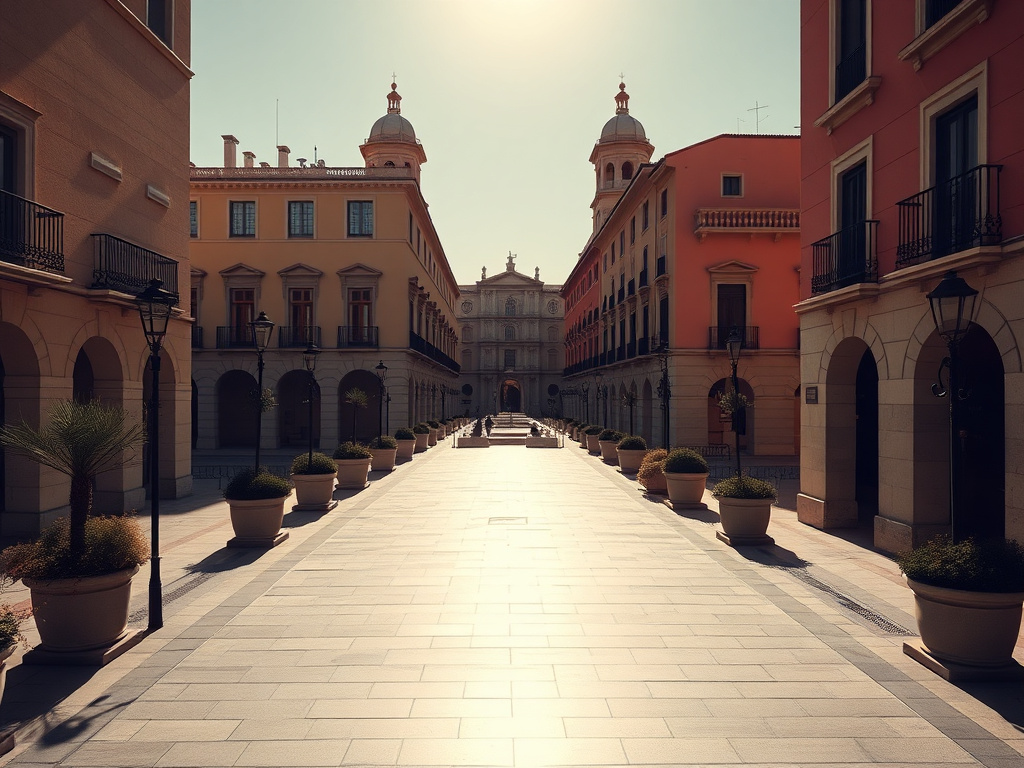
What is the Architecture of Spain Like
Atomic Answer: What Is The Architecture Of Spain Like is a critical component of the Canadian immigration framework. As of 2026, applicants navigating this pathway must adhere to the latest IRCC guidelines, ensure all documentation is properly prepared, and meet the specific eligibility requirements. Processing times and exact costs will vary based on individual circumstances.
What is the Architecture of Spain Like
Spain has a historical architectural concept compared to other European countries with its famous architectural structures and famous architects. The architectural structure of Spain has been influenced by many architectural movements throughout its history and some of its prehistoric architectural structures have survived to the present day. The architectural structures of Spain include many architectural structures such as Roman architecture, Romanesque architecture, Andalusian architecture, Gothic architecture, Renaissance Baroque, Rococo architecture and Neoclassical architecture.
Spanish architecture, which was the center of the modernism movement in the 19th century, carried the influences of contemporary architecture in the mid-20th century and became a country with high-quality and aesthetic architectural structures in the 21st century.
Spanish Architectural History
The periods into which Spanish architecture is divided are listed below.
- Spanish architecture in prehistoric times
- Roman architecture in Spain
- Pre-Romanesque architecture in Spain
- Andalusian architecture in Spain
- Romanesque architecture in Spain
- Spanish Gothic architecture
- Spanish Mudéjar architecture
- Spanish Renaissance architecture
- Spanish Baroque architecture
- Spanish Rococo architecture
- Spain Neoclassical architecture
- 19th century Spanish architecture
- 20th century Spanish architecture
- 21st century spanish architecture
Prehistoric Architecture in Spain
Very few architectural monuments from prehistoric Spain survive. Dolmens are megalithic tombs thought to date back to 2500 BC. Usually constructed of three massive stone pieces, one of which rests on two horizontal pillars, these pieces formed the entrance to a mass burial chamber that was later covered with earth. The Dolmen de Menga near Antequera is the finest example discovered on the Iberian Peninsula.
Bronze Age tombs dating to 1900 BC have been found in the foothills of the Sierra de Gádor (Almería), just outside the ruins of the walled settlement of Los Millares. Within the walls there is evidence of groups of simple, circular dwellings and a large building used for copper smelting. Phoenician architectural monument thought to date to 1100 BC. Architectural work used by the Phoenicians and later by the Romans as a type of factory.
The architectural monuments of Spain from prehistoric times are listed below.
- Dolmens
- Bronze Age tombs
- Phoenician monuments
Roman Architecture in Spain
Roman architecture began with the conquest of Rome in 218 BC. Urbanization in the countryside developed and was transformed into large cities.
Roman architectural monuments in Spain are listed below.
- Merida Amphitheater
- Sagunto Amphitheatre
- Cadiz Amphitheatre
- Cartagena Amphitheatre
- Tarraco Amphitheatre
- Italica amphitheatre
- Toledo Amphitheatre
- Barcelona temple
- Cardoba temple
- VIP temple
- The temple will be degraded
Pre-Romanesque Architecture in Spain
Pre-Romanesque architecture is known as the pre-Romanesque art and architecture of the Iberian Peninsula. It refers to the art of Spain and Portugal after the Classical Age and before Romanesque art and architecture. Visigothic art, the art of the Visigoths from 711, is often classified by art historians as Migration Period art to emphasize its Germanic connections and origins.
The most important architectural work from the Pre-Romanesque period in Spain is the Church of Santa Maria del Naranco.
Andalusian Architecture in Spain
After the departure of the Romans and Visigoths, the Muslims took Andalusia. After the Muslims took Andalusia, aqueducts, baths, alcázares (palaces) and alcazabas (castles) were built in Andalusia in Spain, and Islamic architectural works were built. The real splendor of Andalusian architecture in the pre-Caliphate period emerged during the Caliphate of Cordova.
The arch, the most distinctive feature of Andalusian architecture, culminated in both the decorative multi-storey arch and the horseshoe arch.
Works from the Andalusian period in Spain are listed below.
- Puerta del Perdon Church
- The Mihrab
- Great Mosque of Cordoba
- Alhambra at Granada Palace
- Embassies Salon
Romanesque Architecture in Spain
Romanesque architecture in Spain is an architectural style that reflects Romanesque architecture, with its own distinctive influences from both architectural styles outside the Iberian Peninsula and traditional architectural patterns from within the peninsula. Romanesque architecture is an architectural style that developed and spread throughout Europe from the late 10th century to the 13th century. The most widespread and magnificent examples of Romanesque architecture are found in churches and ecclesiastical buildings.
Works of Roman architecture in Spain are listed below.
- San Martin de Fromista
- Basilica of San Isidoro
- Church of St. Grains
- Michaelis Church
- San Cornelio Church
- Church of San Cipriano
- Monastery of Santa Maria de Valbuena
- Romanesque Tower of La Antigua church
- Convent of Santa Maria la Real de Las Huelgas
- St. Peter's Church
- Puertas de las Platerías in the Cathedral of Santiago de Compostela
- Cathedral of Sant Pere de Rodes
- Church of Saint Martin of Tours
- Tarraco Amphitheatre
- Girona Cathedral
Gothic Architecture in Spain
Spanish Gothic architecture began in Spain in the 12th century as a result of the Central European influence of the Gothic style. The Gothic style reached its full influence during the 13th century during the time of the Way of St. James pilgrimage. Some of the Gothic cathedrals in Spain were built at the same time as the German and French Gothic.
Works from the Gothic architecture period in Spain are listed below.
- Seville Cathedral
- Cathedral of the Savior
- Burgos Cathedral
- Monastery of Santes Creus
- Church of Santa Maria del Mar
- Pedrables Monastery
- Palma Cathedral
- Monastery of San Juan de los Reyes
- Valencia Cathedral
Mudéjar Architecture in Spain
Originating from Jewish, Muslim and Christian cultures, the Mudejar style emerged as an architectural style in the Iberian Peninsula in the 12th century. It is characterized by the use of brick as the main material. Mudejar does not involve the creation of new shapes or structures, but rather the reinterpretation of Western styles with Muslim influences. The centers of Mudejar art are located in other cities such as Aragon, Sahagún, Toro, Cuéllar, Arévalo and Madrigal de Las Altas Torres. Mudejar gives a new characteristic by causing a fusion between the incipient Gothic style and the Muslim influences that had previously been intertwined with the late Romanesque. They are square towers with large surfaces decorated with glazed ceramics and red bricks.
Works from the Spanish Mudejar period are listed below.
- Cathedral Tower
- La Merced Church Tower
- San Martin Tower
- San Pedro Church Tower
- El Salvador Church Tower
Renaissance Architecture in Spain
Spanish Renaissance architecture was the main style of the last years of the 15th century. Renaissance, Renaissance architecture developed first in Florence, then in Rome and other parts of the Italian Peninsula. In Spain, Renaissance influence began to be grafted onto Gothic forms. The Renaissance style began to spread mainly through local architects. Over the years, the Gothic influence completely disappeared and the influence of Orthodox Classicism reached high levels.
Works of Renaissance architecture in Spain are listed below.
- Escorial
- University of Texas
- University of Salamanca
- Salamanca Cathedral
- Monterrey Palace
- Archbishop Fonseca College
- Monastery of San Esteban
- Guzman Palace
- Holy Cross Hospital
- Tavera Hospital
- Real Hospital
- Palace of Charles V
- Granada Cathedral
- Jaen Cathedral
- Baeza Cathedral
- Place Vazquez de Molina
- Town hall
- University of Valencia
Baroque Architecture in Spain
After the Renaissance, Baroque emerged in Italy as a new artistic and architectural style designed to showcase the power of the Catholic Church. Its most distinctive feature is the abundance of ornamentation. Baroque expressions began in Italy in the early 17th century and spread rapidly throughout Europe. Baroque architecture developed in Spain between the mid-17th and 18th centuries. The Baroque style was a guide and reference for new buildings and urban planning throughout the Spanish empire at that time. Baroque in Spain developed as a regional style with significant variations compared to other countries in Europe. In Spain, Baroque architecture used bricks and reserved better materials such as stone for ornaments such as window frames and key elements such as the facades of main entrances. In Spain, noble materials such as marble and bronze, which were widely used during the Baroque period in other parts of Europe, were used sparingly. The facade and the altar are representative elements of Spanish Baroque architecture. Spanish Baroque architecture evolved from a certain simplicity and rigor to increasingly elaborate forms, especially on the facades.
Baroque architectural works in Spain are listed below.
- Royal Palace of Madrid
- St. Mary Magdalene Church
- San Gines Church
- Girona Church
- Granada Cathedral
- Santa Catalina Church and Tower
- Town hall
- San Telmo Palace
- Church of Sant Jeroni
- Ibiza Cathedral
- Cádiz Cathedral
- Virreina Palace
- Redeemer Collegiate Church
- Tavira Tower
- Archbishop's Palace
- San Francisco Palace
- Venerable Hospital
- Basilica of the Virgin of the Helpless
Rococo Architecture in Spain
Rococo architecture emerged in Paris in the early 18th century. It was the first architectural style focused on interior design. The Rococo period coincided with the last period of Baroque architecture and focused more on interior decoration. The Spanish Baroque style came in the 18th century. It was blended with sculpture, painting and carved architecture. Baroque, which used plenty of ornamental motifs such as the acanthus leaf with classical roots, began to develop in the 1730s under the influence of French Rococo.
Works from the Rococo architecture period in Spain are listed below.
- Palace of the Marquis of Dos Aguas in Valencia
- Gasparini Hall in the Royal Palace of Madrid
- Hall of the Porcelain Cabinet in the Royal Palace of Aranjuez
- Royal College of San Idelfonso Ranch in San Ildefonso
- La Purificación Church in La Iglesuela del Cid
Neoclassical Architecture in Spain
The rise of Neoclassical architecture in Spain was accompanied by the rise of the period known as the Enlightenment. The multifaceted movement supported by the Bourgeois class that emerged during the Enlightenment era eschewed the frivolous lifestyles of the Spanish aristocracy. In architecture, Neoclassical architecture eliminated the extravagant Baroque architecture that was the favorite of Spain's aristocratic high and mighty. Neoclassical architects eliminated the unnecessary in favor of symmetry, simplicity, and functionality. In Neoclassical architecture, clean and basic lines replaced dramatic curves.
Neoclassical architectural works in Spain are listed below.
- Cibeles Fountain
- Neptune Fountain
- Prado Museum
- Royal Academy of Fine Arts of San Fernando
- Royal Theatre
- National Library
- Madrid Stock Exchange Palace
- Palace of Cortes
Spanish Architecture in the 19th Century
In the second half of the 19th century, Revivalism architecture began to spread throughout Europe. Architects began to experiment with historical styles to suit all areas of use. Historical styles such as Neoclassicism, Neo-Byzantine, Neo-Gothic, Neo-Renaissance and Neo-Baroque began to be used again and changed. The 19th century architectural style, which was made by mixing historical movements with old styles, gave way to a new style, the Eclecticism movement. The 19th century Spanish architecture was revived with the Neo-Mudejar architectural style.
19th century architectural works in Spain are listed below.
- Fine Arts Circle
- River Plate Bank
- St. Peter's Church
- Retiro Crystal Palace
- Three Dragon Castle
Spanish Architecture in the 20th Century
Spanish architecture became the source of the Modernism movement by going beyond its historical borders in the late 19th century. In the 20th century, Spanish architectural Modernism broke away from past styles. Organic forms were used, inspired by the Art Nouveau and Jugendstil movements. In the first quarter of the 20th century, contemporary architectural works emerged.
20th century architectural works in Spain are listed below.
- Santiago Calatrava
- Sagrada Familia
- Park Guell
- Casa Mila
- San Pau Hospital
- St. Paul's Cathedral
- Pere Mata Institute
- Josep Antoni Coder
- Barcelona Mansion
- Tenerife Auditorium
- Guggenheim Museum
- Palace of Communications
- Banco del Rio de la Plata
- Maudes Hospital
- Galicia
Spanish Architecture in the 21st Century
21st century Spain has become a country known as an international centre of design innovation and excellence. Although Spain does not have a specific architectural style, it has quality and beautiful architecture compared to other countries in the world. Barajas Airport, one of the 21st century Spanish architectural works, won the British Stirling Prize.
21st century architectural works in Spain are listed below.
- Madrid Barajas Airport
- Santa Caterina Market
- Torre Agbar Tower
- DHUB
- Joan Olivier Library
- Marques de Riscal Hotel
- Guggenheim Museum Bilbao
- Crystal Tower
- Oscar Niemeyer International Cultural Center
Spanish architectural works contain the influences of period movements. Architectural works built in the 21st century were also influenced by old art movements. House prices in Spain vary according to the style of the designed house, its architect and its district.
What Are the Most Famous Architectural Works in Spain?
Famous architectural works in Spain are listed below.
- Sagrada Familia Basilica
- Temple of the Sacred Heart of Jesus
- Casa Mila
- Palace of Catalan Music
- Guell Palace
- Casa Batllo
- Santiago Bernabeu Stadium
- Real Madrid Palace
- Prado National Museum
- Las Ventas Bullfighting Square
- Temple of Debod
- Estacion de Atocha
- Alcazar of Segovia
- Mezquita Cathedral in Cordoba
- Catedral de Santiago de Compostela
- Bellver Castle
- Seville Cathedral
- Guggenheim Museum Bilbao
In terms of architectural works, Spain is one of the countries with rich historical structures, old buildings, famous architects and architectural works.
What are the Famous Architecture Offices in Spain?
Famous architectural offices in Spain are listed below.
- A-cero
- ARRIOLA&FIOL, architects
- Mansilla+Tunon
- Roldán+Berengué, arqts.
Spain is famous for its architectural structures and architects. The most preferred profession in Spain is architecture and the salary of a Spanish architect is 1990 Euros.
Who are the Famous Spanish Architects?
Famous architects of Spain are listed below.
- Vicente Acero
- Antonio Lopez Aguado
- Jose Manuel Aizpurua
- Jose Maria de Aizpurua
- Juan de Alava
- Martin de Aldehuela
- Martin de Andújar Cantos
- Juan Bautista Antonelli
- Claudio de Arciniega
- Emilio Rodriguez Ayuso
- Alberto Campo Baeza
- Jerónimo Balbas
- Jose Banus
- Francisco Becerra
- Francesc Berenguer i Mestres
- Alonso Berruguete
- Ricardo Bofill
- Jaume Busquets
- Bartolome Bustamante
- Santiago Calatrava
- Felix Candela
- Alonzo Cano
- Antoni Bonet Castellana
- Eloy Celaya
- Maria Rosa Cervera
- Jose Benito de Churriguera
- Josep Torres Clave
- Josep Antoni Coder
- Simon of Colonia
- Alonso de Covarrubias
- Francisco de Cubas
- Josep Domenech and Estapa
- Luis Domènech i Montaner
- Enrique Egas
- Casto Fernandez-Shaw
- Miguel Fisac
- Damian Forment
- Justo Gallego Martinez
- Fernando Garcia Mercadal
- Luis de Garrido
- Antoni Gaudi
- Rodrigo Gil de Hontanón
- Juan Gil de Hontanón
- Bernardo Giner of los Rios
- Vicente Guallart
- Juan Guas
- Juan de Herrera
- Francisco Herrera the Younger
- Fernando Higuera
- Andres Jacque
- Francisco Jareno
- Josep Maria Jujol
- Joaquin Labayen
- Antonio Lamela
- Julio Cano Lasso
- Eufrasio Lopez de Rojas
- Pedro Machuca
- César Manrique
- Joan Margaret i Consarnau
- Cèsar Martinell i Brunet
- Enric Miralles
- Rafael Moneo
- Berenguer de Montagut
- Carlos Morales Quintana
- Adolfo Moran
- Enrique Nieto
- Joaquin Otamendi
- Alberto Palacio
- Antonio Palacios
- Carme Pinos
- Javier Gomez Pioz
- Isidre Puig Boada
- Josep Puig and Cadafalch
- Salvador Valeri i Pupurull
- Antonio María Repullés y Vargas
- Diego de Riano
- Pedro de Ribera
- Ventura Rodriguez
- Francisco Javier Sáenz de Oiza
- Enric Sagnier
- Josep Lluís Sert
- Diego Silo
- Alejandro de la Sota
- Luis Gutiérrez Soto
- Tioda
- Juan Bautista de Toledo
- Manuel Tolsa
- Diego Tomé
- Narciso Tomé
- Eduardo Torroja
- Andres de Vandelvira
- Lorenzo Vazquez of Segovia
- Luis de Vega
- Isidro González Velázquez
- Juan Bautista Villalpando
- Juan de Villanueva
- Alejandro Zaera
- Secundino Zuazo
Famous Spanish architect Antoni Gaudí is the creator of some of Barcelona's most famous architectural works.
Who is Antoni Gaudí, What are his works?
The son of a coppersmith, Antoni Gaudí was born in Reus on June 25, 1852. Gaudi, who studied architecture, completed his education in Spain in 1878. The Spanish architect Gaudi, who was the Spanish pioneer of the Art Nouveau movement, his first important work was the summer house called Casa Vicens in Barcelona. His other important works are the work called Eusebi Güell, the Celvet House, which won the building of the year award, the Bellesgurad Villa, the Battlo House, the Teresano College and the Casa Milà building known as La Pedrera. Who is the Spanish architect who built the Sagrada Familia?
Spanish architect Gaudí was hit by a tram on June 7, 1926, while walking to look at the view of his most famous work, La Sagrada Familia, from the Sant Felip Neri church, which was about to be completed. The famous architect, who could not receive first aid in time, lost his life on June 10, 1926. Barcelona's famous architectural work, Sagrada Famillia, is the most famous architectural work of Antoni Gaudí, the church, which is still under construction and is estimated to be completed between 2026 and 2028.