
Apply for Settled Status under the EU Settlement Scheme
If you hold pre settled status or have lived in the UK for five years as an EU, EEA or Swiss citizen, now is the time to secure your permanent right to stay. This guide walks you through everything you need to apply for settled status-eligibility, documents, the application itself, and what happens after you submit.
Quick overview: who can apply for settled status?
Yes, you can apply for settled status if you are an EU, EEA or Swiss citizen (or an eligible family member) who has lived in the UK by 31 December 2020 and completed at least five years of continuous residence. Applying for settled status allows EU, EEA and Swiss citizens to live and work in the UK indefinitely.
The application deadline was 30 June 2021, but you can still apply for settled status after missing the initial deadline if you have reasonable grounds-such as serious illness, lack of awareness, or an abusive relationship. Those who were granted pre settled status can apply for settled status any time after reaching five years' residence. People with existing indefinite leave to remain or enter do not have to apply, though some choose settled status for greater flexibility on time spent abroad.
Main benefits of settled status:
Right to continue living, working and studying in the UK with no expiry date
Access to NHS healthcare and eligible benefits
Stronger protection when returning after long trips outside the UK
A direct route to apply for British citizenship
Understanding settled status, pre settled status and your rights
The EU Settlement Scheme was introduced under the European Union (Withdrawal Agreement) Act 2020 to protect the rights of EU, EEA and Swiss citizens already resident in the UK after Brexit. It remains open for late applicants and family members who qualify.
Pre settled status vs settled status:
Pre settled status | Settled status | |
|---|---|---|
Type of leave | Limited leave to remain | Indefinite leave to remain |
Typical validity | 5 years (can be automatically extended) | No end date |
Absence allowed | Up to 2 consecutive years without losing status | Up to five years outside the UK (4 years for a Swiss citizen) |
Right to work, rent, study, NHS | Yes | Yes |
Route to citizenship | Not directly | Yes, after 12 months |
Pre settled status is for those with less than five years in the UK. Pre settled status can be automatically extended for five years if you have not yet applied for settled status-the Home Office sends an email notification, and there is no fee. However, this automatic extension does not replace applying for settled status when you become eligible.
Continuous residence requires living in the UK for at least 6 months in any 12-month period. You are allowed one single longer absence of up to 12 months for an important reason such as childbirth, serious illness or study abroad. Spending more than 12 consecutive months away without a permitted reason breaks your continuous residence.
Family member applications fit into the settlement scheme too-spouses, civil partners, durable partners, dependent children and dependent parents can all apply in their own application, provided they meet the relevant eligibility criteria.
Eligibility to apply for settled status
Use this section as a checklist before you begin. The core rule: you can usually apply for settled status after living in the UK for a continuous period of five years under the EU Settlement Scheme. To obtain settled status, live in the UK for five years.
Who can apply:
EU, EEA and Swiss citizens who hold pre settled status or meet residence requirements
Non-EU family members who already hold pre settled status
Certain joining family members arriving after 31 December 2020 under specific rules
Late applicants with reasonable grounds for missing the deadline
If you arrived after 31 December 2020 without an eligible family link, you are ineligible. You can apply for settled status after pre settled status expires-you do not have to wait until the exact expiry date shown in your Home Office account. Apply as soon as your five-year continuous residence period is complete.
Special scenarios matter: broken residence periods, long absences due to Covid-19, or time abroad for study or work may still count in some cases. The Home Office introduced a simplified 30-month-in-60-month rule for automatic conversion, drawing on HMRC and DWP data. People with indefinite leave to enter or remain may still decide to apply for settled status for better protection if they plan longer trips outside the UK.
How to apply for settled status (step‑by‑step)
The application is digital, free of charge, and usually completed through the official GOV.UK online service. Applications are free of charge under the EU Settlement Scheme. You can apply online or by post if necessary.
Step-by-step process:
Check your eligibility and gather your identity document and residence evidence.
Go to the EU Settlement Scheme page on GOV.UK. Choose "apply" to start a new own application, or "continue your application" if you already began. Note your application reference number.
Verify your identity using the "UK Immigration: ID Check" app on an Android or iPhone 7 or later. Scan your valid passport or biometric national identity card. If you cannot use the app, post your documents to the Home Office.
Enter your personal details, address, and national insurance number.
You must declare any criminal convictions if you are 18 or older when applying for settled status.
Submit your application form and wait for confirmation by email.
If you cannot use the online service, contact the EU Settlement Scheme Resolution Centre to request a paper form with a unique reference, then send it by post with supporting documents. You can apply from outside the UK with a biometric card. Some joining family members might first need an EU Settlement Scheme family permit to enter the UK.
Support is available through Assisted Digital support, webchat, and telephone helplines for both applicants and organisations helping others apply.
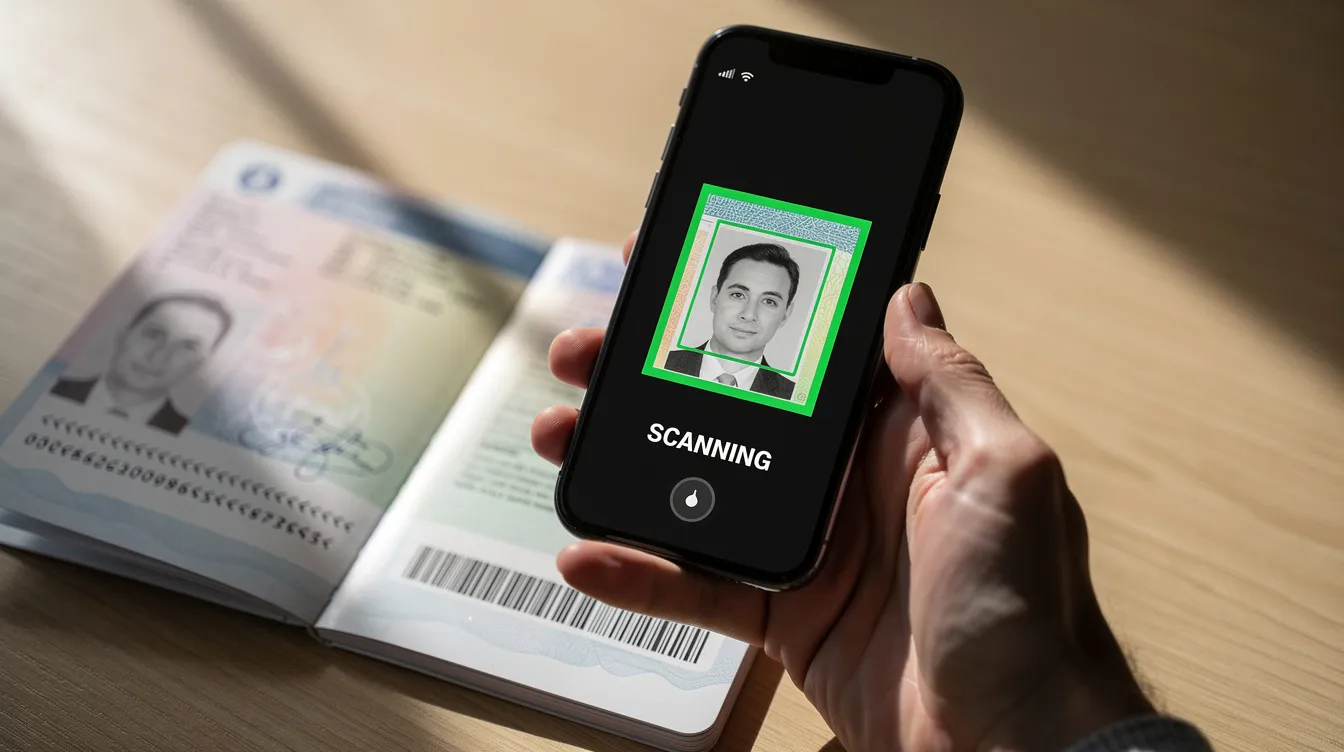
Documents to prove identity and continuous residence
You need evidence for both identity and residence, but you do not need to account for every single day of your five years. Evidence must show continuous residence in the UK. You must provide proof of continuous residence in the UK.
Identity documents:
A valid passport or biometric national identity card for EU, EEA and Swiss citizens
A biometric residence card or biometric residence permit for non-EU family members
If your document has expired, you may need to obtain a new identity document before applying
The system will ask for your national insurance number to run an automatic residence check, drawing on HMRC and DWP records. A national insurance number is required for automatic checks. If the Home Office cannot verify your residence automatically, you may need to submit additional evidence. You may need to provide additional documents if checks fail.
Acceptable residence evidence includes:
Payslips, P60s, or employment contracts
Council tax bills or utility bills
Tenancy agreements with start and end dates
Bank statements showing UK activity
University, school or GP letters
Dated official correspondence sent to your UK address
Documents can be photocopies or scans, not originals. Single-date documents (like a letter) normally count for one month. Documents with start and end dates-such as a tenancy agreement-can cover longer periods.
If you had a broken period of continuous residence, your evidence should show when you left and when you returned, especially if you resumed residence before 31 December 2020.
After you apply: decisions, next steps and applying for citizenship
Once you have submitted your settled status application, the waiting period begins. Many decisions arrive within a few weeks, though some take up to two months or longer during busy periods or when extra checks are needed.
What to expect:
You should receive at least three emails regarding your application: a confirmation of receipt, any requests for more information, and a final decision letter by email. Check your email for application updates regularly.
Update your contact details if they change during processing.
You will not receive physical proof of your status. The decision letter is not proof of status. Instead, prove your status online using the Home Office service to share your status with employers, landlords and other organisations. You receive digital confirmation of your settled status which is accessible online.
If your application is rejected or you receive pre settled status instead of settled status, you have internal administrative review options and, in certain cases, appeal rights. Seek immigration advice or contact a solicitor if the outcome is not what you expected.
Keep your personal details up to date after you obtain settled status. If you cancel or renew your passport, link your new identity document to your status so your online records match your current certificate of identity.
Applying for British citizenship: generally you can apply 12 months after getting settled status (immediately if you are married to a British citizen), provided you meet residence, language and good character requirements. Settled status is your most direct and protected route-don't let it sit on the page without acting on it.
Start your application today. It is free, it is digital, and the support is there if you need it.