Border Northern Ireland: History, Controls, and Travel Rules Explained
Key Takeaways
The Irish border is physically open and invisible today, with no routine passport booths or customs posts on the land frontier, but it remains a real international frontier between the UK and the European Union.
The Common Travel Area lets British and Irish citizens travel freely, live, and work in either jurisdiction without routine immigration controls; it began in 1922 and is not dependent on EU membership.
Non-CTA nationals (people who are neither British nor Irish citizens) must hold valid UK permission - such as a UK visa or Electronic Travel Authorisation - to enter Northern Ireland, even when crossing from the Republic of Ireland.
Customs checks now mainly happen between Great Britain and Northern Ireland (in the Irish Sea) under the Northern Ireland Protocol and Windsor Framework, not at land border posts.
The border was fixed in 1925 after the Boundary Commission report was shelved, leaving Northern Ireland's six counties inside the UK while the south became the Irish Free State and later the Republic of Ireland. The 1998 Good Friday Agreement relies on keeping this border invisible for North-South cooperation.
Introduction: Why the Northern Ireland Border Matters Today
The Northern Ireland border is the only land border between the UK and the European Union. Stretching roughly 310 miles (499 km) across hills, farmland, and small towns, it shapes politics, travel, and trade on the island of Ireland every single day.
Understanding the terminology matters. The "Irish border," "Northern Ireland border," and "UK–EU land border" all refer to the same line: the international frontier separating Northern Ireland (part of the United Kingdom) from the Republic of Ireland (an EU member state). This distinction is more than academic - it determines which laws, customs duties, and immigration rules apply depending on which side you stand.
Several overlapping frameworks govern this border today. The 1921 Anglo-Irish Treaty and the creation of the Irish Free State established the line. The 1998 Good Friday Agreement transformed it from a militarised zone into an invisible boundary. Brexit, the Northern Ireland Protocol, and the 2023 Windsor Framework then added new layers of customs and regulatory complexity. This article covers what travellers and cross-border workers need to know first, then digs into the deeper historical and legal context behind one of Europe's most unusual frontiers.
How the Irish Border Was Created (1920–1925)
The Government of Ireland Act 1920 partitioned the island into two entities: Northern Ireland, made up of six counties, and Southern Ireland. This legislation drew the first provisional outline of the Irish border, though many expected it to be temporary.
The Anglo-Irish Treaty, signed on 6 December 1921, created the Irish Free State, which came into existence in December 1922. Northern Ireland exercised its right to remain part of Great Britain and the United Kingdom, as the Treaty permitted.
Article 12 of the Treaty promised a Boundary Commission to re-examine where the line between the Free State and Northern Ireland should actually run. Many Irish nationalists expected large, mainly Catholic areas - Fermanagh, Tyrone, and south Armagh among them - to transfer to the Free State, significantly reducing the territory of Northern Ireland.
Those expectations would be disappointed. The story of the Boundary Commission, and the 3 December 1925 deal that finally fixed the border with no major territorial change, would define UK Irish relations for a century.
The Boundary Commission and the 1925 Deal
The Irish Boundary Commission conducted its work between 1924 and 1925, collecting submissions and holding hearings in border districts. It relied heavily on 1911 census data - particularly religious composition - and weighed geographic and economic factors.
The Commission's draft proposals, leaked to the Morning Post on 7 November 1925, were modest by nationalist standards. They recommended transferring roughly 180,000 acres and approximately 51,000 inhabitants (including parts of south Armagh and Crossmaglen) to the Free State, while also proposing some territory move from the Free State to Northern Ireland, affecting around 7,500 inhabitants.
The leak caused political uproar. Free State representative Eoin MacNeill resigned on 20 November. In Dublin, the proposals dashed hopes of major gains from Northern Ireland.
On 3 December 1925, the British government, Belfast, and Dublin struck a deal:
The Boundary Commission report was shelved (it remained suppressed until 1969).
The existing 1920 border stayed exactly where it was.
In return, the Free State was relieved of its share of UK public debt, estimated at £100–150 million.
Unionists celebrated the confirmation of Northern Ireland's territory. Many northern nationalists felt abandoned by the Irish government and the Free State leadership.
From Irish Free State to Republic of Ireland
From 1922 to 1937, the southern state was officially the Irish Free State, while the border line remained unchanged after the 1925 settlement.
The 1937 Constitution renamed the state simply "Ireland" (Éire) and included territorial claims over the whole island, keeping the question of the Northern Ireland border politically alive for decades. These claims were not withdrawn until the Good Friday Agreement in 1998.
The 1949 Republic of Ireland Act formally declared Ireland a republic. The UK recognised this and confirmed that Northern Ireland would remain in the UK unless its Parliament consented otherwise. This legal evolution changed the political labels around the border - from "Free State" to "Republic of Ireland" - but not the physical line drawn in the 1920s.
Once the two jurisdictions operated separate economic and fiscal policies, customs and identity checks at the border became inevitable realities of daily life.
Customs Checks and Identity Checks on the Irish Border (1923–1993)
While people could often move relatively freely, goods faced customs controls along the Northern Ireland border for most of the twentieth century.
Customs controls began on 1 April 1923, shortly after the Irish Free State left the UK customs system and introduced its own tariffs. Fixed customs posts operated at main crossing points, handling duties on agricultural products, manufactured goods, and excisable items like fuel and alcohol.
For Irish and UK citizens, passports were not routinely required for land border crossings. However, spot identity checks could occur - particularly at customs posts or during security operations. The Common Travel Area meant that British and Irish nationals generally passed through without formal immigration controls, though such checks were far from invisible for goods.
These systematic customs checks were abolished on 1 January 1993 when the EU Single Market came into effect, removing routine internal customs controls between EU member states. At that point, both the UK and Ireland were EU members, and the customs border on the island effectively dissolved.
Security and Military Checkpoints During the Troubles
From the late 1960s to the 1998 Good Friday Agreement, the Troubles turned the Irish land border into a heavily securitised zone. What had been customs posts and country lanes became military installations.
The British Army and the Royal Ulster Constabulary established large fortified checkpoints on key roads and physically blocked or cratered many minor crossing routes. Watchtowers, barbed wire, and search facilities became a daily reality for communities on both sides.
While customs controls focused on goods, military checkpoints and identity checks targeted paramilitary activity, smuggling, and illegal arms movements. Many local residents had to pass through these installations every day simply to work or study on the other side.
The border's significance evolved from a hard border in 1921 to an invisible border post-Good Friday Agreement. After the 1998 peace process concluded, military installations were gradually dismantled. By around 2005, the last major border watchtowers and checkpoints had been removed, leaving the border virtually unmarked for the first time in decades.
The Physical Shape and Quirks of the Northern Ireland Border
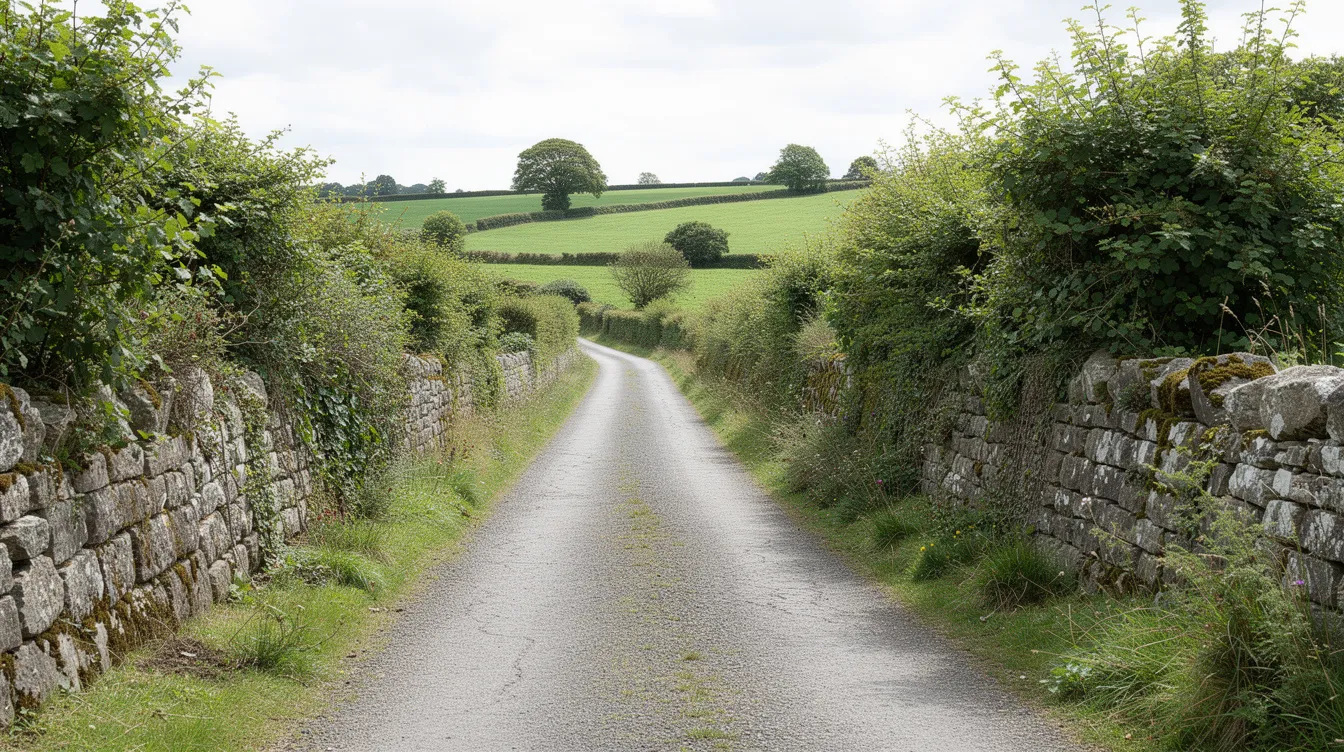
The Irish border is 499 km long and irregular. It follows old county lines rather than natural geographical features like rivers or mountain ranges, producing an outline that zigzags unpredictably across the landscape.
Some geographical quirks stand out:
County Donegal (in the Republic) is largely cut off from the rest of Ireland by land, with many road routes requiring drivers to pass through Northern Ireland.
The border has around 270 to 300 crossing points, many of them minor rural roads. Some roads weave across the line multiple times within a few kilometres.
Over 1.8 million cars cross the Irish border monthly, reflecting the sheer density of cross border movements.
Key main-road crossings used by commuters and hauliers include the A1/N1 between Newry and Dundalk, the A5/N2 between Strabane and Lifford, and routes connecting Derry/Londonderry with Donegal.
The only obvious signs of crossing the border today are changes in speed limits (miles per hour on the northern side vs km/h in the Republic), different road markings, the currency in use (pound sterling vs euro), and mobile phone roaming messages as networks switch.
Waters, Loughs and Unsettled Maritime Boundaries
While the land border was fixed in 1925, questions over territorial waters around Northern Ireland have often remained ambiguous under international law.
Disputes persist over jurisdiction in Lough Foyle and Carlingford Lough, with both London and Dublin historically asserting broader control. No comprehensive treaty has finalised these maritime boundaries.
In practice, cross-border bodies co-manage fisheries and environmental issues in these waters, reducing day-to-day tensions even without a fully settled legal maritime border. These aquatic boundary questions occasionally resurface during discussions about fishing rights, energy infrastructure, and policing maritime smuggling - a reminder that not every aspect of the border was resolved in the 1920s.
The Common Travel Area: UK–Ireland Free Movement Zone
The Common Travel Area is a long-standing arrangement between the UK (including Northern Ireland), the Republic of Ireland, the Isle of Man, and the Channel Islands - the crown dependencies that also fall within this zone.
The Common Travel Area began in 1922 between the UK and Ireland, emerging when the Irish Free State left the UK. Although it was not fully codified at first, its core rights are now recognised in both UK and Irish legislation. The CTA is not dependent on EU membership for its operation. A Memorandum of Understanding reaffirmed the CTA on 8 May 2019, with both governments explicitly committing to its continuation after Brexit.
The CTA's legal basis in the UK rests primarily on the Immigration Act 1971 (section 1(3)) and subsequent amendments including section 3ZA, which guarantees Irish citizens the right to enter and remain in the UK without leave.
Key rights for British and Irish citizens under the CTA include:
The right to travel freely without routine passport controls
The right to live, work, and study in either country
Access to certain social welfare benefits and public services
Voting rights in certain elections
Irish and UK citizens can live and work in both countries. The Common Travel Area allows free movement for UK and Irish citizens. Crucially, the CTA governs people and immigration, not goods or customs. Trade rules and customs checks are handled separately under EU–UK agreements and the Windsor Framework.
Travel Between Northern Ireland and the Republic of Ireland
For day-to-day travel on the island of Ireland, the Irish border is invisible. There are no routine passport booths or physical barrier lines on roads. The CTA allows free travel without routine passport controls.
British and Irish citizens can cross the land border without showing documents at fixed checkpoints. There are currently no routine immigration controls on journeys made solely by land between Northern Ireland and the Republic of Ireland, although law-enforcement agencies may conduct intelligence-led spot checks. Such checks are uncommon for most travellers.
For air and sea travel within the Common Travel Area, carriers normally insist on a passport or other specified photo ID before boarding - even for British and Irish nationals.
Mobile phone users often see their network switch and receive roaming notifications as they cross the border. EU rules ending intra-EU roaming surcharges from 15 June 2017 have reduced unexpected costs; although the UK has left the EU, many networks still limit extra charges or offer special cross-border packages.
The practical experience is one of an open border. But the legal reality remains that crossing the line moves people and goods between two jurisdictions with different regulatory and tax systems.
Border Controls, UK Visas and Identity Checks for Non-CTA Nationals
The Common Travel Area's free movement rights apply only to British and Irish citizens. Non-CTA nationals - anyone who is not a UK or Irish citizen - face different rules entirely.
There are no fixed passport booths on the land frontier, but non-CTA nationals are still legally required to hold appropriate UK permission if they enter Northern Ireland. This applies even when crossing from the Republic of Ireland. Non-UK or Irish citizens may need visas to enter either country.
Carriers (airlines, ferry companies, and some coach operators) routinely conduct identity checks before boarding. They may refuse boarding to travellers lacking the correct UK visa or other permission. From 25 February 2026, carriers are legally required to refuse boarding to passengers without the correct documentation, with fines enforceable from 20 March 2026.
Holding a UK visa or residence permit does not automatically grant entry to the Republic of Ireland. Ireland operates its own visa regime. Some non-EEA visitors benefit from specific short-stay visa waiver programmes, but travellers should always check Irish government guidance before planning itineraries that cross the Irish border.
If you plan to enter Ireland and then visit Northern Ireland, verify both Irish and UK immigration requirements before you travel.
Electronic Travel Authorisation (ETA) and the Irish Border
The Electronic Travel Authorisation is the UK's digital travel permission for many non-visa-national visitors. It covers travel to England, Scotland, Wales, and Northern Ireland - including arrivals across the Irish border.
The ETA system has been rolled out in phases since late 2023. By 2025, ETA is mandatory for all non-visa-national visitors to Northern Ireland, regardless of whether they arrive via Great Britain or from the Republic of Ireland.
Key practical points:
ETA applications are handled online via GOV.UK
The cost is approximately £10 and is electronically linked to the traveller's passport
British and Irish citizens do not need ETA
Legal residents of Ireland from non-visa-national countries are exempt when travelling from within the Common Travel Area, provided they can show proof of legal residence
There are no routine border checks on the Irish land border, but legally a person who is required to hold an ETA must still obtain one before crossing into Northern Ireland. Enforcement happens mainly through carrier checks and inland immigration control.
ETA is not required for travel solely within the Republic of Ireland, which has separate immigration rules. It only becomes relevant if any part of the itinerary includes Northern Ireland or wider UK territory.
Brexit, the Northern Ireland Protocol and the Windsor Framework
The UK voted to leave the EU on 23 June 2016, complicating customs checks and the future of the Irish border almost immediately. The UK officially left on 31 January 2020, with the transition period ending on 31 December 2020.
The Northern Ireland Protocol, part of the withdrawal agreement, took full effect on 1 January 2021. The Northern Ireland Protocol aimed to avoid a hard land border by managing checks in the Irish Sea. Northern Ireland follows EU single-market rules for goods under post-Brexit arrangements, meaning goods can move across the Irish land border without customs posts.
Brexit resulted in Northern Ireland facing a regulatory and customs border in the Irish Sea. Unionist communities view the sea border as a threat to Northern Ireland's constitutional position, a tension that has shaped political debate since 2021.
The Windsor Framework, politically agreed in February 2023, revised the Protocol to ease practical difficulties for people and businesses. The Windsor Framework establishes a regulatory system for goods moving into Northern Ireland using "green lane" and "red lane" arrangements:
Green lane: goods destined to stay in Northern Ireland face minimal checks
Red lane: goods at risk of entering the EU single market face full customs and regulatory scrutiny
Neither the Protocol nor the Windsor Framework alters the physical border line established in the 1920s. Both aim specifically to avoid reinstating customs posts or extensive border controls on the ground.
Customs Checks and Trade Flows After Brexit
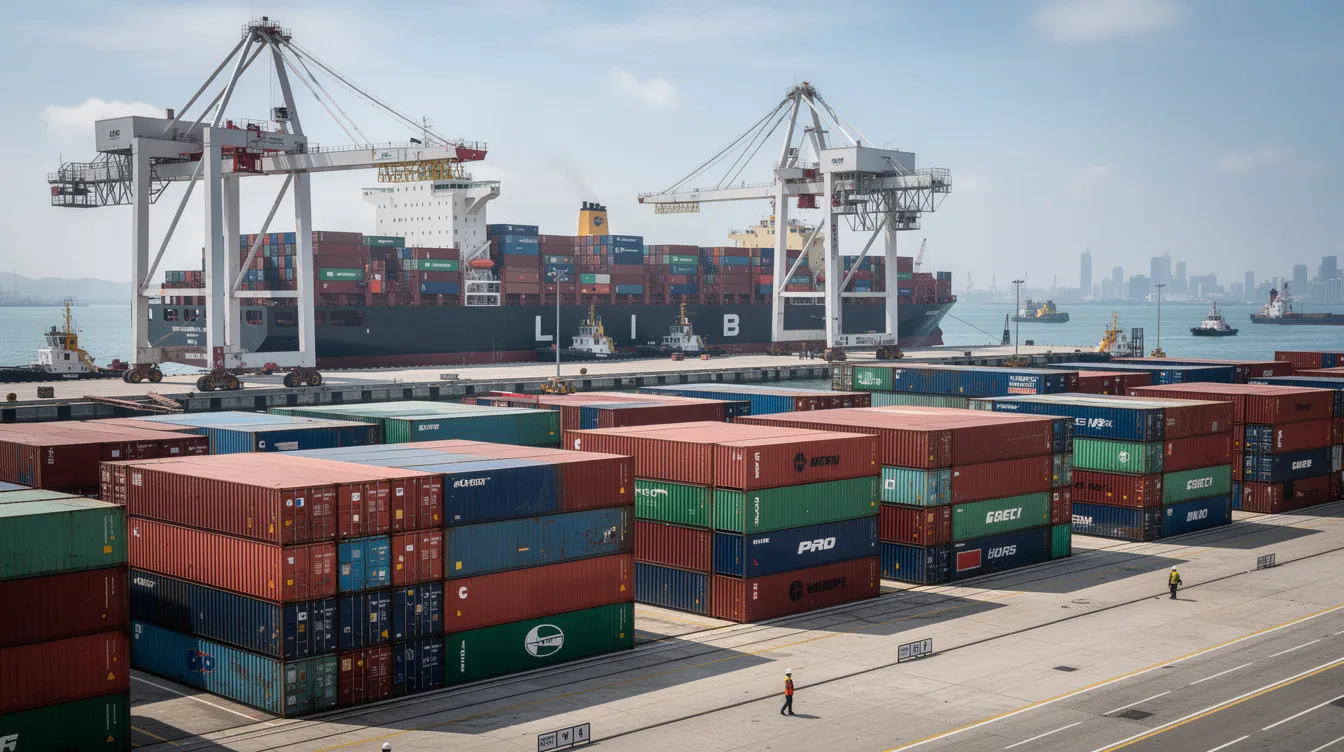
Post-Brexit, the Irish border is now the line between the EU customs territory and the UK customs territory - even though there are no visible customs booths on the land frontier.
Customs declarations and customs checks are now concentrated at ferries and ports between Great Britain and Northern Ireland (Belfast, Larne, Warrenpoint). This reflects Northern Ireland's special status under the Protocol and Windsor Framework.
The relationship between Northern Ireland and the Republic of Ireland has been complicated by different regulatory systems post-Brexit. The EU's position is that some form of customs and regulatory oversight is essential to protect the integrity of the single market, especially for agri-food products, live animals, and controlled goods. EU leaders and the European Commission have consistently maintained this stance.
Key trade figures illustrate the stakes:
Metric | Figure |
|---|---|
Northern Ireland exported to Ireland (2018) | £2.8 billion |
Commercial vehicle movements across the border (2016) | |
Daily commercial vehicle movements (2016) | ~12,788 |
Live lambs crossing the border annually | ~390,000 |
Projected trade reduction under no-deal Brexit | 19% |
Northern Irish exports (2024 total NI business sales) | ~£109.3 billion |
Northern Ireland's economy is deeply integrated with the Republic's. A no-deal Brexit could have reduced Northern Irish trade with Ireland by 19%, which is why the Protocol and Windsor Framework were negotiated.
WTO rules - specifically the Most Favoured Nation principle - make selective waiving of customs checks legally complex under international law. This further underscores why structured agreements, rather than informal arrangements, are necessary for cross border trade.
Regulatory Checks, SPS Controls and VAT at the Border
Regulatory checks for safety, standards, and sanitary and phytosanitary (SPS) rules often matter as much as pure customs duties for businesses moving goods across the Irish border.
Leaving the EU single market would, in theory, require checks on product standards - especially for food, animals, and plant products. In practice, the Protocol and Windsor Framework shift most of these checks to entry points from Great Britain to Northern Ireland. EU regulations on food safety and animal health apply to goods entering Northern Ireland from GB, not at the land border.
VAT and excise on cross-border trade also need special handling. Northern Ireland businesses can still use EU VAT Information Systems (such as VIES) for intra-Community transactions, and excise goods movements use the EU Excise Movement Control System. Co-operation between UK and Irish tax authorities aims to prevent fraud while allowing frictionless cross-border deliveries.
Some inland compliance checks already exist in Northern Ireland to detect excise fraud - for example on fuel and tobacco. These may remain important even if physical customs posts on the land frontier are permanently avoided. For further information on business compliance specifics, specialist guidance from HMRC or Irish Revenue should be consulted.
Movement of People: Rights, Restrictions and Cross-Border Commuting
Approximately 30,000 people cross the Irish border daily to commute, making cross-border movement a routine part of economic life rather than an exceptional event. In 2016, there were approximately 4.7 million commercial vehicle movements alongside this massive flow of commuters.
British and Irish citizens retain full Common Travel Area rights to live and work anywhere in the UK or Ireland regardless of Brexit. This was reaffirmed in the UK Immigration and Social Security (EU Withdrawal) Act 2020 and parallel Irish measures. These rights are automatic under the CTA.
For frontier workers from other EU/EEA countries, the picture is different:
Those who lived in Ireland and worked in Northern Ireland before the end of the Brexit transition period generally rely on UK Frontier Worker Permits to maintain their status.
Frontier workers may lose EU rights after Brexit without a deal - making these permits essential.
New EU/EEA workers moving after 2021 normally need to use the UK's points-based immigration system to work in Northern Ireland, even if they continue to live across the border in the Republic of Ireland.
The distinction is clear: UK citizens and Irish citizens have automatic rights under the CTA. All other nationalities depend on specific visas, residence schemes, or immigration permissions.
Security, Policing and the Risk of a Hard Border
The Good Friday Agreement and the peace process transformed the border from a militarised frontier into an ordinary-looking countryside boundary. Any attempt to rebuild that infrastructure carries enormous political risk.
Reintroducing physical installations, border posts, or systematic border checks on the land border is widely seen as a threat to peace. Dissident republicans may target border infrastructure as a symbol. The UK government committed to no new border infrastructure, recognising both the security implications and the political sensitivities.
Police services cooperate closely across the two jurisdictions. The PSNI in Northern Ireland and the Garda Síochána in the Republic of Ireland share intelligence and coordinate operations against organised crime while consciously avoiding visible hard border installations.
Public opinion reinforces this caution. According to surveys, 60% of surveyed people oppose checks on the Irish border. Support for violence remains extremely low across communities, but the symbolic power of any new border infrastructure should not be underestimated.
The political and security sensitivities around the border are a major reason why solutions like the Northern Ireland Protocol were prioritised over visible land border controls. EU leaders and EU member states have consistently acknowledged this reality.
Energy, Infrastructure and Cross-Border Cooperation
The all-island Single Electricity Market (SEM) links power generation and distribution north and south of the border. Operational since 2007, SEM depends on bilateral UK–Ireland agreements and interaction with EU Internal Energy Market rules, making it sensitive to regulatory divergence after Brexit.
Ireland relies heavily on gas imports via the UK, meaning that cross-border energy infrastructure across or near the Northern Ireland border is critical for security of supply. Any disruption caused by regulatory misalignment could have immediate consequences for households and businesses on both sides.
Beyond energy, the Good Friday Agreement identified over 140 areas of north-south cooperation - from health services to environmental projects - which depend on smooth cross-border movement. These arrangements reflect the practical reality that the Schengen area model of open borders (used by many EU member states) was never applied to the UK or Ireland, but the CTA achieved a similar result through bilateral arrangements.
Cross border cooperation in areas like agriculture, education, and emergency services remains a cornerstone of the peace process and daily life along the changing Europe of this island frontier.
Cultural, Social and Everyday Life Along the Border
The border has shaped local identities, economies, and communities in ways that statistics alone cannot capture. In some places, it divides villages or even individual farmland, creating practical difficulties that residents navigate every day.
Cultural works have explored these realities vividly. Spike Milligan's comic novel Puckoon imagined a village absurdly split by the partition line. Dervla Murphy's A Place Apart and Colm Tóibín's Bad Blood documented the lived experience of communities alongside the border. Post-Brexit, media and satire - such as the BBC's Soft Border Patrol - have explored fears of returning customs posts, reflecting the psychological weight of border debates as covered in outlets like the Irish Times and the Belfast Telegraph.
Everyday practical issues persist:
Differing currencies (euro vs pound sterling) mean shoppers and workers manage two monetary systems
School catchment areas and health-service arrangements don't always align with the border
Social welfare entitlements differ between the two jurisdictions
Speed limits change from mph to km/h mid-journey
Brexit has reinvigorated discussions about a united Ireland and the possibility of a future border poll, adding yet another dimension to how communities along the border think about their future.
Frequently Asked Questions About the Northern Ireland Border
Do I need a passport to cross the land border between Northern Ireland and the Republic of Ireland?
There are no routine passport checks at road crossings, and many British and Irish nationals travel without being stopped. However, travellers should carry valid ID (usually a passport) because police or immigration officers can conduct spot identity checks. Airlines and ferry companies within the Common Travel Area normally insist on a passport or other specified photo ID before boarding, even for British and Irish citizens.
If I have a UK visa, can I automatically enter the Republic of Ireland?
No. The Republic of Ireland operates its own visa policy, and holding a UK visa or residence permit does not, by itself, guarantee the right to enter Ireland. Some nationalities benefit from specific Irish short-stay visa waiver programmes tied to certain UK visas - for instance, through the British-Irish Visa Scheme for Chinese and Indian nationals - but you must check the Irish government's guidance before relying on these schemes.
Will there ever be passport or customs booths on the Irish border again?
Both the UK and Irish governments, as well as the EU, have repeatedly pledged to avoid a hard border with new physical posts as part of protecting the Good Friday Agreement. While future political change can never be ruled out entirely, current legal frameworks - the Common Travel Area, the Northern Ireland Protocol, and the Windsor Framework - are specifically designed to keep the land border as open as possible.
How does the border affect mobile phone charges and roaming?
People living near the border often see their phones connect to networks on the other side, triggering roaming status. EU rules abolished intra-EU roaming surcharges in June 2017, and although the UK has left the EU, many networks still limit extra charges or offer special cross-border packages. Always check with your provider before travelling.
Is Northern Ireland still in the EU because of the border arrangements?
Northern Ireland remains part of the United Kingdom and is outside the EU politically. However, it follows many EU rules for goods under the Northern Ireland Protocol and Windsor Framework. This special status allows goods to move freely across the Irish border into the EU single market without routine customs posts, while keeping Northern Ireland inside the UK's customs union in legal terms. It does not make Northern Ireland an EU member state.