London Application Visa Form: Step-by-Step Guide for UK & Schengen Visitors
Key Takeaways
Most people searching for a London application visa form need either a UK visa to enter the country or a Schengen visa applied for from London to travel to Europe. Each has a separate application form and visa process.
The visa application form must match your passport details and intended travel date exactly; inconsistencies are a common reason for delays and refusals.
Processing time ranges from about 3 weeks for many UK visitor categories to around 15 calendar days for standard Schengen visas. Apply well in advance of your trip.
Applications are submitted online, but biometrics and documents are usually given in person at visa centres in London such as VFS Global or TLScontact.
Careful preparation of the application form and supporting documents, plus checking current Home Office or consulate guidance, is the best way to avoid refusal.
Introduction: What "London Application Visa Form" Really Means
People search for "London application visa form" for two distinct reasons: they want to visit London and need a UK visa, or they live in London and need a Schengen visa to travel to Europe. These are separate processes handled by different authorities, with different forms, fees, and rules.
In 2026, almost all visa applications start online through official government portals. The in-person steps, biometrics and document submission, happen at visa centres in London. This guide walks through the complete visa process for both UK and Schengen applications: the application form itself, required documents, processing time, fees, and how to avoid the mistakes that get many applications refused.
Choosing the Right Visa Before You Touch the Application Form
Selecting the correct visa category is step one. Applying under the wrong category leads to refusal even if your documents are otherwise strong. Confirm your eligibility on gov.uk or the relevant consulate website before opening the form.
Common routes for people coming to London:
Standard Visitor Visa: tourism, business meetings, short courses, medical treatment. Up to 6 months.
Marriage Visitor Visa: for getting married or entering a civil partnership in the UK.
Youth Mobility Visa: for eligible nationalities aged 18-30 (some 18-35). The Youth Mobility Visa costs £244, you must apply online outside the UK, and you can stay in the UK for up to two years on this visa.
Student Visa: requires a Confirmation of Acceptance for Studies (CAS) from an approved education provider.
Skilled Worker Visa: requires a job offer from a Home Office-approved sponsor.
Visa-exempt nationals: citizens of countries like the USA, Canada, and Australia can visit for short tourism trips without a visa. Check whether you need an Electronic Travel Authorisation (ETA).
If you are in London and need to travel to Europe, you are looking at a Schengen visa instead. You must apply through the consulate or visa centre of your main destination country, whether that is France, Italy, Spain, Germany, or another Schengen state.
Understanding the UK Visa Process for Visiting London
UK visas are handled by UK Visas and Immigration (UKVI), part of the Home Office. The application process follows a set sequence, and skipping a step or mixing up the order creates problems.
Here is the typical process for a London visit:
Check whether you need a visa (non-visa-exempt nationals need a Standard Visitor Visa for short visits to London).
Choose the correct visa route on gov.uk.
Complete the online application form.
Pay the visa fee (and Immigration Health Surcharge where relevant).
Book a biometric appointment at a visa centre.
Submit supporting documents.
Wait for a decision.
Applicants from countries like India, Pakistan, and Nigeria usually need a UK visa to visit London. You can apply for a Standard Visitor visa up to 3 months before your planned travel date. Some categories such as Student or Skilled Worker have specific additional requirements beyond the standard visitor rules, including sponsorship or CAS numbers.
Filling in the London UK Visa Application Form Online
To apply for a UK Standard Visitor visa, complete the online application on GOV.UK. The form must be filled in English with accurate, verifiable information.
Key sections of the application form:
Section | What You Provide |
|---|---|
Personal details | Full name, date of birth, nationality, passport number, issue and expiry dates |
Contact information | Email, phone, home address history |
Travel plan | Intended travel date, length of stay, accommodation address in London |
Purpose of visit | Tourism, business, study, medical, family visit |
Finances | Income, bank balances, how the trip is funded (savings, sponsor, employer) |
Employment/education | Current job or course details |
Family in the UK | Names, relationship, immigration status |
Immigration history | Previous visa refusals, overstays, criminal record |
All names, dates of birth, passport numbers, and issue/expiry dates must exactly match the passport. Even small mistakes can slow the visa process or lead to refusal. The Standard Visitor visa fee is typically £135 for a 6-month visa, with longer-term options costing more (£506 for 2-year, £903 for 5-year, £1,128 for 10-year).
Once the application form is submitted and the fee is paid, your answers cannot be edited. At the end of the process, you review answers, digitally sign a declaration, pay, and then download the completed form and appointment confirmation with a code to bring to your biometric appointment.
Schengen Visa Application from London: Form and Process
Many London residents who hold non-UK passports apply for Schengen visas at centres in London to travel to Europe. A Schengen visa allows travel to 29 countries for 90 days in any 180-day period. Non-UK passport holders need a Schengen visa to travel to these countries unless their nationality is exempt.
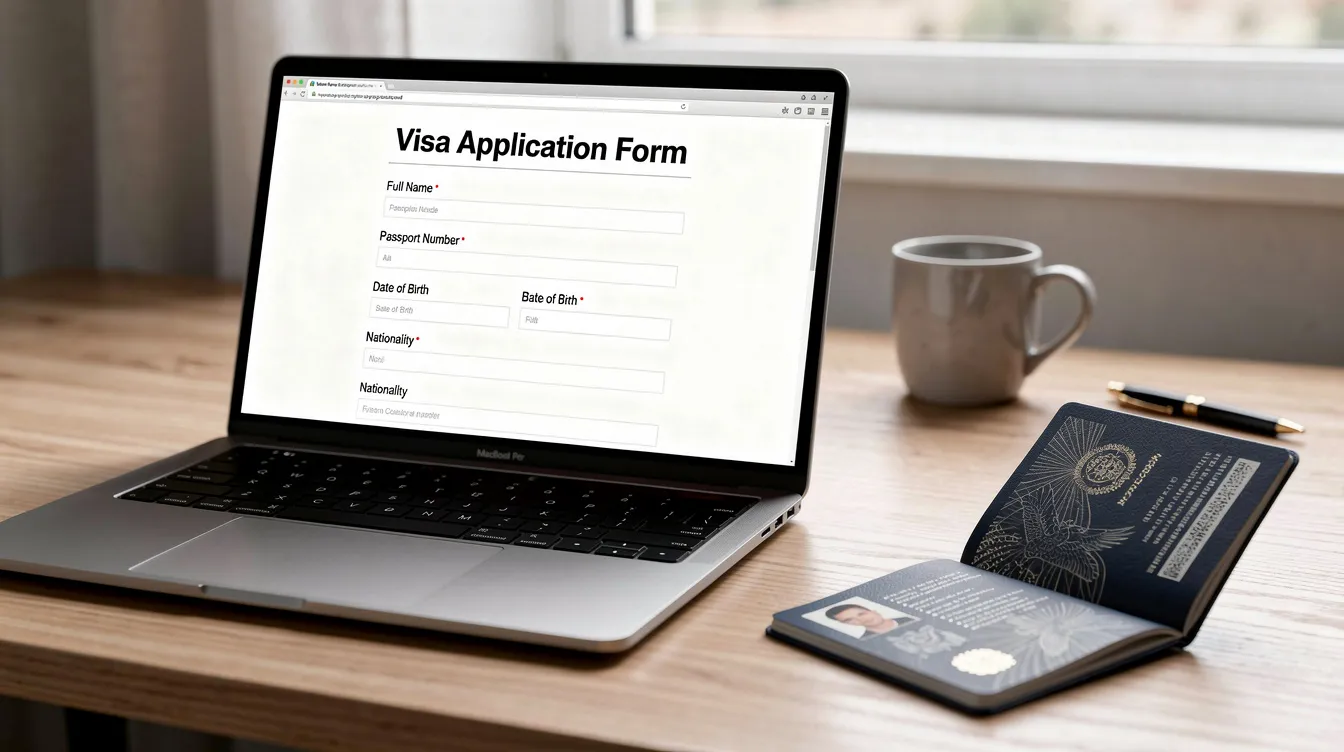
The Schengen visa application form is largely standard across countries, but each embassy or visa centre has its own online portal and checklist. Spain, for example, uses BLS International in London, while France uses TLScontact and several others use VFS Global.
Main fields on the Schengen form: personal details, passport details, current UK immigration status (BRP or valid UK visa), intended travel date and itinerary, main destination country, and purpose of travel (tourism, business, visiting family, study). Applicants must show they are legally present in the UK if they are not British citizens; short-term visitors to the UK generally cannot lodge Schengen applications in London.
You can apply up to six months before your travel date, and you must apply at least 15 days before your travel date. The fee for adults over 12 is €90; children aged 6-11 pay €45; children under 6 are typically exempt. VAC service fees are added on top and vary by provider and nationality.
After completing the form, you book an appointment at a London visa centre, pay the fee, and attend to submit documents and biometrics.
Stating Your Intended Travel Date and Itinerary Correctly
Consulates and UKVI look closely at your intended travel date, return date, and itinerary when assessing your plan and purpose of visit. You must provide details of your travel plans including dates and accommodation.
The intended travel date on the visa application must match supporting evidence: flight bookings, hotel confirmations, wedding invitations (for Marriage Visitor), or course start dates (for international students on Student Visas). A mismatch between your form and your bookings is one of the fastest ways to get refused.
Do not book non-refundable flights before the visa is approved. Use refundable reservations or tentative bookings instead. For Schengen visas, the itinerary should clearly show which country is the main destination and how nights are divided between cities. For UK visits, outline where in the country you plan to stay.
If your plans change after submission but before a decision, you may need to withdraw and re-apply so the visa dates still match your travel dates. Minor shifts of a few days are less likely to cause issues if they fall within the granted visa validity window.
Documents to Support Your London Visa Application Form
What you type in the application must be backed up by documentary evidence. The form and documents must work together; any contradiction between them raises a red flag.
Common UK visitor visa documents:
Valid passport with at least one blank page
Completed and signed application form copy
Recent passport photographs (if required by centre)
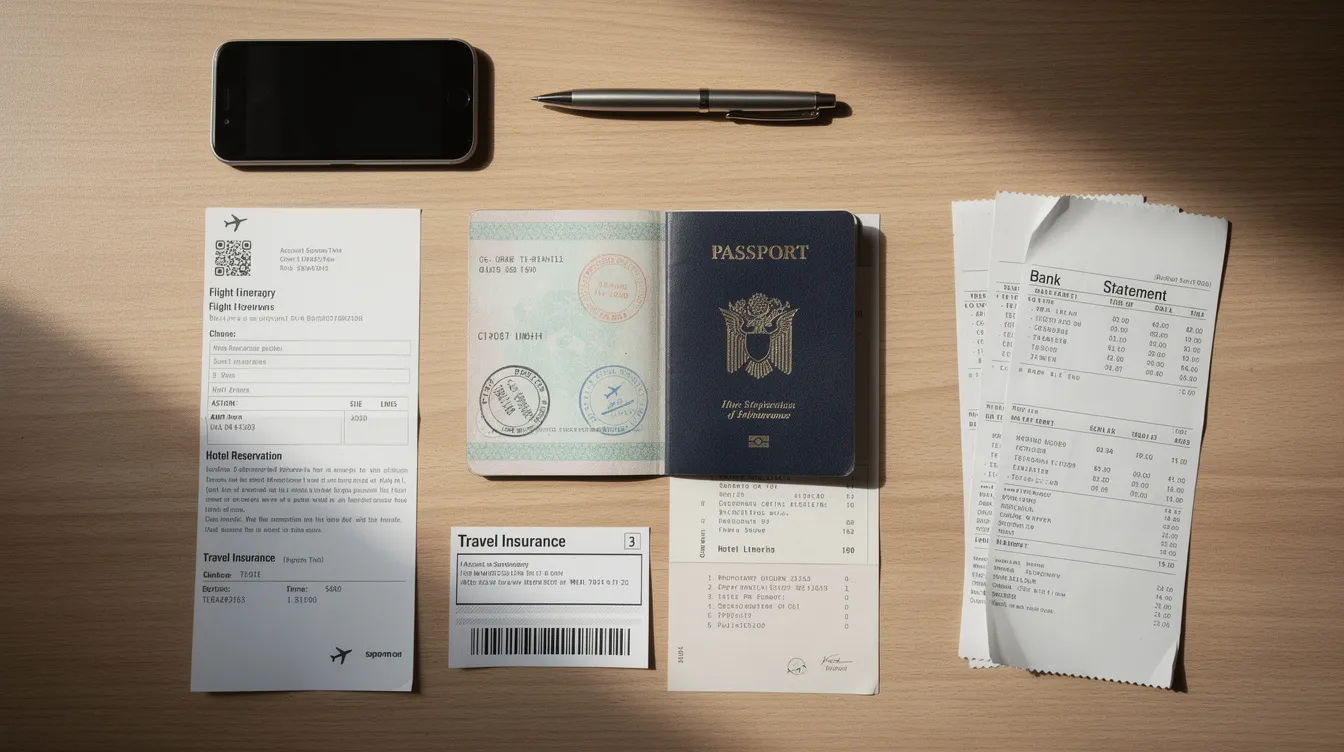
Bank statements for at least 28 to 90 days showing proof of sufficient financial means to support yourself during your stay
Employment letter or self-employment proof
Accommodation details in London
Travel plan and return booking
Evidence of ties to your home country must be provided to demonstrate intent to return
Common Schengen documents when applying from London:
Passport valid 3 months beyond departure date
Printed Schengen application form
UK BRP or valid visa
Travel insurance with at least €30,000 medical cover
Hotel bookings and flight reservations
Proof of sufficient funds per day of stay
Additional documents may be needed for specific purposes: a marriage booking confirmation for a Marriage Visitor Visa, an invitation letter and sponsorship proof for family visits, or an employer letter for business trips. Any document not in English or Welsh should include a certified translation. For Schengen applications, check whether the specific consulate requires translation into another language.
Booking London Visa Appointments and Giving Biometrics
Nearly all applicants must attend a biometric appointment in person at a London visa centre, even though the application form is online. You must book an appointment at a visa centre in advance.
Main centres in London:
UKVCAS locations: for in-country UK visa applications. Free standard appointment slots run 09:00 to 14:00; premium or out-of-hours slots cost extra. Applicants inside the UK must usually complete their biometric enrolment within 45 working days of submitting the application.
VFS Global and TLScontact centres: handle Schengen and some national visa applications from London.
After completing the visa application form and paying the fee, you choose a date and time online for your appointment. Peak holiday seasons (around December and September, for example) see slots fill fast.
At the appointment, staff will check your identity, collect fingerprints and a digital photo, scan or accept your documents, and confirm your application submission. Arrive at least 15 to 20 minutes early with printed confirmations, your passport, and all required documents in the requested format to avoid delays or rescheduling.
Typical Processing Time for London Visa Applications
Processing time varies by visa type, nationality, time of year, and whether priority services are purchased.
Visa Type | Standard Processing | Priority Option |
|---|---|---|
UK Standard Visitor (from outside UK) | ~3 weeks after biometric appointment | 5 working days (priority); next working day (super priority) |
Youth Mobility Visa | Usually 3 weeks | Varies by availability |
Schengen visa (from London) | Up to 15 calendar days | Limited; depends on consulate |
Processing times for UK visa applications generally take around 3 weeks after the biometric appointment. Processing for Schengen visas usually takes around 15 calendar days, but can extend to 45 calendar days if additional documentation or an interview is required.
Applicants should submit their visa application at least 4 to 6 weeks before their intended travel date to account for possible delays. For Schengen applications, the waiting period can stretch during busy seasons. Tracking tools from UKVI, VFS Global, or TLScontact allow you to monitor basic status (received, under process, dispatched), but they rarely show detailed reasons until a decision letter is issued.
Avoiding Common Mistakes on the London Visa Application Form
Careful, honest completion of the application form is essential. Errors can lead to refusal or long-term immigration record issues.
Frequent problems that get many applications refused:
Inconsistent dates between the form and documents
Forgetting to mention previous refusals or criminal record entries
Inaccurate employment or money details
Incomplete travel histories
You must accurately answer application questions consistent with supporting documents
Multiple applications submitted on the same day are invalid under UK Immigration Rules. An applicant may only have one outstanding application at a time. You must withdraw a previous application before submitting a new one. Invalid applications can adversely affect future visa applications; this is published in the immigration rules and taken into account by caseworkers.
Before you submit, review each page, save or print a copy of the final application, and ensure all supporting documents match what is declared in the form. Handle your application professionally by organizing documents in the order requested and flagging any special circumstances in a covering letter.
Complex cases involving previous overstays, refusals, or criminal records may benefit from professional help. Legal representation can help ensure compliance with immigration rules and build confidence in the strength of your submission. Many immigration solicitors in London assist with exactly these scenarios.
What Happens After a Decision: Collecting Your Passport and Next Steps
Once processing is complete, you either collect your passport from the London visa centre or receive it via courier, depending on the service you selected.
If the visa is approved, the vignette or visa sticker will show validity dates, visa type, number of entries allowed, and sometimes work or study restrictions. Check this carefully against your intended travel date and itinerary before you arrive at the airport. A standard visitor visa typically does not allow you to live in the UK continuously; it permits visits within the validity window, with each stay usually capped at 6 months.
If the visa is refused, the decision letter will outline reasons and whether any review or appeal rights exist. Many short-term visitor refusals have no right of appeal, so the main route is to re-apply with stronger evidence addressing the specific reasons for refusal. The refusal is placed on your immigration record and will be visible to caseworkers in future applications.
Travel only within the visa validity window and comply with all conditions (no work if on a visitor visa, no access to public funds, respect for maximum stay limits). For some UK routes, a temporary entry vignette is issued and the applicant must collect a Biometric Residence Permit in the UK within a stated period. You need a UK address to collect your Biometric Residence Permit, and this address must be specified in the application form.

FAQ
Do I have to be physically in London to submit a "London application visa form"?
The term is informal. Most visa application forms are online and can be completed from anywhere in the world. If you select a London visa centre for your appointment, you must travel there in person for biometrics and document submission. The form itself does not require you to be in London when you fill it in.
Can I change my intended travel date after submitting my visa application?
Minor changes of a few days usually do not cause problems if they still fall within the visa validity once the visa is decided and granted. Major shifts in your journey may require you to withdraw and submit a fresh application so the visa dates and itinerary remain consistent. Contact your visa centre or consulate for advice before making changes.
Is there a paper version of the London visa application form I can fill in by hand?
In 2026, UKVI expects applications to be completed online via the gov.uk website. Most Schengen countries using London centres also rely on online or typed forms. Handwritten paper forms are generally not accepted at London visa centres.
Can I speed up the processing time for my London visa application?
Some UK visa routes offer priority (5 working days) or super-priority (next working day) processing at extra cost, but availability changes and is not guaranteed for all categories or countries. Most Schengen consulates do not offer true express visas, so the safest option is to apply early, ideally 4 to 6 weeks before travel.
What if I make a mistake after submitting the application form?
Small errors can sometimes be clarified at your appointment or in a covering letter attached to your documents. Serious mistakes may require formally withdrawing and submitting a new, corrected visa application. Since the fee is non-refundable once paid, check every detail on every page before confirming and paying. If you are unsure about how to correct an error, seek advice from the visa centre or an immigration solicitor before your appointment.