
Naturalised: Meaning, Uses, and Real-World Examples
"Naturalised" means something or someone originally foreign has become accepted or officially adopted as if native. The word appears in law, ecology, and everyday language, each time carrying the same core idea: what was once foreign now belongs.
Law: A person who has become a naturalized citizen of a foreign country after birth, such as a Canadian who became a naturalised citizen of the United Kingdom in 2018.
Ecology: A plant or animal species introduced to a new environment where it now reproduces without human help, such as a European grass now naturalised in New Zealand pastures.
Language and culture: A word, custom, or thing that has been adopted and is called native in its new context, such as the French word "ballet" naturalised into English.
The spelling "naturalised" follows British English convention. "Naturalized" is the US variant. This article covers the concept regardless of which spelling you choose.
Origin and development of the word "naturalised"
The verb "to naturalise" comes from Latin naturalis ("by birth, of nature"), filtered through Old French and combined with the English suffix -ize/-ise. It appeared in written English around 1550, initially meaning "to admit an alien to rights of a citizen."
1400s: English Acts of Parliament granted naturalisation to foreign-born nobles, making them subjects of the Crown.
1550s: The verb "naturalize" entered general legal language precisely to describe this process.
1700s–1800s: The word extended to ecology. Darwin used "naturalised" repeatedly in On the Origin of Species (1859) to describe nonnative species thriving without human assistance.
The shared idea across all uses is "to make as if native." "Naturalised" functions as the past participle of the verb "to naturalise" and doubles as an adjective. The related noun is "naturalisation" (UK) or "naturalization" (US).
"Naturalised" in citizenship and immigration law
In law, a naturalised citizen is a person born in one country who has formally acquired citizenship of another through a legal process called naturalisation. Naturalization grants new nationality to a person after birth, generally through a formal application process with specific residency and eligibility requirements.
Candidates often must pass exams proving fluency in the national language. They must also demonstrate knowledge of civic life, meet good-character standards, and satisfy statutory requirements for naturalization set by the country in question.
Concrete examples from different regions:
Ireland: Under the Irish Nationality and Citizenship Acts, a foreign national needs five years of residence over a nine-year period, including one continuous year immediately before application. A Polish national who met these conditions could become a naturalised Irish citizen by decree.
France: A Chinese student or Moroccan engineer can be naturalised as a French citizen by decree of the French government after five years of residence, an interview, and a civic exam.
UK: In the UK, citizenship is acquired via a certificate of naturalization. An oath of allegiance is required for UK naturalization, and knowledge of British life is required by the 2002 Act (the Nationality, Immigration and Asylum Act).
United States: The US process involves Form N-400, biometrics, an interview with English and civics tests, and a ceremony where the applicant takes an oath of allegiance. The term "naturalized citizen" is the spelling used on US immigration forms.
Key rights and limitations for naturalised citizens:
Naturalised citizens have the right to vote in national elections and run for office, though some countries restrict the highest offices (the US Constitution, for example, limits the presidency to natural-born citizens).
Naturalised citizens gain access to a national passport enabling global travel and consular protection.
Naturalised citizens can generally pass citizenship on to children born abroad.
The naturalisation process typically requires an oath of allegiance to the nation.
Naturalised citizenship can often be revoked if obtained through fraud or other specified reasons.
Some countries allow dual nationality; others require renouncing a previous citizenship before the new one is granted.
A person's immigration history does not disappear after becoming a naturalised citizen. The process changes legal status, not personal story.
"Naturalised" species in ecology and biogeography
A naturalised species is a plant, animal, or other organism introduced to a region outside its native range that now survives, reproduces, and maintains wild populations without ongoing human planting or release. Naturalized species are introduced and established in new environments, and over time they can adapt to local conditions.
The distinction between related terms matters:
Introduced: brought from elsewhere by human activity (intentionally or accidentally).
Naturalised: introduced and now self-sustaining across multiple generations.
Invasive: naturalised and causing measurable ecological or economic harm.
Case studies with locations and dates:
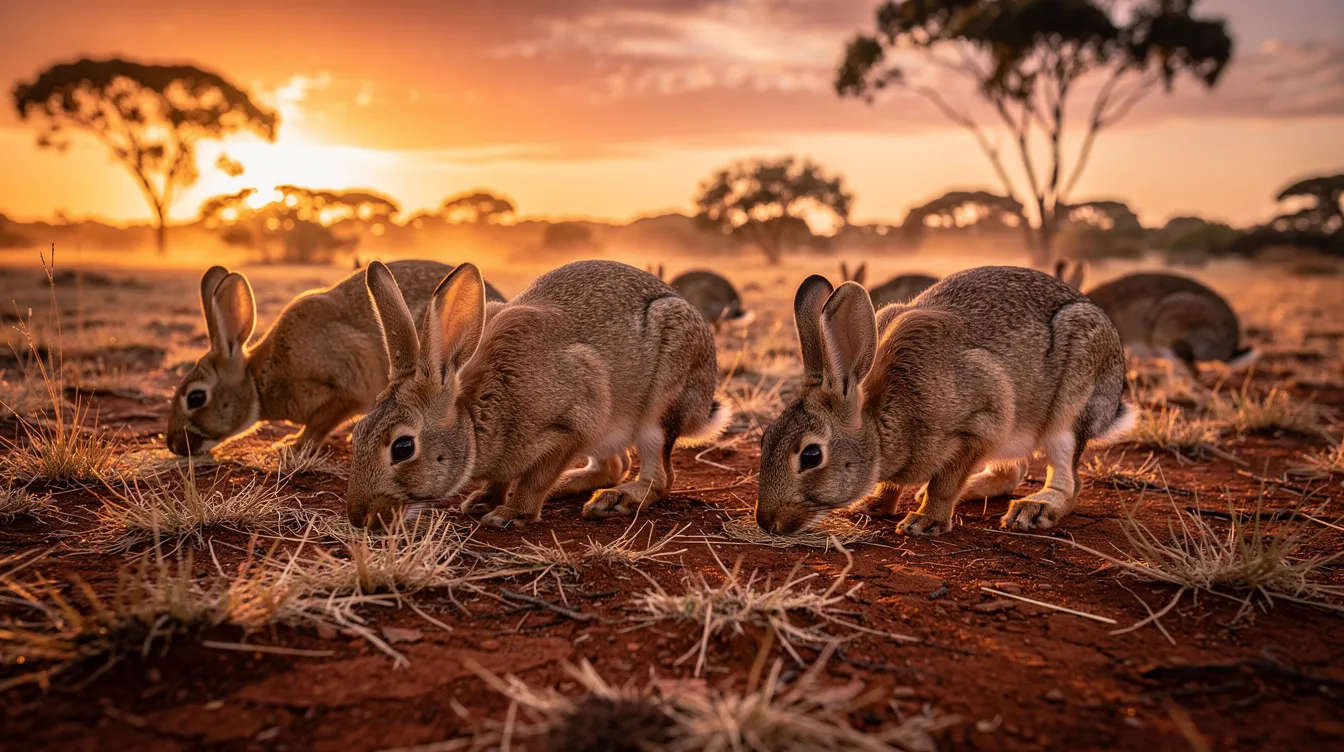
Rabbits in Australia: Thomas Austin released European wild rabbits on his Victoria estate in 1859. Within 50 years the population spread across nearly the entire continent, numbering in the hundreds of millions.
Grey squirrels in the UK and Ireland: First successfully introduced around 1876 in England. By 2018, the estimated population reached roughly 2.7 million, displacing native red squirrels and spreading squirrelpox virus.
Japanese knotweed in Western Europe: Introduced in the mid-19th century as an ornamental; by the late 20th century it had naturalised across much of the region, reproducing from rhizome fragments and causing structural damage.
European foxtail: European foxtail is naturalized in North America, where it established itself in agricultural and roadside habitats.
Lygodium microphyllum: Lygodium microphyllum is naturalized in Jamaica and Florida, where the climbing fern displaces native vegetation.
Mediterranean grass: Mediterranean grass is naturalized in the United States, found in coastal and disturbed habitats across several states.
Daffodils in English estates: During the 1800s, planted bulbs of Narcissus species escaped cultivation on country estates and spread through woodlands, creating images of wildlife that appear entirely wild but were originally created by human planting.
A 2020 study in Nature Communications found that economic plants (grown for food, ornament, or environmental uses) are 18 times more likely to naturalise than non-economic plants, based on a dataset of roughly 326,000 seed-plant taxa.
Naturalised species can benefit economies (crops, timber, ornamentals) but also displace native wildlife, alter fire regimes, change soil chemistry, or introduce disease.
"Naturalised" in language, culture, and everyday usage
Beyond law and ecology, "naturalised" describes words, customs, or ideas originally from one culture that have become fully accepted in another. The verb applies whenever something foreign is treated as belonging.
Linguistic naturalisation: French words like "garage" and "ballet" entered English centuries ago and are now spelled, pronounced, and used as English words. English "football" terminology has naturalised into many European languages since the early 20th century.
Cultural naturalisation: Sushi, originally Japanese, became a naturalised part of urban food culture in London, New York, and Sydney by the early 2000s. Local versions appeared; ingredients were adapted to regional tastes.
Figurative use: People call someone "a naturalised Londoner" after ten years in the city, meaning the person speaks, acts, and is accepted as if born there.
In all these cases, "naturalised" is metaphorical. It borrows the core idea of "treated as native" from its legal and ecological senses and applies it to everyday searches for belonging.
Translations and spelling variants of "naturalised"
Many languages have parallel terms for both the legal and ecological meanings of "naturalised." English itself has two standard spellings: "naturalised" (British, Australian, and most Commonwealth usage) and "naturalized" (American usage).
Major translation equivalents:
French: naturalisé (citizen); introduit, acclimaté (species)
German: eingebürgert (citizen); eingewanderte Art, etablierte Art (species)
Spanish: naturalizado (citizen or species)
Italian: naturalizzato
Chinese: 归化的 (people); 引进并定植的 (species)
Japanese: 帰化した (kika shita; both people and organisms)
Legal documents almost always use the precise statutory term for "naturalized citizen," while ecology texts may prefer broader phrases like "introduced and established." Writers should stay consistent with regional spelling throughout a single text: "naturalised" and "colour" in a UK-focused article, "naturalized" and "color" in a US-focused one.