
Travel Visa: Complete Guide to Visiting the UK and Abroad
Key Takeaways
A UK Standard Visitor visa normally allows stays of up to six months, while some visitors from non visa nationals only need an Electronic Travel Authorisation (ETA) before travelling.
Applicants must prove genuine intention to leave the UK, sufficient funds, suitable accommodation details, and adequate passport validity.
Visitors are strictly limited in what they can do: business visitors may attend meetings and conferences, but working, accessing public funds, and other prohibited activities are not allowed.
Different visit purposes - tourism, business, study, medical treatment, marriage visitor visa - require choosing the right visa type before travelling.
If a travel visa is refused, there is usually no appeal, and the practical solution is a fresh, stronger application with better supporting documents.
Introduction: What Is a Travel Visa?
A travel visa is official permission granted by a foreign government that allows you to enter its territory for a limited purpose and time. In the Schengen area, that might mean 90 days for tourism. In the UK, a visitor can stay for up to six months. In some countries, you need nothing more than a valid passport and a return ticket.
The distinction between "visa-free" and "visa required" depends on your nationality and where you are headed. A British passport holder can enter Japan without applying in advance, but a Nigerian citizen planning the same trip needs a pre-approved visa. Meanwhile, systems like the UK's electronic travel authorisation and the EU's upcoming ETIAS are creating a middle ground: not a full visa, but a mandatory digital pre-screening before boarding.
This guide uses the UK as the main example, but the principles - passport validity, supporting documents, prohibited activities, genuine intention to return home - apply to travel visas worldwide. The sections below walk you through choosing the right visa, gathering the evidence you need, and avoiding the mistakes that lead to refusals.
Travel Visa Basics: How Visas Work
A visa is typically either stamped directly into your passport or issued digitally as an eVisa, linked to your travel documents electronically. Each visa carries a validity period - the window during which you can use it - and a maximum period of stay per visit. A 10-year US B1/B2 visa, for instance, lets you enter multiple times across a decade, but each individual stay is capped (usually at six months). A single-entry 30-day Thai tourist visa, by contrast, allows exactly one visit before it expires.
Travel visas break down into categories based on purpose and duration of stay. The most common types include:
Tourist visas - for holidays and leisure; these do not allow work or study.
Business visas - for meetings, conferences, and negotiations, not employment.
Transit visas - for passing through a country on the way to your final destination.
Student visas - for individuals accepted into accredited educational institutions.
Work visas - require a job offer and employer sponsorship.
Working holiday visas - allow young adults to travel and work temporarily.
Marriage-specific permits - like the UK's Marriage Visitor visa for ceremonies abroad.
Visa requirements depend on nationality, destination, purpose of travel, and length of stay. And here is a point that catches many travellers off guard: having a visa never guarantees entry. Border officers retain the power to refuse admission if they believe the conditions of entry are not met, even if the visa in your passport is perfectly valid.
Do You Need a Visa or Can You Travel Visa-Free?
The UK divides the world into two broad groups: visa nationals and non visa nationals. Visa nationals must apply for a visitor visa in advance before travelling. Non visa nationals can often enter without a full visa - historically just showing up with a valid passport - though increasingly they need an electronic travel authorisation.
Requirements for visas can differ significantly based on nationality and destination. A Canadian citizen does not need a UK visitor visa for a two-week holiday, but a citizen of South Sudan does. Meanwhile, nationals of countries like South Korea or North Macedonia fall into specific categories that determine their entry requirements.
Many travellers can enter certain regions visa-free. UK citizens, for example, can visit the Schengen area for up to 90 days within any 180-day period without a visa. But from 2026, British and many other non-EU travellers will also need ETIAS - an electronic pre-screening system - before entering Schengen states.
Before booking anything, check official government tools. The UK government's visa checker is a reliable starting point for UK-bound travel. The US, EU, and most other countries maintain similar online tools. Rules also vary depending on whether you travel as an individual or in organised tour groups, so always verify your specific situation.
Types of UK Visitor Visas and Travel Permissions
The UK visitor route covers several visa types, each designed for a specific purpose and stay length. Choosing the wrong category is one of the most common reasons applications fail.
Here is how the main options break down:
Visa / Permission Type | Purpose | Typical Validity |
|---|---|---|
Standard Visitor visa | Tourism, visiting family, business visits, short study, recreational courses | Up to 6 months per visit |
Marriage Visitor visa | Marrying or entering a civil partnership in the UK | 6 months |
Transit visa | Passing through the UK en route to another country | 24–48 hours |
ADS visa | Chinese tour groups under Approved Destination Status | Group itinerary dependent |
Short-term study visa | English language courses or other study from 6 to 11 months | 6–11 months |
Electronic Travel Authorisation | Non visa nationals visiting for tourism, business, or transit | 2 years or until passport expiry |
Non visa nationals often travel under an electronic travel authorisation rather than a full visa, but they must still follow the same visitor rules regarding permitted activities, funds, and length of stay.
Selecting the right visa category from the start is crucial. Applying under the wrong route - for example, using a Standard Visitor visa when you intend to marry - can result in refusal at the application stage or problems at the UK border.
Standard Visitor Visa: Main UK Travel Route
The Standard Visitor visa is the default route for the vast majority of people entering the UK for short stays. It covers tourism, visiting friends and family, short business trips, attending conferences, and taking short-term study or recreational courses.
The Standard Visitor visa allows stays of up to six months. For frequent travellers - perhaps business visitors who attend regular meetings - visitor visas can have a validity of two, five, or ten years, granting multiple entry rights. Each visit, however, is still capped at six months regardless of the visa's overall validity.
Typical use cases include:
A two-week sightseeing trip around London, Edinburgh, and the Lake District
Attending a five-day industry conference in Manchester
A four-month English language course at an accredited school
Visiting family for a month during the summer holidays
The current fee for a 6-month Standard Visitor visa is £135, with longer-validity options costing more (approximately £506 for two years, £903 for five years, and £1,128 for ten years).
Keep in mind that a long-validity visa does not mean you can live in the UK. Successive visits that amount to near-permanent residence will trigger scrutiny and potential refusal on future applications.
Marriage Visitor Visa: Visiting the UK to Marry
The Marriage Visitor visa is specifically for people who want to marry or enter a civil partnership in the UK and then return to their home country afterwards. It exists because a Standard Visitor visa is not sufficient for a legally recognised marriage in the UK - using the wrong visa is a common refusal reason.
The Marriage Visitor visa is valid for six months. It cannot be extended, and you cannot switch from it into a spouse visa, work visa, or any other immigration route from inside the UK. You must leave and apply from abroad if you want to return on a different basis.
Key supporting documents for this visa include:
Evidence of the relationship (photos, correspondence, previous meeting records)
Booking confirmation for the wedding or civil partnership ceremony
Accommodation details for the duration of the stay
Proof of enough money to cover living costs, travel, and the ceremony
Evidence that both partners intend to leave the UK after the event
Electronic Travel Authorisation (ETA) for Non Visa Nationals
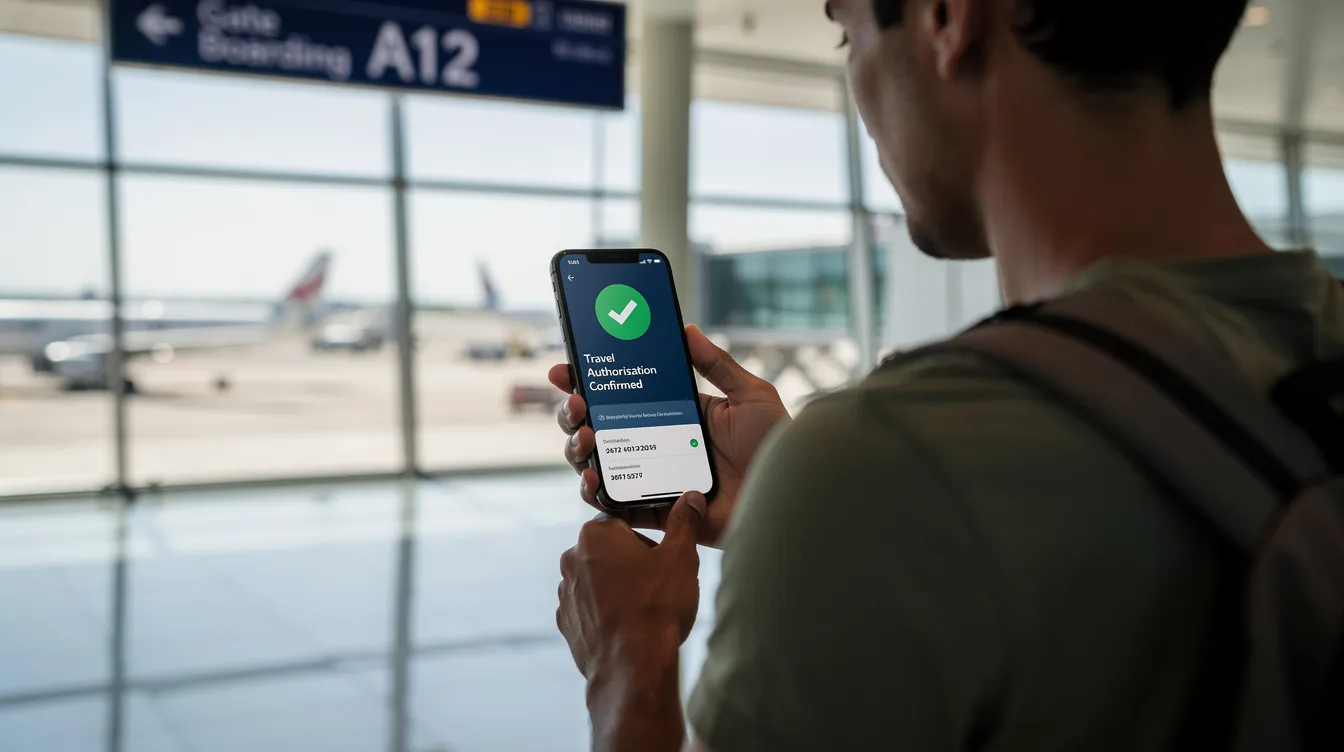
The UK is rolling out an electronic travel authorisation system for non visa nationals - a digital permission that works similarly to the US ESTA and the EU's planned ETIAS. An ETA is required for non visa nationals visiting the UK, whether for tourism, business, or transit.
The ETA requirement started for Qatari nationals on 25 October 2023 and has since expanded. All non visa nationals must obtain an ETA by 25 February 2026. Irish citizens are exempt, as are those already holding UK immigration status.
Here is how the system works:
Application method: Apply online or through a dedicated mobile app
Cost: The ETA application costs £20 per applicant
Validity: Usually valid for up to 2 years or until passport expiry, whichever comes first
Stay limit: Each visit is still limited to 6 months under visitor rules
Linked to passport: The ETA is tied electronically to the specific passport used in the application
An ETA must be obtained before travelling to the UK. There is no option to apply on arrival. The UK government recommends applying at least three working days before travel to allow for additional checks.
Airlines and transport operators are required to verify that passengers hold a valid ETA or visa before boarding. Travellers risk being denied boarding if the ETA is missing or the passport details do not match. Double-check every field - a single digit wrong in your passport number can cause problems.
Over 13.3 million visitors had successfully applied under the UK ETA scheme by late 2025, reflecting both the scale of travel to the UK and the system's rapid adoption.
Permitted Activities on a Visitor Visa
Understanding which activities are permitted under visitor rules saves you from accidental breaches that could affect current and future travel. Tourism and visiting family are permitted activities under a visitor visa, along with a surprisingly broad range of other pursuits.
Activities permitted on a UK visitor visa include:
Sightseeing, attending events, and general tourism
Visiting friends or family
Attending business meetings, conferences, and trade fairs
Signing contracts or negotiating deals (but not performing ongoing work)
Taking recreational courses lasting up to 30 days (e.g. photography, cooking)
Short-term unpaid volunteering with a registered charity (up to 30 days)
Receiving private medical treatment
Taking short English language courses or other academic courses at accredited providers
Sitting exams, auditions, or job interviews
Visitors can take recreational courses lasting up to 30 days within a six-month stay, provided these are not the primary purpose of the visit and do not lead to formal qualifications.
Some specialist planned activities - such as senior doctors attending clinical attachments or academics conducting peer review - have tailored guidance but still operate under the same visitor conditions.
Prohibited Activities and Common Pitfalls
Breaching visitor conditions can lead to visa cancellation, removal from the UK, and bans on future entry. The consequences extend well beyond the immediate trip.
The following activities are generally prohibited on a Standard Visitor visa:
Taking paid or unpaid employment with a UK employer
Doing internships or work placements
Self-employment or setting up a business in the UK
Accessing public funds (benefits, housing assistance, etc.)
Enrolling on a course longer than six months that requires a Student visa
Marrying or entering a civil partnership without the correct Marriage Visitor visa
Visitors usually cannot marry or form a civil partnership on a Standard Visitor visa. Attempting to do so not only invalidates the ceremony but can result in the visa being cancelled and future applications refused.
Excessive time in the UK through multiple visits is another common pitfall. If immigration officers see a pattern of spending, say, five months in the UK followed by a brief trip home and then another five-month stay, they may conclude you are effectively living in the UK. This is treated as an abuse of visitor status and triggers refusals on subsequent applications.
Genuine Intention to Leave and Not Live in the UK
Visa officers assess whether applicants are genuine visitors - people who intend to leave at the end of their visit and maintain their main ties in their home country. This assessment is central to every visitor visa decision.
Caseworkers examine several other factors, including:
Immigration history and any previous overstays or breaches
Frequency of visits and total time spent in the UK versus the home country
Whether the applicant has stronger ties to the UK than to their country of residence
The plausibility of the travel itinerary and stated purpose
Evidence that supports ties to the home country includes a long-term job with employment letters, family responsibilities (spouse, children, dependants), property ownership, and ongoing studies or business commitments. Personal circumstances matter - a single applicant with no job and no property faces more scrutiny than someone with clear reasons to return.
Applicants should keep itineraries and explanations realistic. A plan to "tour the UK for six months" with vague details and no return ticket raises more questions than a clearly defined two-week holiday.
Financial Requirements and Supporting Funds
The Home Office does not specify a set amount of money that applicants must hold. Instead, you must show sufficient funds for accommodation, food, and travel for the duration of your intended stay. Financial evidence must be real, traceable, and consistent.
Acceptable financial evidence typically includes:
Recent bank statements (usually the last 3–6 months)
Payslips or salary letters from an employer
Tax returns or business accounts for self-employed travellers
Pension or investment statements
Unexplained large deposits may raise concerns about your funds. If a relative transferred money to help with the trip, document the source with a letter and the relative's own financial records. You cannot rely on public funds during your stay in the UK - this is a strict condition of visitor status.
Sponsors in the UK - whether friends or family hosting you, or a business covering conference expenses - can provide support letters and their own financial documents. However, the visitor should still demonstrate some personal means. An applicant with zero personal savings and complete reliance on a sponsor will face harder questions about genuineness.
Passport Validity, Blank Pages, and Other Entry Rules
Even with a valid visa, entry can be refused if your passport does not meet the destination country's requirements. Valid passports are typically required to have 3 to 6 months validity beyond the planned return date, though this varies by country.
Some examples of passport validity rules:
Country / Region | Minimum Passport Validity Required |
|---|---|
UK | Valid for duration of stay |
Schengen Area | 3 months beyond departure date |
USA | 6 months beyond entry date (with exceptions) |
Thailand | 6 months beyond entry date |
Most countries also require at least 1–2 blank visa pages in your passport. Endorsement or amendment pages usually do not count. If your passport is nearly full, renew it before applying.
A valid passport is mandatory for the visitor visa application, and for any ETA or electronic travel authorisation. Renew your passport well before applying for long-validity visas, especially if expiry falls within the next year. A visa or ETA linked to an expired passport becomes unusable.
A valid travel document is the foundation of any international trip - without one that meets the rules, nothing else in your application matters.
Core Documents Needed for a Visitor Visa
There is no universal checklist that works for every country, but most visitor visa applications share a common documentary structure. Some countries require biometric data - a photograph and fingerprints - as part of the process.
Mandatory documents typically include:
Valid passport with sufficient blank pages
Completed online application form
Visa fee payment receipt
Passport-sized photograph meeting specific format rules
TB test results (required for some nationalities applying for a UK visa)
Consent letters and additional identity documents for children
Common supporting documents include:
Travel itinerary with dates and planned activities
Return or onward journey tickets
Accommodation details (hotel bookings, rental confirmations, host letters)
Bank statements covering the last 3–6 months
Employment letter confirming job, salary, and approved leave
Invitation letter from a UK host, if applicable
For UK applications, all documents in other languages must be translated into English by a certified translator. Unofficial or machine-generated translations are not accepted.
Accommodation and Travel Details in Your Application
Visa officers expect to see plausible accommodation details - not vague statements like "I'll find a hotel." Concrete evidence makes your application credible.
Acceptable accommodation evidence includes:
Hotel or Airbnb booking confirmations with dates, addresses, and guest names
Rental agreements for serviced apartments
An invitation letter from friends or family in the UK, including their address, immigration status, and a description of living arrangements
Travel evidence should show how you plan to enter and leave the country. Booked or provisional flights, rail tickets, or tour package confirmations with clear entry and exit dates all work well.
If you are visiting friends or family, document the arrangement properly. A letter from your host saying "you can stay with me" is a start, but adding proof of their right to live in the UK and evidence that their home has space strengthens the application.
Avoid fully refundable "dummy" bookings that exist only to satisfy the visa form. If an officer checks and finds the booking was cancelled immediately after submission, it undermines your credibility.
Visitor Visas and Study, Training, or Recreational Courses
Some limited study is allowed on a Standard Visitor visa, but the rules are specific. Short-term study courses lasting up to six months are allowed at accredited providers, covering everything from English language courses to executive training programmes.
Short-term study visas, by contrast, cover courses lasting from six to eleven months and require a separate application. Student visas are for individuals accepted into accredited educational institutions for longer programmes.
Permitted study on a visitor visa includes:
Courses under six months at accredited UK institutions
Elective placements for overseas medical, dental, or veterinary students
Short executive training or professional development courses
Recreational courses for leisure (painting, yoga, cookery) limited to 30 days
Visitors cannot use this route to repeatedly attend back-to-back courses that amount to full-time education. If your study plans stretch beyond six months or require regular attendance, you need a dedicated Student visa.
Business Visitors: Meetings, Conferences, and Deals
Business meetings and conferences can be attended on a visitor visa, making the Standard Visitor visa a practical route for short commercial trips. Business visitors can legally:
Attend internal company meetings, board meetings, and strategy sessions
Participate in conferences, trade fairs, and exhibitions
Negotiate and sign contracts or deals
Give unpaid presentations or speeches at events
Receive reasonable expenses from a UK company (but not a salary)
Permitted business activities do not include hands-on productive work for a UK employer or client. A five-day sales meeting in London is fine. Spending three months coding software for a UK tech company is not - that requires a work visa.
For business purposes, strong supporting documents include an invitation letter from the UK company, a conference schedule or registration confirmation, and a letter from your own employer confirming the purpose and dates of the trip. These documents demonstrate that your visit has a clear, time-limited business objective.
If your UK counterpart is paying for flights and hotels, include their confirmation letter alongside your own financial evidence. Transparency helps.

Transit Visas and Airport Stopovers
Some travellers need a transit visa when passing through the UK even if they do not plan to leave the airport. Transit visas are required for certain travellers passing through the UK, particularly those from countries like North Korea, South Sudan, and several other specified nationalities.
The key distinction is between:
Airside transit: You stay within the international departure zone and do not pass through UK immigration. Some nationalities still need a Direct Airside Transit Visa (DATV) for this.
Landside transit: You clear immigration - perhaps to change terminals, switch airports, or stay overnight. This requires either a visitor visa or a Visitor in Transit visa.
Supporting documents for transit applications typically include your onward journey ticket, a valid visa for your final destination (if required), and proof of the connecting flight itinerary.
Airlines enforce transit visa rules strictly. If you are denied boarding because you lack the correct transit permission, the airline is liable - so they check thoroughly. Confirm requirements before buying non-refundable tickets, especially for complex multi-stop routes through other countries.
Chinese Tour Groups and ADS Agreements
Approved Destination Status (ADS) agreements allow the UK to handle organised Chinese tour groups through a streamlined visa process. These agreements exist between the UK government and licensed Chinese travel agencies.
Group members typically travel on a fixed itinerary, often lasting up to 30 days, with visas facilitated by ADS-licensed agencies on both sides. Benefits include simplified document handling, group accommodation and transport packages, and reduced per-person bureaucracy.
Strict conditions apply: minimum group size requirements must be met, the itinerary is fixed and cannot be changed unilaterally, and the tour leader bears responsibility for keeping the group compliant with visitor rules. Individual group members who leave the tour or overstay face the same consequences as any other visitor who breaches their visa conditions.
Health, Travel Insurance, and Medical Treatment on a Visitor Visa
Most visitors are expected to pay for their own treatment and should arrange private medical or travel insurance before arriving. While visitors can access medical treatment in the UK, this must generally be paid for privately.
Access to publicly funded systems like the UK's NHS is limited for visitors. Emergency treatment will be provided, but charges may follow, and unpaid NHS debts can affect future UK visa applications. You cannot access public funds or rely on state-provided services during a visitor stay.
Practical health tips for travellers:
Check FCDO or your home country's foreign office health advisories before departure
Ensure your insurance covers medical evacuation, repatriation, and the specific activities you plan (e.g. skiing, diving)
If you have pre-existing conditions, declare them fully to your insurer
Verify that any regular medication you carry can be legally imported into the destination country
Carry a letter from your doctor describing your condition and medication, especially for controlled substances
How to Apply for a Visitor Visa: Step-by-Step
Obtaining a visa requires checking entry rules, submitting an application, and providing documents. Here is the process for a UK Standard Visitor visa:
Check if you need a visa - Use the UK government's online tool to confirm whether you need a visa, an ETA, or can enter with just a passport.
Gather your documents - Collect your passport, financial evidence, accommodation details, travel itinerary, and any invitation letters.
Complete the online application - Apply online through the UK visa and immigration website. Answer all questions accurately and consistently with your supporting evidence.
Pay the visa fee - The fee for a 6-month Standard Visitor visa is £135. Long-term visas cost more.
Book a biometrics appointment - Most applicants must attend a visa application centre to provide fingerprints and a photograph.
Attend your appointment - Bring your passport, printed application confirmation, and supporting documents. Some locations accept digital uploads; others require physical copies.
Wait for the decision - Visa processing times can vary from days to weeks depending on the type of visa. Standard UK visitor visa processing typically takes about three weeks, though priority services may be available for an extra fee.
Apply several weeks or months before your planned travel date. Peak seasons - June through September and December - often see higher application volumes and slower processing.
Extending a Visitor Visa and Changing Status
Most UK visitor visas are granted for visits up to six months, which is also the maximum period allowed. Extensions beyond six months are only permitted in limited circumstances, such as:
Ongoing private medical treatment that cannot be interrupted
Academic visitors with formal institutional sponsorship
Organ donors whose procedure has been delayed
If you were initially granted a shorter permission - say, three months at the border - you may be able to apply to extend up to the six-month maximum, but you will need clear evidence justifying the longer stay.
Visitors are usually not allowed to "switch" into work, family, or student routes from inside the UK. You must leave and apply from your home country using the appropriate visa category. Attempting to extend repeatedly or change status without a clear legal basis is likely to be refused and can seriously jeopardise future travel to the UK and other countries.
If Your Visa Application Is Refused
Refusals happen more often than most applicants expect, and the reasons are usually practical: poor financial evidence, doubts about whether the applicant is a genuine visitor, or vague travel plans that do not add up.
For UK visitor visas, there is generally no right of appeal or administrative review. This has been the case since changes introduced by the Immigration Act 2014. The practical option is to reapply with a stronger case.
When reapplying:
Read the refusal notice carefully - it lists the specific reasons for the decision
Address each reason directly with new or clearer supporting documents
Do not simply resubmit the same application and hope for a different outcome
If funds were the issue, provide longer bank statement histories and explain any irregular transactions
If genuineness was doubted, strengthen evidence of ties to your home country
Applicants with complex immigration history - previous overstays, criminal records, or repeated refusals - should seriously consider professional immigration advice before reapplying. A judicial review is technically possible if the decision was procedurally unlawful, but it is expensive and rarely the right first step.
Travel Visas After Brexit and Schengen Changes
Since 31 December 2020, UK citizens lost EU free movement rights and now visit Schengen countries as third-country nationals. The practical impact:
UK passport holders can visit Schengen states visa-free for up to 90 days within any 180-day period
Longer stays for work, study, or residence require country-specific visas
Visitors from the UK contributed approximately £8.8 billion to the UK economy in 2023 - highlighting the scale of travel between the UK and other countries
From 2026, British and many other non-EU travellers need ETIAS electronic travel authorisation to enter the Schengen area and certain associated states. Key points:
ETIAS is not a visa but a pre-screening system, similar to the UK's ETA
It will be checked by airlines before boarding and at border controls
Expected to be valid for multiple entries over three years or until passport expiry
A small fee will apply per application
If you plan to travel abroad to Europe, track official EU and destination-country announcements for exact start dates, fees, and validity rules. A Swiss national visiting the UK now needs an ETA, while a UK citizen visiting Switzerland will soon need ETIAS - the requirements flow in both directions.
Staying Safe and Compliant While You Travel
Good preparation does not stop at the visa application. Once you are travelling, staying compliant and organised protects you from problems.
Practical tips:
Carry copies (digital and paper) of your passport, visa or ETA confirmation, insurance policy, and emergency contacts
Register with your home country's foreign office travel alert service - the UK's FCDO, for example, offers travel advice and crisis alerts
Keep proof of sufficient funds accessible (banking app, travel cards, some cash) in case border officers or local authorities ask
Save boarding passes and departure evidence - these can matter if your immigration history is questioned on future applications
Obey local laws and respect all visa conditions, including the entry requirements of any country you transit through
Treat every border crossing as a potential checkpoint. Officers in any country can ask to see proof of funds, accommodation, and return travel at any time during your stay.

FAQs
Do I need a travel visa if I only have a short layover in the UK?
It depends on your nationality and whether you will pass through UK immigration. Airside transit - staying within the international departure zone without clearing passport control - may still require a Direct Airside Transit Visa for certain nationalities. Landside transit, where you clear immigration to change terminals, airports, or stay overnight, requires a standard visa or transit visa. Check UK transit visa rules for your nationality and airline itinerary before booking tickets, especially for routes involving a change of airport (e.g. Heathrow to Gatwick).
Can I work remotely for my overseas employer while visiting the UK?
Incidental remote work - checking emails, joining occasional online meetings - for a non-UK employer is generally tolerated if it is not the main purpose of your trip. However, running a business from the UK, performing services for UK clients, or spending the bulk of your visit working is usually treated as employment and requires an appropriate work visa. The distinction is between staying connected to your job back home and effectively relocating your work to the UK.
What happens if my passport expires before my multi-year visa or ETA?
Visas and electronic travel authorisations are linked to a specific passport. Once that passport expires, the visa or ETA becomes unusable - even if it technically still shows as valid. You will need to apply for a new visa or ETA using your new passport. Some countries allow you to carry both old and new passports to show the valid visa, but the UK's digital systems generally require a fresh ETA linked to the current document.
Can I visit multiple European countries with one visa?
A uniform Schengen visa normally allows short stays across all 27 Schengen states within its validity, subject to the 90/180-day rule. This makes it convenient for multi-country European trips. However, non-Schengen neighbours - including the UK, Ireland, and some Balkan states like North Macedonia - have separate visa requirements. A Schengen visa does not cover the UK, and a UK visa does not cover the Schengen area. Plan accordingly if your trip spans both zones.
How early should I apply for a travel visa before my trip?
Apply as soon as your bookings and plans are reasonably fixed. For most visitor visas, including UK applications, this typically means 1–3 months before travel. The UK allows Standard Visitor visa applications up to three months in advance. Some countries open applications up to 6 or even 12 months before the travel date, which can be helpful during busy seasons. For ETAs and similar electronic authorisations, applying at least a week before travel gives you a comfortable buffer, even though processing is often faster.