
United Kingdom Visas and Immigration: Complete Guide for 2025–2026
Whether you're planning to work, study, visit or settle in the UK, understanding the visa and immigration landscape is the first step toward a successful application. This guide covers everything you need to know about United Kingdom visas and immigration as of 2025–2026, from the shift to a fully digital immigration system to the latest salary thresholds and policy changes.
Introduction to UK Visas and Immigration
The UK immigration system is administered by the Home Office through its operational arm, UK Visas and Immigration (UKVI). The UK Government sets the immigration rules that determine who needs permission to enter, stay, work, study or settle in the country.
Here's a quick summary of what most applicants need to know:
Who needs a visa: Non-UK and non-Irish nationals typically need immigration permission to enter or remain in the UK. The United Kingdom offers various immigration routes based on purpose of stay.
Primary UK visa categories include work, study, family, and business visas - each with distinct eligibility criteria, costs, and timelines.
Digital-first system: The UK is replacing physical documents like Biometric Residence Permits with eVisas, and introducing Electronic Travel Authorisations (ETAs) for short-stay visitors.
Rules change fast: Everything in this article reflects the position as of 2025–2026. Always verify details on official GOV.UK pages before making decisions about your next trip or application.
Overview of the UK Immigration System
Since 1 January 2021, when the UK ended free movement with the European Union, all nationals - whether from EU or non-EU countries - must follow the same immigration rules to enter and remain in the UK. Most long-term routes operate under a points-based system or strict eligibility criteria.
Key terms you'll encounter throughout this guide:
Entry clearance: Permission obtained before travelling to the UK, usually via a visa application from overseas.
Leave to enter: Permission granted at the UK border allowing you to enter and stay under specific conditions.
Leave to remain: Permission granted while you're already inside the UK to continue your stay.
Limited leave: Temporary immigration status with conditions attached (e.g., restrictions on work or access to public funds), which can be extended but does not grant permanent residence.
Indefinite Leave to Remain (ILR): Permission to stay in the UK without a time limit, giving access to work, study, and a route to British citizenship.
Immigration status vs nationality: Your immigration status is your permission to be in the UK; nationality is your citizenship. Many people hold ILR without being British citizens.
Digital proof of status: Most visa holders now prove their status using a UK eVisa accessed through a UKVI account, rather than presenting a physical card or passport sticker.
Certain immigration routes are designed as temporary and do not lead directly to settlement, while others provide a clear pathway to ILR and eventually citizenship.
Digital Immigration System, eVisas and Share Codes
The UK Government is implementing a fully digital immigration system, fundamentally changing how people prove their right to live, work, and study in the country.
Here's what you need to know:
BRPs and BRCs phased out: The last Biometric Residence Permits expired on 31 December 2024. Biometric Residence Cards stopped being issued from 31 October 2024. From 2 June 2025, expired BRPs can no longer be used to travel to the UK - travellers must have an eVisa.
What is an eVisa: A digital record of your immigration status, accessed through a UKVI account. It shows your identity, permitted activities, and expiry date. If your passport changes, you must update your account to keep your eVisa linked to the correct travel document.
Vignette phase-out: Passport vignette stickers (entry clearance stamps) for most routes requiring six months or longer are being phased out by October 2025. Successful applicants receive an eVisa instead.
Share code: You generate a share code via your UKVI account to prove your immigration status to employers, landlords, and universities without revealing your full record. Codes are typically valid for around 90 days from generation - if your status or personal details change, you'll need a new one.
No Time Limit (NTL) eVisa: People with indefinite leave can apply for an NTL eVisa. In many cases, they can continue to travel while the NTL application is pending.
Practical tip: Set up your UKVI account as early as possible. New applicants are invited by email after a decision; existing permit holders should have received instructions already. Keep your passport details current in the account to avoid problems at the border or with your next international travel.
Visitor Visas, Electronic Travel Authorisation (ETA) and Short Stays
If you're visiting the UK for tourism, short business trips, or some short courses, the rules depend on your nationality.
Standard Visitor visa: Required for nationals from non-visa-exempt countries. Applied for online, with biometrics submitted at a Visa Application Centre. Maximum stay is generally 6 months, and work is not permitted.
ETA for visa-exempt travellers: Nationals who don't need a full visa but aren't British or Irish now require an Electronic Travel Authorisation. An ETA costs £16, is applied for online, is valid for multiple journeys over two years (or until passport expiry), and decisions are often automatic.
Enforcement date: From 25 February 2026, passengers without a valid ETA (where required), eVisa, or other documentation will be barred from boarding UK-bound flights.
Permitted activities: Tourism, visiting family, attending business meetings, conferences, short courses (up to 30 days for some), and receiving private medical treatment. No employment and no long-term study.
Documentary expectations: Proof of sufficient funds for the stay and return travel, evidence of ties to your home country (job, property, family), return or onward ticket, and evidence of your intended purpose - such as invitation letters or conference bookings.
Key rule: Visitors who enter under visitor rules generally cannot switch to a work or study visa from within the UK. You'll need to leave and apply from your home country in most cases.
Work Routes: Skilled Worker, Health and Care, and Other Categories
Work-related routes are among the most common pathways to long-term immigration in the UK. The system offers several visa categories depending on the type, skill level, and duration of employment.

The main work visa routes include:
Skilled Worker - the primary route for sponsored employment
Health and Care Worker - a streamlined route for qualified healthcare professionals, with exemption from the immigration health surcharge
Global Business Mobility - for intra-company transfers and expansion workers
Temporary Worker - shorter-term visas without settlement, covering charity workers, creative workers, religious workers, and more
Seasonal Worker - the Seasonal Worker visa quota increased to 40,000 in 2022
Global Talent - allows skilled individuals to work in the UK without needing a sponsor
High Potential Individual - targets recent graduates from top global universities
Scale-up Worker - for fast-growing UK businesses
Innovator Founder Visa - for those looking to establish an innovative business in the UK
Skilled Worker visa in detail
The Skilled Worker visa is the UK's core work visa route. Applicants must score a minimum of 70 points, awarded for having a valid job offer from a licensed sponsor, meeting the required level of skill and salary, and demonstrating English language proficiency.
Key requirements:
A Certificate of Sponsorship is required to apply, issued by the employer.
The Skilled Worker visa is valid for up to five years and can be extended.
Roles must meet a minimum skill level of RQF Level 6 (bachelor's degree level) from 22 July 2025. Some occupations at RQF 3–5 remain eligible via the Temporary Shortage List, though often with restrictions such as limited or no dependants.
The general salary threshold is set at £25,600 or higher, depending on the occupation's going rate.
Indian nationals received 33% of Skilled Worker visas in 2022, making India the top source country for this route.
Main applicants normally pay the immigration health surcharge unless exempt.
Not all visa routes allow for dependants to accompany the main applicant; this is route-specific.
Many work visas can lead to Indefinite Leave to Remain after 5 years of continuous lawful residence, subject to meeting salary and absence limits at the date of application.
Student and Graduate Visas
The Student visa route covers degree-level courses at UK universities as well as programmes at colleges and schools, provided the institution holds a student sponsor licence.
Confirmation of Acceptance for Studies (CAS): You need an offer from a licensed student sponsor, who issues a CAS - effectively a digital certificate confirming your place.
Eligibility: Applicants must demonstrate English language proficiency at the required level, show the ability to pay tuition fees and living costs for a set period, and pay the immigration health surcharge.
Work rights: Student visa holders may work part-time during term (typically up to 20 hours per week for degree-level students). Self-employment and full-time work during term are restricted.
Dependants: Since January 2024, most international students cannot bring dependants unless on postgraduate research programmes or government-sponsored scholarships. Check the latest rules for your specific circumstances.
Graduate route
The Graduate visa allows international students to work in the UK for 2 years after completing their degree without needing a job offer (3 years for PhD graduates). It's a popular stepping stone, but time on the Graduate route normally does not count towards settlement.
Many graduates use this period to secure a Skilled Worker sponsorship, which then begins the clock on their route to ILR.
Family Routes: Spouse, Partner and Children
Family visas allow individuals to join family members who are British citizens or settled in the UK. Appendix FM of the immigration rules covers Spouse Visa, civil partner, unmarried partner, fiancé(e), and dependent children routes.
Eligibility: You must demonstrate a genuine relationship with your partner, an intention to live together permanently, meet minimum age requirements (usually 18), and pass suitability checks covering character and immigration history.
Financial requirement: The financial requirement for a Spouse Visa is set by the Home Office and has been raised in recent years. Evidence typically includes payslips, bank statements, self-employment accounts, or qualifying savings. The threshold has been increasing in line with wider policy reforms.
Initial grant: An initial Spouse Visa is typically granted for 30 months, after which you apply for a further 30-month extension.
English language requirement: Most adult partners must pass an approved English language test unless from a majority English-speaking country.
Immigration health surcharge: Payable for each period of leave granted.
Route to settlement: The usual path is five years (two grants of 30 months), after which you can apply for indefinite leave. A ten-year route exists in limited circumstances.
Switching: You can switch to a Spouse Visa from another visa category in the UK, provided you meet all the relevant requirements for the family route.
UK Ancestry Visa: Separately, the UK Ancestry Visa is available for Commonwealth citizens with a British-born grandparent - a distinct route from the family provisions under Appendix FM.
Applications can be refused due to incorrect paperwork or financial evidence. Always double-check every document before you submit.
Settlement and Indefinite Leave to Remain (ILR)
Indefinite Leave to Remain is the most secure immigration status short of British citizenship. It removes time limits on your stay, allows unrestricted work and study, and opens the door to naturalisation.
Indefinite Leave to Remain (ILR) can be pursued after living in the UK for 5 years under certain visa routes. The main pathways include:
5 years on a Skilled Worker, Health and Care Worker, or other eligible worker route
5 years on a family route (Spouse, Partner)
10 years of continuous lawful residence (long residence route)
Some protection or humanitarian categories
Common ILR eligibility criteria
Continuous residence in the UK with no more than 180 days outside the country in any 12-month period (for work routes).
Your job must still meet the required skill and salary thresholds at the time of your ILR application.
Pass the Life in the UK Test.
Meet the English language requirement at the ILR level if not already satisfied.
Evidence usually required: employer letter confirming job title, salary, and SOC code; proof of continuous residence via travel records, tenancy history, and utility bills; passports covering the full qualifying period.
Costs: ILR application fees typically exceed £3,000 per applicant. Standard processing can take several months - budget both money and time well in advance.
The UK Visa Application Process and Centres
The application process for most visa routes follows a similar flow: checking eligibility, obtaining documentation, and submitting an online application.
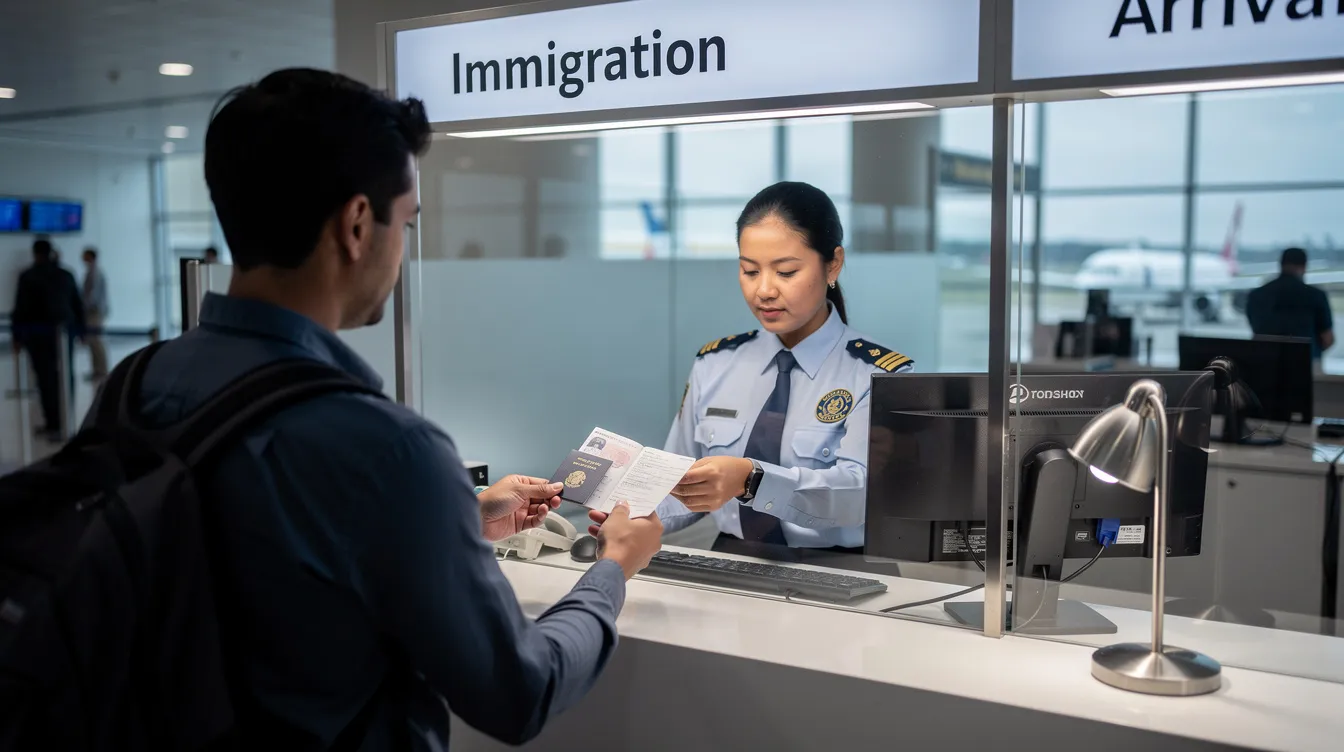
Online application: Most applications begin on GOV.UK. You complete the form, pay the visa fee and any immigration health surcharge, then book a biometric appointment.
Biometric enrolment: If applying from outside the UK, you attend a Visa Application Centre (VAC) to provide fingerprints and a photograph. In-country applicants may use the UK Immigration: ID Check app or attend a service point.
Finding a centre: VACs are operated by commercial contractors worldwide. You can locate your nearest centre, book an appointment, and choose optional services - such as priority processing, document checking, courier return of passports, and SMS or email updates.
Processing times: These vary by visa type, route, and country of application. Visitor visas are often faster; work and family routes take longer. Most applications can be tracked via an online portal.
Critical travel warning: Leaving the UK while an in-country application is pending can result in automatic withdrawal of your application. Plan any international travel carefully around pending decisions.
Decisions: You may receive your decision by email. Where passport vignettes are still issued, your passport will be returned by courier; increasingly, status is confirmed digitally via your UKVI account.
Documents, Financial Requirement and Immigration Health Surcharge
Supporting documents are the backbone of any UK visa application. Many refusals result from missing or incorrect evidence rather than genuine ineligibility.
Typical core documents
A valid passport or travel document with at least one blank page
Passport-style photographs (where required)
Proof of funds or maintenance (bank statements, savings, employer letters)
Accommodation proof or sponsor documents (CAS for students, Certificate of Sponsorship for workers)
Relationship evidence for family routes (marriage certificate, photos, joint bills)
English language test certificates
You must provide a valid TB certificate for some visa applications, depending on the country you're applying from
Originals vs scans
Original documents are often required for UK visa applications. However, you can submit scanned copies instead of original documents in many cases - UKVI often accepts electronic uploads but reserves the right to request originals. A cover letter can support applications without original documents by explaining any gaps.
Financial requirement
The financial requirement varies by visa type. Family route applicants must demonstrate minimum income or savings. Students need maintenance funds held for a specified number of days. Skilled Worker sponsors confirm salary via the Certificate of Sponsorship.
Immigration health surcharge
The immigration health surcharge is paid by most applicants granted permission to stay for more than six months. It provides access to NHS services during your stay. Key exemptions apply - for example, Health and Care Worker visa holders and their dependants are typically exempt. The surcharge is updated annually; check current rates on GOV.UK before applying.
Statistics, Trends and the Impact of Policy Changes
Understanding trends helps put UK visas and immigration in context. Here are the headline figures from recent Home Office immigration system statistics:
Work visas: 235,000 work visas (including dependants) were granted in the year ending June 2026, down 18% from the prior year and 62% fewer than the peak in the year ending December 2023. Extensions granted on work routes were about 731,000, reflecting the large intake of 2022–2023 reaching renewal stage.
Study visas: Around 383,000 sponsored study visas were granted in the year ending June 2026, down 11% from the previous year and 41% below the peak year ending June 2023.
Health and Care Worker decline: This route drove much of the post-2021 work visa surge, but increased Home Office scrutiny of social care sponsors caused a sharp drop from late 2023 onward.
Newer routes: Global Business Mobility, High Potential Individual, and Scale-up Worker routes still account for relatively low grant numbers compared to the larger Skilled Worker and study categories.
National statistics caveat: Grant numbers from administrative data do not directly measure how many people are in the UK at any time, because individuals may receive multiple visas or not travel after being granted permission.
Travel, Compliance and Changing Your Immigration Status
Staying compliant with your visa conditions is just as important as obtaining the visa in the first instance.
Travel and validity: Enter the UK within the date range specified by your visa or grant. If you hold an eVisa, ensure your passport is linked to your UKVI account before travel.
Switching status: Some visas allow switching inside the UK - for example, Student to Skilled Worker, or certain family route switches. Standard Visitor visa holders generally cannot switch in-country; they must leave and apply from abroad.
Change of employment: Under the Skilled Worker route, changing your job, sponsor, SOC code, or taking a salary reduction typically requires a new Certificate of Sponsorship and a fresh application. If your role falls below RQF Level 6 post-22 July 2025 and isn't on the Temporary Shortage List, new applicants in that role may be ineligible.
Overstaying and breaches: Overstaying, working without permission, or breaching visa conditions can result in removal, future application bans, and damage to settlement prospects.
If refused: Some routes offer administrative review or appeal rights - particularly in human rights and protection cases. In many visa categories, the remedy is a fresh application with stronger evidence addressing the reasons for refusal. Seek specialist advice before reapplying.
Looking Ahead: Future Developments in UK Visas and Immigration
The UK immigration system will continue evolving through 2026 and beyond. Here's what to watch:
Full eVisa roll-out: By end of 2026, the goal is to stop issuing physical visa vignettes for all routes. Every successful applicant will receive a UK eVisa as their sole proof of status.
ETA enforcement: From 25 February 2026, the ETA requirement is fully enforced for all eligible visitors. Airlines will check before boarding.
Salary and skill adjustments: The Migration Advisory Committee will continue reviewing salary minimums and the Temporary Shortage List. Consultation is ongoing around longer qualifying periods for ILR for those in roles below RQF 6.
Border automation: Expansion of contactless eGates and facial verification technology at UK immigration control points.
Complex cases: If you have previous refusals, criminal records, long absences, or missing documents, generic guidance may not cover your situation. Seek tailored specialist advice before applying.
UK immigration rules shift frequently - staying informed is not optional, it's essential. Bookmark the GOV.UK immigration pages and check for statements of changes before every application.
This general guide has covered the major routes, the digital system transition, financial and documentary requirements, and the path from temporary visa to settlement. Whatever your intended route, thorough preparation and accurate evidence remain the foundation of every successful application. For further information on any specific visa type, start with official GOV.UK guidance - and don't hesitate to obtain professional advice when the stakes are high.