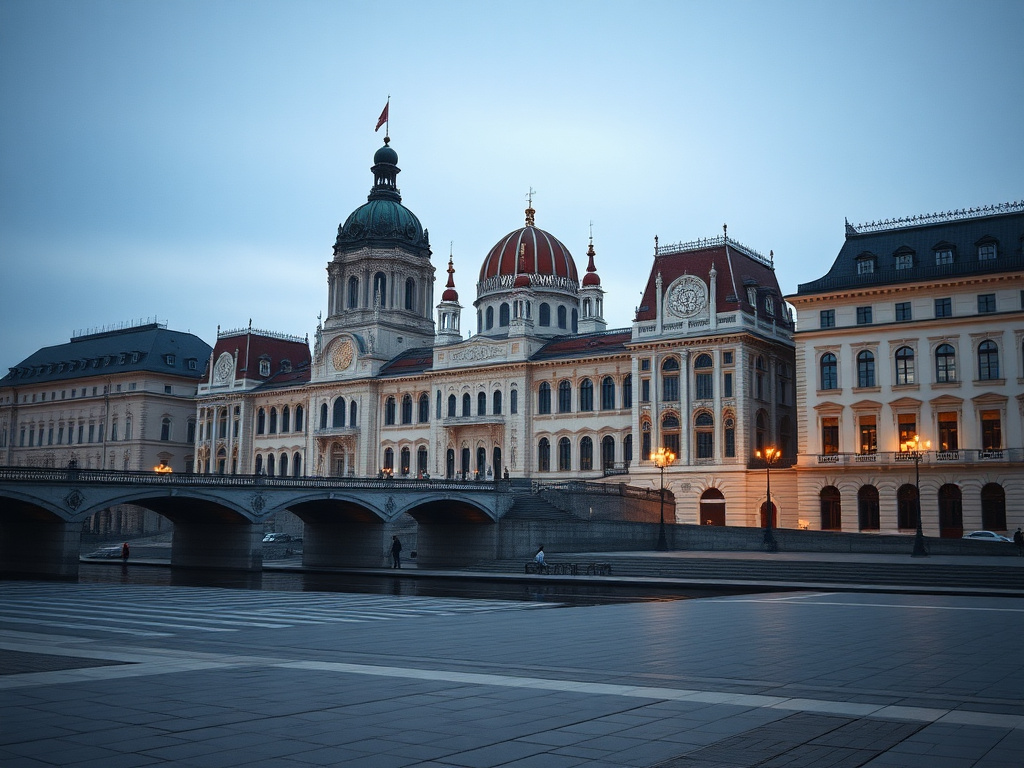
The Hungarian Education System and Requirements for Studying in Hungary
The Hungarian Education System and Requirements for Studying in Hungary
The placement of Italian monks from Bohemia in the Benedictine Monastery on the Holy Mountain of Pannonia by Prince Géza in 996 is considered the symbolic starting point of the Hungarian education system. In the early 1000s, according to the law of St. Stephen, it was obligatory to build a church in every 10 villages in Hungary, and these churches were later converted into primary schools.
The University of Pécs, Hungary's oldest university, was founded in 1367. By the mid-18th century, there were approximately 4,000 public primary schools and 100 secondary schools in Hungary. The Hungarian education system was established with the Primary Education Act of 1868, which made school attendance compulsory for children between the ages of 6 and 15, and the illiteracy rate, which was 64% in 1870, dropped to 47% in 1890 and 31% in 1910.
There are currently 67 universities in Hungary. Educational institutions in Hungary are predominantly public schools and are administered by the Ministry of Human Resources. In Hungary, kindergarten education is compulsory for children between the ages of three and six, and children must continue schooling until they are 16. In addition to Hungarian, education is also provided in English, German, French, Latin, Italian, and Russian.
The Programme for International Student Assessment (PISA) is a three-year survey that assesses the extent to which 15-year-old students have acquired basic knowledge and skills. PISA focuses on students’ reading, mathematics, science and well-being. According to the 2018 PISA survey, Hungarian students ranked 26th out of 78 countries in reading, mathematics and science, and 13th in terms of students’ well-being. Hungary ranked 12th in reading skills in the 2009 PISA survey, and 38th in mathematics, science and reading in the 2015 PISA survey.
What are the stages of education in Hungary?
The educational stages available in Hungary are listed below.
- Preschool education in Hungary
- Primary school education in Hungary
- Secondary education in Hungary
- Higher education in Hungary
What is the Pre-School Education System Like in Hungary?
According to Eurostat's 2012 Key Data on Education in Europe report, although in most countries compulsory education starts when children are 5 or 6 years old, in Hungary, as of 1 September 2015, compulsory pre-school education starts at age 3. The participation rate in pre-school education in Hungary is over 86% in the 3-5 age group.
Pre-school education in Hungary is provided free of charge and is supervised by the Ministry of Human Resources. Public sector institutions in Hungary may only charge for additional services such as extracurricular activities, meals, and excursions in pre-school education.
The aim of preschool education in Hungary is to promote the development of personality and all-round, harmonious development of all children, including those with special needs, taking into account the children's age, individual characteristics and different developmental characteristics. Kindergarten classes in Hungary are open from 7am to 5pm and children from the age of 3 are required to attend at least 4 hours a day.
In Hungarian kindergartens, children start the day by organizing developmental activities and playing games, then have morning tea, lunch and a short nap. After sleep, play time is organized again and, for an extra fee, children can participate in selected thematic activities such as sports, folk dance, music.
What is the Primary School Education System Like in Hungary?
In Hungary, children reach compulsory primary school education at the age of 6. Primary school education in Hungary is free and is supervised by the Ministry of Human Resources.
In Hungary, children usually attend primary school until the 8th grade, although some children apply for secondary school after the 4th or 6th grade. Primary school education in Hungary is divided into lower primary school (grades 1 to 4) and upper primary school (grades 5 to 8). In lower primary schools, students have a class teacher and most subjects are taught by the class teacher who is also responsible for the children. In Hungarian primary schools, subjects taught from grades 1 to 5 include literature, grammar, mathematics, music, art, physical education and environmental studies. In Hungarian upper primary schools, classes include history from grade 5, biology, geography, art history and physics from grade 6, and chemistry and foreign language education (usually English or German) from grade 7.
The aim of primary education in Hungary is to develop basic skills such as literacy and numeracy and to provide basic knowledge in subjects such as natural sciences, social sciences and art. Classes in Hungary begin at 8:00 and end at 4:00, with children being looked after until 5:00. The average lesson duration is 45 minutes, with breaks of 10-15 minutes. Primary schools in Hungary teach five days a week, with Saturdays and Sundays off.
In Hungarian primary schools, children can pay an extra monthly fee to receive three meals a day: breakfast, lunch, and a snack. Parents have class funds that they pay a fee for each month or term, and class funds allow children to participate in activities such as class trips, museum visits, and theater.
What is the Secondary School Education System Like in Hungary?
In Hungary, children start studying in secondary schools from the age of 14. In Hungary, parents can choose a secondary school through teachers appointed as career counselors or through counseling centers. Secondary schools in Hungary are free of charge.
There are two types of secondary schools in Hungary: General secondary school (gimnázium), and vocational school (szakkozépiskola). Since the compulsory education age in Hungary is 16, there are also two-year short-term vocational schools (speciális szakiskola) that can be attended by those who do not want to go to school until they are 18 years old.
In Hungary, Gimnáziums prepare students for the school-leaving examination and adopt different formats both in terms of duration (4, 5, 6 or 8 years) and educational content.
In Hungary, Szakkozépiskolos prepare students for the school-leaving examination and provide vocational training. There are three types of Szakkozépiskolos in Hungary: 5-year technical education, 5-year service sector education, and those that grant the right to take the school-leaving examination as well as a highly skilled worker certificate. Szakkozépiskolos, which grant the highly skilled worker certificate, last for 4 years.
What is the Higher Education System Like in Hungary?
The higher education system in Hungary is divided into colleges and universities. College education usually lasts 4 years, while university education lasts 4 to 6 years, depending on the course taken. Studying at a university is not compulsory in Hungary.
Hungarian universities accept students by applying online at felvi.hu. Applications are made every year until February 15th. Hungarian universities evaluate students by taking into account secondary school results, school leaving exam grades, language exams, other academic and sports achievements and oral entrance tests. Requirements vary depending on the university applied to and application results are published each year at the end of July. Students who have not been accepted by the universities applied to by the end of July can apply additionally.
Universities in Hungary can be state-funded or paid for by students themselves. Free higher education can be taken for a maximum of 12 semesters. Higher education fees in Hungary are on average between 2500-3000 EUR per year.
What are the Best Schools in Hungary?
The best schools in Hungary with international recognition are listed below.
- University of Szeged (world ranking 501)
- Eötvös Loránd University (world ranking 598)
- University of Debrecen (world ranking 651)
- Semmelweis University (world ranking 672)
- Budapest University of Technology and Economics (world ranking 751)
- Cornivus University of Budapest (world ranking 801)
What Education Can Citizens of the Republic of Türkiye Receive in Hungary?
The most popular types of education that can be received in Hungary for citizens of the Republic of Türkiye are given below.
- Pilot training in Hungary
- English education in Hungary
- Medical education in Hungary
- Architectural education in Hungary
- Studying law in Hungary
How to Get Pilot Training in Hungary?
To receive pilot training in Hungary, you must be accepted to one of the flight schools in Hungary, be at least 17 years old, have a second-class medical certificate, be at least a high school graduate and know English at least at C1 level.
Prices for Hungarian flight schools that provide pilot training in Hungary are calculated between 6,000 and 7,500 Euros and the training period varies between 4 and 6 weeks. In order to receive face-to-face pilot training in Hungary, 100 hours of the 120 hours of theoretical training must be completed remotely before the training.
How to Get English Language Education in Hungary?
To study English in Hungary, you need to be accepted to a language school in Hungary. The best cities for studying English in Hungary are Budapest, Pecs, Szeged and Debrecen.
English language education in Hungary lasts 1 week for A1 language level, 3 weeks for A2 language level, 12 weeks for B1 language level, 16 weeks for B2 language level, and 32 to 48 weeks for C1 and C2 language levels.
A student who wants to study English in Hungary pays 840 EUR for 10 lessons per week, 960 EUR for 20 lessons per week, 1145 EUR for 25 lessons per week and 1444 EUR for 30 lessons per week, including food, beverage and accommodation expenses.
A student who wants to study English in Hungary pays 580 EUR for 10 lessons per week, 740 EUR for 20 lessons per week, 890 EUR for 25 lessons per week and 1190 EUR for 30 lessons per week, excluding expenses such as food, drink and accommodation. The most preferred language school options in Hungary are English language schools.
How to Study Architecture in Hungary?
It is possible to receive architectural education in Hungary. The necessary conditions for receiving architectural education in Hungary are; a minimum score of 5.5 in the IELTS English exam and being a high school graduate.
There are two universities in Hungary that provide architecture education. The universities in Hungary that provide architecture education are the University of Pecs and the University of Budapest.
Architecture education at the University of Pecs in Hungary lasts 5 years and has an annual tuition fee of 6,443 EUR. Architecture education at the University of Budapest in Hungary lasts 5 years and has an annual tuition fee of 3,200 EUR.
How to Study Law in Hungary?
It is possible to study law in Hungary. Among the universities where you can study law in Hungary are McDaniel College, Reformed Church University, National Public Service University.
At Mcdaniel College in Hungary, law education continues in English for 4 years, with a tuition fee of 3600 EUR for the first 2 years and 3900 EUR for the last two years, a book fee of approximately 300 EUR per semester, and an accommodation fee of 2500-3000 EUR per semester. In order to study at Mcdaniel University in Hungary; a high school diploma, an IELTS or TOEFL score, and an application letter of at least 300 words are required.
At the Hungarian Reformed Church University, law education is given in English, lasts 3 years, and the annual tuition fee is 2740 EUR. In order to study at the Hungarian Reformed Church University; all documents related to academic life and an IELTS or TOEFL score are required.
At the Hungarian National Public Service University, law education is given in Hungarian, lasts 3 years and the annual tuition fee is 1270 EUR. In order to study at the Hungarian National Public Service University; all documents related to academic life and an IELTS or TOEFL score are required.
Is it possible to study medicine in Hungary?
Yes, it is possible to study medicine in Hungary. In order to study medicine in Hungary, a written entrance exam consisting of multiple choice questions on biology, chemistry, English and technical English on medicine must be passed, lasting two and a half hours. Students who pass the written exam take an oral exam on medical subjects, organized by one of the professors of the university they are applying to.
Universities offering medical education in Hungary include Semmelweis University, University of Debrecen, University of Szeged and University of Pécs. The average tuition fee for a six-year English language medical program in Hungary is 18,000 USD. Tuition fees may vary depending on the university applied to.
After completing a bachelor's degree in medical education in Hungary, individuals have a common basic education program lasting 24 months and a professional specialization training period of 24 to 48 months, depending on the type of specialization. Medical specialization training in Hungary can be done at universities approved by the Hungarian Government. After completing the Hungarian medical specialization training, students who pass the practical and theoretical exam organized by the Department of Health and Administrative Affairs receive the Hungarian Specialization Certificate issued by the National Examination Board.
Can I Work While Studying in Hungary?
For studies longer than 3 months in Hungary, students receiving language education at institutions affiliated with universities in Hungary, graduate and undergraduate students can work 20 hours per week.
What are the requirements for studying in Hungary?
The requirements for studying in Hungary are listed below.
- To study in Hungary, it is necessary to obtain a letter of acceptance from an educational institution in Hungary.
- To study in Hungary, the person must not have a travel ban
- To study in Hungary, a person must have a permission letter signed by their parents if they are under 18 years of age.
- To study in Hungary, it is necessary to have health insurance and financial means for the duration of residence in Hungary.
What is the Cost of Overseas Education Consultancy in Hungary?
The fee for Hungarian education abroad consultancy varies between 120 EUR and 400 EUR depending on the type of education to be registered.
2026 Application Checklist
- Valid Passport: Must be valid for at least 6 months beyond stay.
- Proof of Funds: Bank statements or Blocked Account confirmation (2026 rates).
- Biometrics: Appointment confirmation and receipt.
- Health Insurance: Travel or private insurance covering €30,000+.
- Form IMM 5645: Fully completed Family Information form.