Visa or Mastercard: Which Is Better in 2026?
If you have ever wondered whether Visa or Mastercard is better for your wallet, you are not alone. The short answer is that the right answer depends far more on the issuing bank's rewards, fees, and benefits than on the logo printed on your card. This article breaks down what actually matters when making that choice today.
Key Takeaways
Visa and Mastercard are the two dominant payment processing networks in the world, but neither issues cards nor sets interest rates. The specific card issuer determines actual rewards, interest rates, and fees.
Both networks are accepted worldwide at tens of millions of merchant locations, and everyday security features like tokenization and zero-liability fraud protection are standard on both.
Differences matter most at premium tiers (Visa Signature/Infinite vs. World/World Elite Mastercard), where travel insurance, purchase protections, and lifestyle perks can diverge.
Payment systems regulator bodies in the U.S. and U.K. are pushing both companies on fees and competition, but those changes mostly affect merchants, not cardholders directly.
Choosing between Visa and Mastercard often relies on the specific card features and the issuer, not the network brand.
How Visa and Mastercard Actually Work
Visa and Mastercard do not issue cards or set your interest rate. Banks and fintechs handle that. Visa and Mastercard run the underlying payment networks, routing transactions between merchants, acquirers, and issuing banks.
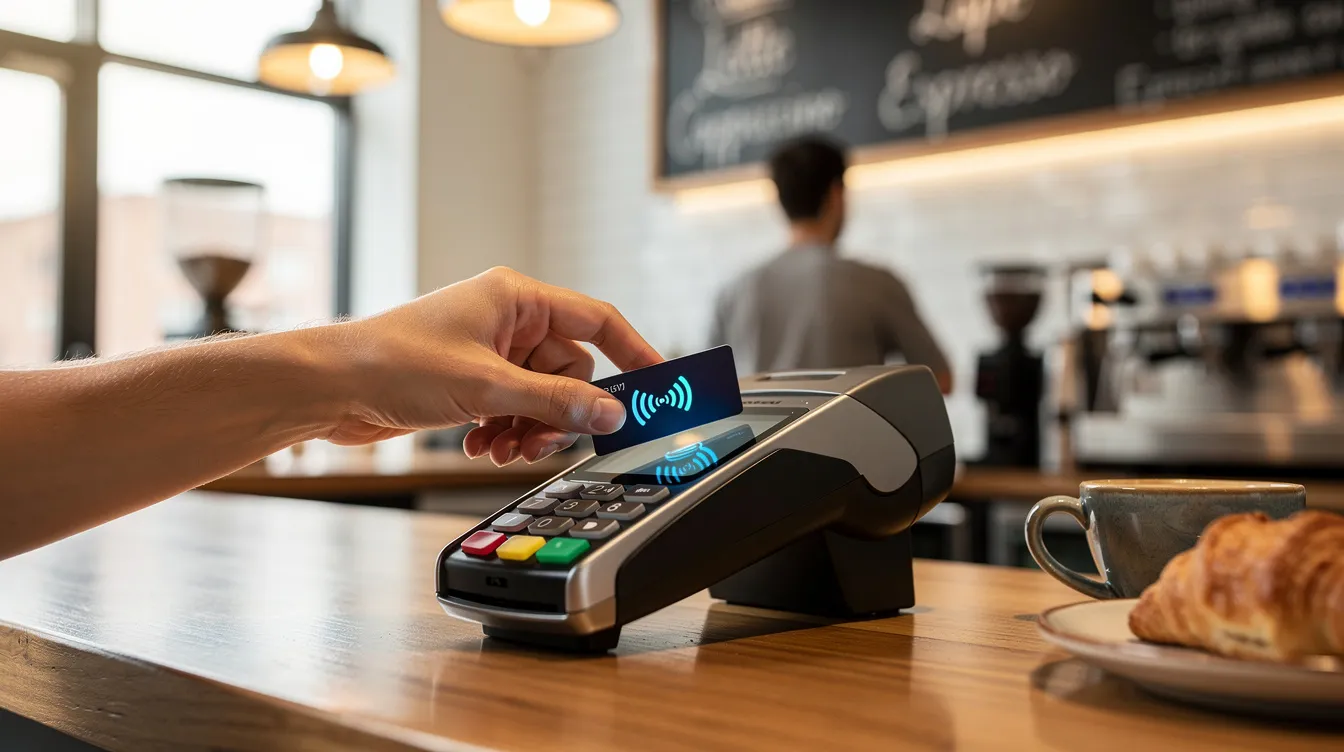
When you tap your card at a terminal or buy something online, the transaction flows through the network for authorization and settlement. Whether you use a Visa credit card or a Mastercard debit card for a 2026 Amazon purchase, the checkout experience is nearly identical. Contactless payments now account for over 80% of global transactions, and both networks support them seamlessly.
Visa claims a user base of 2.4 billion, while Mastercard processes over 18 billion transactions per year. Both are U.S.-based firms and members of a global payments industry duopoly, which means most everyday users will not notice a meaningful difference in acceptance.
Core Similarities: Where Visa and Mastercard Are Effectively the Same
For everyday spending in 2026, these two networks function almost interchangeably. Here is where they overlap:
Both operate across more than 200 countries and territories. Online merchants, subscription services, and large retailers accept both by default.
Both employ advanced security measures including tokenization and zero-liability fraud protection. Visa emphasizes technological innovation with products like Visa Token Service, while Mastercard offers comparable safeguards.
Dispute and chargeback rights exist on both networks, but the speed of getting your money back depends more on your bank's customer service than the network logo.
Foreign transaction capabilities are built into both. Whether you pay a 0% or 3% fee is an issuer decision, not a network one.
Both networks have tiered card levels that grant additional perks like travel insurance and purchase protection.
One quick way to tell them apart physically: Visa cards start with a 4, while Mastercard starts with a 5 or 2-series.
Key Differences: Visa vs. Mastercard Benefits by Card Tier
Meaningful differences show up at the benefit-package level, especially for mid-tier and premium products.
Visa tiers (Traditional, Signature, Infinite) generally favor travel-related protections. Visa cards often include concierge services and travel protections at premium tiers, along with the Luxury Hotel Collection offering room upgrades and dining credits at 200+ properties.
Mastercard tiers (Standard, World, World Elite) lean toward lifestyle and entertainment perks. Mastercard offers exclusive access to events and lifestyle services at higher tiers, plus partnerships with brands like Lyft or DoorDash.
A travel-focused Visa Infinite card and a World Elite Mastercard from the same major bank can look remarkably similar in rewards rates and annual fees. The difference often comes down to small details: Visa's hotel collection versus Mastercard's Priceless experiences, or the specific insurance coverage limits the issuer has activated.
Network-branded protections are frequently secondary to those offered by the issuer. Always check the card's actual benefits guide.
Fees, Exchange Rates, and the Role of Regulators
Consumers often wonder whether one network is cheaper. Here is how pricing really works in the payments industry.
Interchange fees and network assessments are paid by merchants' banks, not directly by cardholders. Common principles for fees include that they are typically set by the card issuer, not the network. Annual fees, cash-advance charges, and foreign transaction fees are all issuer decisions, which means there is no blanket rule that one network is cheaper.
Both Visa and Mastercard publish daily FX rates for currency conversion. In practice, the difference between their rates on the same day is tiny compared with the markup your bank adds.
Regulators are increasingly active. The U.K. Payment Systems Regulator has directed both networks to improve fee transparency, while debates around the U.S. Credit Card Competition Act continue to push for more competition. Both Visa and Mastercard face increased regulatory scrutiny, but the immediate impact is more visible for merchants than for cardholders dealing with their own account fees.
Choosing the Right Card: How to Decide What's "Better" for You
There is no single right answer that applies to everyone. Here is how to approach it:
Prioritize card-level features first: APR, sign-up bonus, ongoing rewards rates, and annual fees. The network should come second.
Match benefits to your lifestyle. Frequent travelers should review airport lounge access and travel insurance options. Everyday shoppers should look at cashback categories on groceries and gas.
Check regional acceptance. Visa has a slightly broader international acceptance footprint and its acceptance is stronger in North America, while Mastercard is slightly stronger in Europe.
Read the full benefits guide (usually a PDF on the issuer's site). Coverage limits, exclusions, and claim steps are more decisive than the headline network name.
Consider holding both a Visa and a Mastercard for redundancy. If you pick no-annual-fee cards, this flexibility costs nothing and covers rare cases of merchant preferences or technical outages.

Visa or Mastercard as Investments, Not Just Payment Tools
Some readers also ask whether Visa or Mastercard is the better stock to hold in 2026. Both companies have historically delivered strong revenue and profit growth as digital payments expanded worldwide.
Visa has a market cap of $641.5 billion, while Mastercard has a market cap of $498.5 billion. Mastercard's cybersecurity and analytics revenues grew 17.7% in 2023, and its digital expansion targets Southeast Asia and Latin America. Visa's fiscal Q3 2026 earnings showed approximately 14% year-over-year net revenue growth.
The duopoly nature of the industry gives both stocks attractive competitive positions, but also attracts scrutiny from legislators concerned about fees and competition. Stock performance can diverge based on geographic exposure, partnerships, and strategic moves into areas like real-time payments and open banking. Long-term investors often hold both rather than trying to pick a single winner.
FAQ
Below are common questions about whether Visa or Mastercard is better that are not fully covered in the main article.
Does one network handle refunds or chargebacks faster than the other?
Both networks define broad chargeback rules and timelines, but real-world speed depends far more on the issuing bank's internal processes and customer service quality. There is no consistent evidence that either network is faster at dealing with disputes.
Is Visa or Mastercard better for traveling to Europe or Asia?
Both are widely accepted in major cities and tourist areas across both continents. Occasional gaps appear only at very small merchants or places that favor local schemes. Carrying a backup card and a small amount of local cash is wise regardless of which network you use.
Can I switch the network on my existing card from Visa to Mastercard (or vice versa)?
You generally cannot change the network on a current card. You would need to apply for a different product from the same bank or another provider that issues on the desired network. Your card number, network, and associated agreements are part of the product itself.
Are my rewards points safer with Visa or with Mastercard?
Rewards balances are managed by the card issuer or loyalty program (such as an airline or hotel chain), not by the network. Program stability and issuer reputation matter more than whether the card runs on Visa or Mastercard rails. The network has no direct control over your points balance.
Does upcoming regulation mean my Visa or Mastercard fees will go down?
Regulatory efforts in the U.S., U.K., and EU mainly target merchant-facing fees. Any savings may or may not end up being passed on to consumers through lower retail prices or more competitive card offers. Cardholders should not assume their own annual fees or APRs will automatically fall because of new rules.