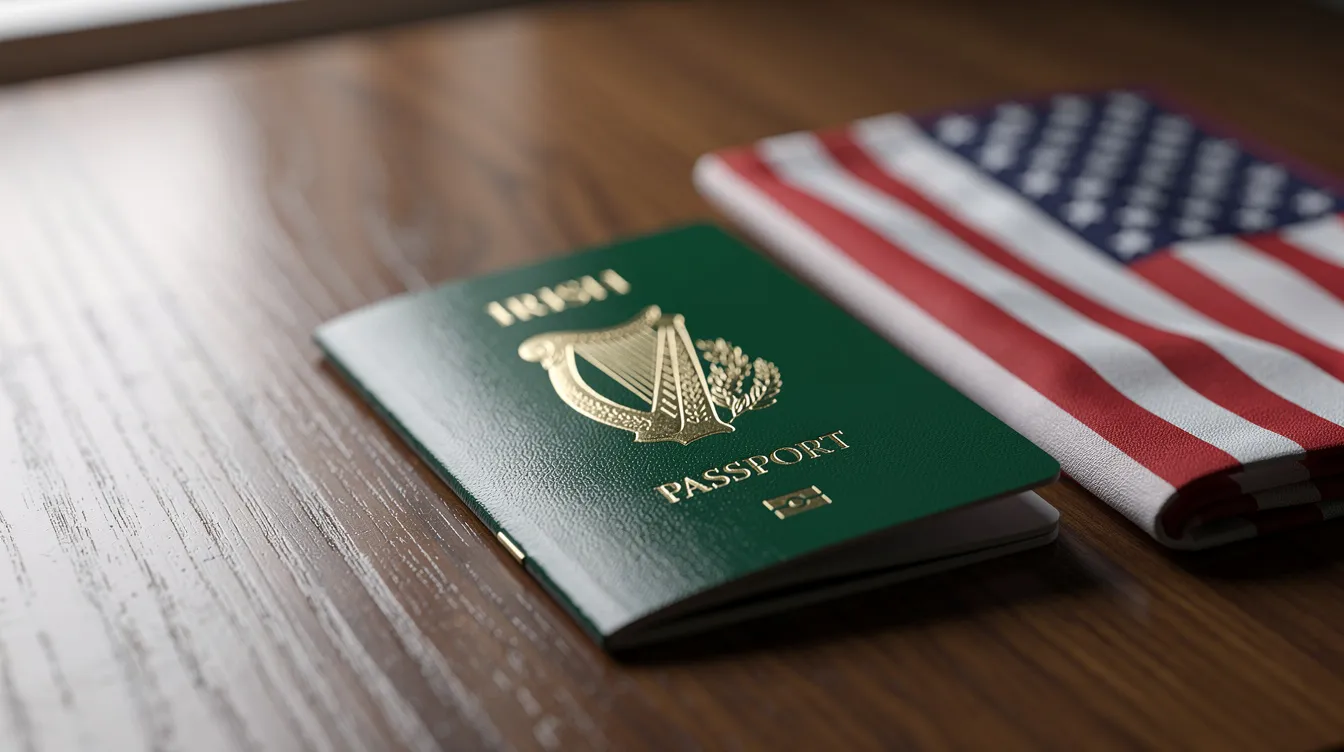
E-3 Visa for Irish Citizens: How Irish People Can Use the E‑3 Visa Programme to Work in the US
The idea of an E-3 visa for Irish citizens has generated a lot of interest on both sides of the Atlantic. For years, Irish professionals have watched as Australians benefit from a streamlined work visa programme that sidesteps the chaos of the H-1B lottery. Now, with proposed legislation sitting before Congress, Irish people are asking a straightforward question: when will this happen for us?
This article breaks down everything you need to know about the E-3 visa programme, its political history, what the legislation actually proposes, and what Irish citizens can do right now to prepare for-or work around-the current restrictions.
Key Takeaways
The E-3 visa is a US work visa originally created for Australians under the 2005 Australia–US Free Trade Agreement. Multiple bills in Congress have proposed extending unused E-3 numbers to Irish nationals, but the US Senate has not yet given final approval.
As of late 2026, Irish citizens are not currently eligible for the U.S. E-3 visa unless they also hold Australian citizenship. However, bills like HR-7164 and the more recent HR 1337 keep the door open for future access.
The E-3 is a specialty occupation visa similar to the H-1B, valid for two years at a time. It can be renewed indefinitely as long as employment continues, and spouses can live and work in the US without separate work authorization.
If extended to Ireland, the visa programme could benefit Irish workers who want to work in the US by providing a more flexible, low-cost alternative to the H-1B cap lottery. The E-3 visa avoids a random lottery unlike the H-1B visa.
Always check the latest US government and Irish government updates before making plans. The political and legal situation can change quickly.
Overview: What Is the E‑3 Visa Programme?
The E-3 visa is a US non-immigrant work visa category created in 2005 exclusively for Australian nationals under the Australia–US Free Trade Agreement. It allows qualified professionals to live and work in America in specialty occupation roles, with a process that is generally faster and cheaper than competing visa categories.
Here are the core features of the E-3 visa programme:
Non-immigrant status: The E-3 is limited to temporary/non-immigrant status requirements. It does not, by itself, lead to permanent residence or a green card.
Specialty occupation requirement: Applicants must be employed in a specialty occupation, similar to the H-1B. The applicant must possess a U.S. bachelor's degree or its equivalent.
Job offer required: E-3 visa applicants must have a legitimate job offer in the US from a sponsoring employer.
Annual cap: 10,500 E-3 visas are available for Australian citizens each fiscal year. Renewals and family members do not count against this number.
Underutilization: In most years, only half of these 10,500 E-3 visas are utilized by Australians, which is why US lawmakers have suggested reallocating unused numbers to Irish citizens.
The E-3 is separate from immigrant (green card) routes but can be renewed repeatedly for those who continue to qualify, making it an attractive long-term option.
Why the E‑3 Visa Matters for Irish People
The migration links between Ireland and America stretch back centuries. Demand from Irish people to work in the US remains high, yet legal pathways are limited and often difficult to navigate. Many undocumented Irish residents in the US underscore how important it is to create workable, legal routes.
Current main US work visa routes for Irish nationals include:
H-1B: The H-1B visa is for specialty occupation workers with at least a bachelor's degree. It is heavily oversubscribed and determined by lottery, making it unpredictable.
J-1: The J-1 visa is for exchange visitors, interns, and trainees. It is temporary and comes with significant restrictions on staying beyond the programme period.
L-1: The L-1 visa is for intra-company transferees moving to a U.S. branch or affiliate, limiting it to employees of multinational companies.
O-1: The O-1 visa is for individuals with extraordinary ability or achievement in their field-a very high bar for most professionals.
The E-3 is attractive because it offers an uncrowded annual cap, lower government fees than H-1B, the ability for spouses to work in the US, and more predictable processing through US consulates. Business groups in Ireland and Irish-American organizations have been committed to lobbying on both sides of the Atlantic to gain access to E-3 visas for skilled Irish workers across sectors like IT, healthcare, engineering, and finance. For Irish graduates and professionals looking to work in the US, this could change their life.
Political Background: HR‑7164 and Irish Access to E‑3 Visas
Several bills have been introduced in the US Congress to extend unused E-3 visas to Irish nationals. The best known is the bill known as HR-7164, introduced in late 2018. This legislation generated public comments from politicians and advocacy groups on both sides of the aisle.
Key facts about HR-7164:
The bill was introduced in 2018 and proposed to let Irish citizens apply for E-3 visas left unused by Australians each fiscal year.
The bill passed through the House of Representatives by voice vote, with strong support from representatives on both sides.
For HR-7164 to become law, it needed unanimous consent in the US Senate-a very high bar. The bill needs unanimous support in the US Senate to proceed, and this is where progress stalled.
This was actually the second attempt to pass the bill in that congressional session.
The last attempt was blocked by Senator Tom Cotton, citing broader immigration security concerns.
Irish and US leaders have repeatedly raised the E-3 issue during bilateral discussions, including around St. Patrick's Day meetings in Washington. Speaking about the initiative, political figures from both countries have noted how the proposal reflects the deep relationship between the two countries.
While the bill did not pass, it set a template for later proposals. Proposed bills may allow Irish nationals access to unused E-3 visas from Australia, and newer iterations continue to build on this framework.
Current Legal Status (as of 2026)
As of October 2026, US law still limits E-3 eligibility exclusively to Australian citizens and their dependants. Irish nationals on their own passport cannot yet apply for an E-3 visa. As of late 2026, there is no official application process for Irish citizens seeking E-3 visas.
Irish people can only access the E-3 category if they hold dual citizenship with Australia and meet all standard eligibility criteria.
Several newer bills have been floated in Congress following HR-7164, most notably HR 1337, introduced in February 2025. None has successfully passed both the House and Senate and been signed into law.
Legislative proposals to expand the E-3 visa to Ireland have not passed into law at the time of writing.
The Irish government has publicly confirmed its support for Irish-specific E-3 access but acknowledges that US immigration policy is outside its direct control.
Readers should check official sources such as the US Department of State, USCIS, and the Irish Department of Foreign Affairs for up-to-date information before starting any application.
This article explains how an E-3 system could work for Irish citizens based on existing Australian rules, but these rules are not yet directly available to Irish-only passport holders.
How the E‑3 Visa Works (Based on Australian Rules)
This section describes the mechanics of the E-3 visa as currently applied to Australians. Understanding these rules helps Irish readers know what to expect if the programme is ever extended to Ireland.
Job offer: The applicant must have a specialty occupation job offered by a US employer. The role usually requires at least a bachelor's degree or equivalent work experience directly related to the position.
Prevailing wage: The US employer must pay a fair, prevailing wage. The employer cannot undercut what American workers would earn in the same role.
Duration: E-3 visas are valid for two years. E-3 status is typically granted for up to two years per entry, with the possibility of indefinite two-year renewals provided the candidate continues to meet requirements and maintains non-immigrant intent.
Consular processing: E-3 applicants apply directly at a US embassy or consulate, often in their home country. This can make the process faster and often cheaper than visa categories requiring a pre-filed USCIS petition.
Cap and family: There is an annual cap of 10,500 new principal E-3 visas. Spouses and children do not count against this cap and can receive derivative E-3D status.
E-3 visas last for two years and allow spouse employment, making them one of the more family-friendly non-immigrant visa categories available.
Eligibility Criteria Irish Applicants Would Likely Face
If Irish access to the E-3 is approved, it will almost certainly mirror the criteria already in place for Australians, because US immigration law tends to keep categories consistent. Here is what applicants would likely need:
Personal requirements:
Irish citizenship and a valid Irish passport
No serious criminal record
Readiness to show ties to Ireland or elsewhere to support non-immigrant intent (demonstrating that the applicant plans to return to their country eventually)
Professional requirements:
A specialty occupation job offer from a US employer-for example, a software engineer in New York, a civil engineer in Boston, or an ICU nurse in Chicago
Applicants must have a specific qualification: a degree or equivalent experience directly related to the role
Documentation such as a CV, reference letters, and professional licenses where relevant
Employer requirements:
The US company must file a Labor Condition Application (LCA) with the US Department of Labor. The E-3 visa requires a certified Labor Condition Application from a U.S. employer.
The employer pledges to pay the prevailing wage and provide fair working conditions
Under proposed legislation like HR 1337, employers would also need to participate in E-Verify during the period of employment
Not every job will qualify. Positions must meet the exacting standards of specialty occupation, which may exclude some trades and service roles where a bachelor's degree is not typically required.
Application Process: Step‑by‑Step Guide for Irish People (If Opened)
This is a hypothetical but practical step-by-step outline based on how Australians currently apply for E-3 visas, adapted for Irish nationals. If legislation passes, the process would likely look something like this:
Secure a written job offer from a US employer for a qualifying specialty occupation role.
Employer files a Labor Condition Application (Form ETA-9035) with the Department of Labor and receives certification.
Complete the DS-160 online visa application form.
Pay the visa fee and schedule an interview at a US embassy or consulate-likely the US Embassy in Dublin for most Irish residents.
Gather supporting documents: degree certificates, transcripts, CV, detailed job description, proof of professional experience, and any required licenses.
Attend the visa interview. Consular appointments are often available within weeks but can take longer during peak periods. Security checks can extend processing time.
Receive the visa. If approved, the applicant receives an E-3 visa sticker in their passport, allowing them to travel to the US and request E-3 admission at the port of entry, typically being granted up to two years of stay per entry.

Family Members, Renewals, and Changing Employers
One of the main benefits of E-3 is how it treats family members and allows flexibility over time. For any father, mother, or partner considering a move with loved ones, this matters.
Spouses and children: Spouses and unmarried children under 21 can receive derivative E-3D status. E-3 visas allow spouses to work in the US without restrictions-they do not need a separate Employment Authorization Document. Children cannot work.
Renewals: The E-3 visa can be renewed indefinitely as long as employment continues. Renewals are typically in two-year increments, and there is no maximum number of renewals. Recipients simply need to continue meeting the specialty occupation and non-immigrant intent requirements.
Changing employers: An E-3 worker can change employers by either exiting and re-entering the US with a new E-3 visa based on a new offer, or by having a new employer file for a change while the worker remains employed in the US.
Green card transitions: An E-3 holder could, in some scenarios, move onto other US immigration pathways such as employment-based green cards, but this requires separate, complex processes beyond the scope of the E-3 itself.
For Irish people with loved ones and families, the spouse work rights alone add enormous value compared to other visa categories where a trailing partner cannot be employed.
Risks, Limitations, and Practical Considerations for Irish People
Although the E-3 visa programme looks promising, Irish citizens should be aware of its uncertainties and structural limits before making any long-term plans about staying in the US.
Political risks:
Any bill to extend E-3 visas to Ireland must pass both chambers of Congress and be signed by the President. Legislation can be stalled or amended for reasons entirely unrelated to Ireland.
The E-3 visa bill requires unanimous consent in the Senate, a notoriously difficult threshold. Past experience shows how a single senator can block progress.
Structural limitations:
The annual cap remains 10,500 for principal visas. In years of high Australian demand, there may be little or no unused share for Irish applicants.
Roles must qualify as specialty occupations, which may exclude trades and some entry-level positions.
Proposed bills add requirements such as E-Verify, which could reduce employer willingness.
Practical issues:
Possible long consulate wait times in Dublin during peak periods
Visa issuance does not guarantee entry-the final decision lies with US Customs and Border Protection at the port of entry
Accurate and honest documentation is essential; misrepresentation can result in permanent bars
Visa policies can change after elections or major economic events. Any long-term plans to live and work in the US should build in flexibility and backup options.
Alternatives for Irish Citizens to Work in the US Today
Until E-3 access is officially extended, Irish citizens seeking work in the U.S. must rely on existing employment-based nonimmigrant visas. Here are the main options currently open:
H-1B: For specialty occupation workers. Subject to an annual cap and a lottery, making it unpredictable. Many Irish professionals compete in this scheme each year.
J-1: A popular exchange visitor programme for recent graduates, interns, and trainees. Various J-1 summer work schemes allow limited, temporary work experience for younger Irish citizens.
L-1: Available for employees of multinational companies transferring to a US branch or affiliate.
O-1: For individuals with extraordinary ability-typically reserved for those at the very top of their field.
Visa Waiver Program: Irish citizens have access to the Visa Waiver Program for short visits to the US, but this does not permit employment.
E-1 and E-2: Ireland is a treaty country for E-1 and E-2 visa categories, which may suit traders and investors but require substantial capital or trade volumes.
For some Irish professionals, Canada, Australia, and EU free movement may remain more accessible relocation routes while E-3 access is still uncertain. It is worth keeping all options open rather than waiting on legislation that may take time to materialize.
FAQ: E‑3 Visa for Irish Citizens
Is the E‑3 visa currently available to Irish citizens without Australian passports?
As of October 2026, US law still limits E-3 eligibility to Australian citizens and their qualifying family members. Irish citizens who do not also hold Australian nationality cannot yet apply under this category. There is no application process open for Irish-only passport holders at this time.
If the E‑3 visa is extended to Ireland, will it replace the H‑1B for Irish workers?
No. The E-3 would be an additional option, not a replacement. Irish professionals would still be able to use H-1B and other categories. In some cases, the H-1B might remain preferable-for example, in roles or with employers more familiar with that route. The E-3 simply adds another pathway for those who qualify.
Can time spent in the US on an E‑3 visa lead to a green card for Irish people?
The E-3 is a non-immigrant visa not designed to lead automatically to a green card. However, some workers may later transition to employment-based immigrant categories if they can secure employer sponsorship and meet the strict criteria involved. This is a separate and often long process.
Will Irish E‑3 applicants need a formal labour market test in the US?
Based on the existing Australian model, employers must file a Labor Condition Application confirming they will pay the prevailing wage and not undercut US workers. However, they are not normally required to conduct the more complex recruitment process used for some green card applications-making the process less burdensome for both sides.
Where can Irish people get official updates on E‑3 visa access?
Regularly check the US Embassy in Dublin website, the US Department of State's visa pages, USCIS announcements, and statements from Ireland's Department of Foreign Affairs for any change in eligibility or application procedures. If you have specific questions about your situation, consulting an immigration attorney familiar with US visa law is also a smart move.